
Happy on the Shelf: Styling a Bookcase that Feels like You
A laid-back guide to shelf styling that reflects who you are—dog-eared paperbacks and all.
During my work-from-home days, my carefully styled bookcase was a permanent fixture on every Zoom call (I've never been a camera-off, blurred-background kind of gal). One day, in a shining endorsement of my shelf-styling skills, a senior executive at my company paused the meeting to ask if I'd come arrange hers. Although I never took her up on it, I figure it’s time to write it all down.
So here are a few rules to help create a bookshelf that reflects your interests, tastes, and (do I have to say it?) books you’ve actually read.
RULE NO. 1
Mix upright and stacked books to create visual interest
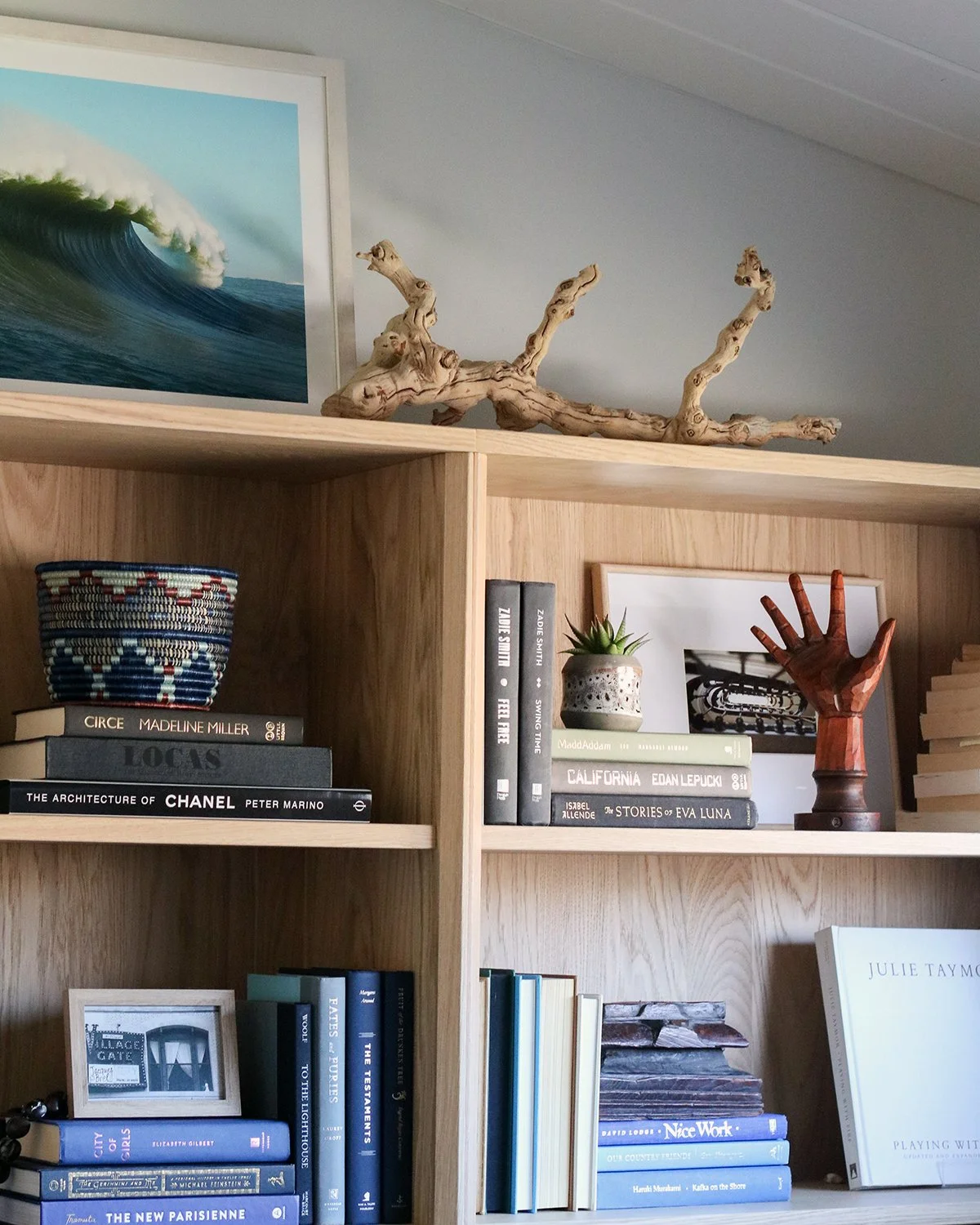
One of the easiest ways to make a shelf look styled instead of just full is to break the horizontal monotony. Stand some books upright, stack others horizontally, and use those stacks as little pedestals for personally meaningful objects. Try a ceramic vessel with a succulent on top of a stack of novels. Or a sculptural wooden hand on a stack of art books (yes, mine’s oddly specific, but you can probably find something equally special at your local thrift store).
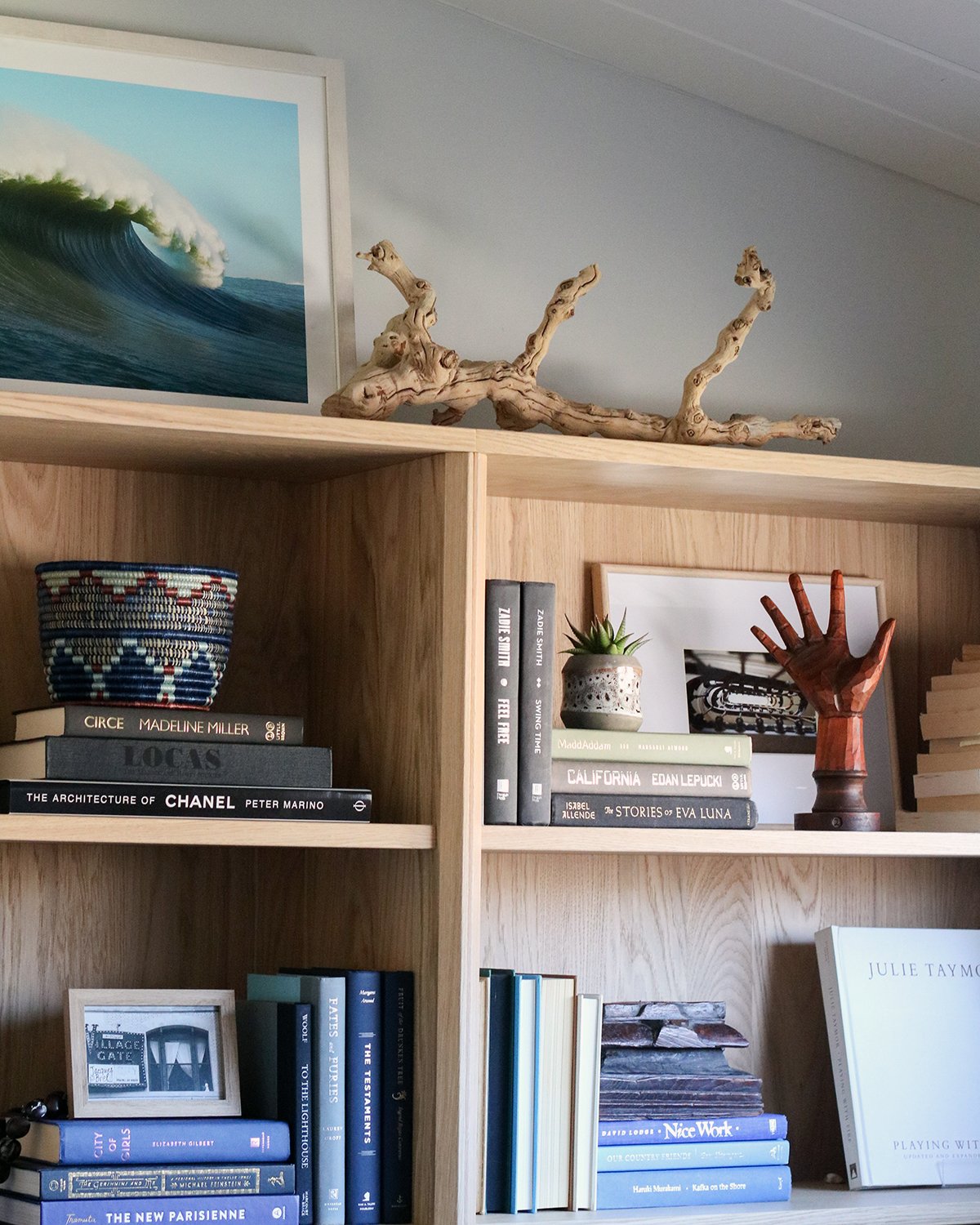
The key is to vary the heights. Think of it like a skyline—you want peaks and valleys, not a flat line. On the shelf pictured here, stacks of California by Edan Lepucki, The Stories of Eva Luna by Isabel Allende, and MaddAddam by Margaret Atwood create a natural base layer for a potted succulent, which sits next to an antique wooden hand mannequin (one of my favorite consignment finds).
RULE NO.2
Go ahead, turn your books backward — but do it strategically
This one’s hotly debated, but here me out. Just like alternating between stacked and upright positioning, turning a few books spine-in (showing the pages rather than the spine) can add texture and visual breathing room to your bookshelf.
Here’s my personal caveat, though: I only use this strategy to deal with books that: a) feature aggressively ugly fonts and color choices; or b) books I’ve finished but would rather not publicly endorse. I have a few self-help books from my early twenties that fall into the latter category.
Try it: Pull out 4–6 books with especially clashing or dated spine fonts and turn them pages-out together. The contrast with colorful spines nearby will create a nice little visual rhythm.
RULE NO. 3
Treat objects like punctuation
Your shelf is a story, where books are the sentences and objects are the punctuation. Strategically placed objects create pauses, emphasis, and rhythm—all the things that give the writing on your shelves texture and interest, too.
Use things you’ve picked up on your travels, or gifts that are especially meaningful to you. A few things I’ve incorporated into my bookshelf: a Kukui nut lei from our family trip to Hawaii, a framed black and white photo I took in Greenwich Village when I was seventeen, and a hand-carved maple box my uncle made. Your shelf will work best with a few meaningful pieces rather than a crowd of random objects competing for attention (one exclamation point is better than three, I promise).
RULE NO. 4
Choose a loose palette and group by color
You've probably seen the hyper-color-coordinated shelves on Pinterest where every book is sorted by hue into a perfect rainbow gradient. Amazing! Also, absolutely a complete pain in the rear every time you want to find a title or add a new one to the mix.
A more livable approach is loose color clusters. Blues and greens together, neutrals and creams together, dark greys and blacks anchoring the bottom. You don't have to be too strict about it, just add it to your mental checklist when placing a new book. On my shelf, the black and white spines of White Noise and Middlesex naturally want to group with other dark r neutral spines. The linen covers of coffee table books like The Bold Dry Garden cluster nicely with other white and off-white selections.
And if a spine is truly a disaster? Well, that's what Rule No. 2 is for.
RULE NO. 5
Treat the top of the shelf like the prime real estate it is
The top of a bookcase is a whole extra canvas, where larger-scale pieces like framed art, sculptural objects, and storage baskets can live. My top-shelfers include two tributes to my time in San Francisco: a gorgeous piece of driftwood and a large photograph of the waves at Ocean Beach. This combination brings height to the whole unit gives it a sense of completion—the frosting on the cake, as it were.
Framed photos work particularly well at this height, where they can be seen from across the room without competing with the shelf vignettes below. Layering a framed black-and-white print behind a color photo adds depth and keeps the arrangement from feeling too matchy-matchy.
RULE NO. 6
Read, read, read
As a former English major and high school teacher, I have to shout it from the rooftops: One of the best things you can do for your mind, your soul, and the world at large is to simply read more books. It will make you a better writer and communicator, and it will force you to spend time in someone else’s head for a while (in other words, it builds empathy). But a lesser-known benefit of reading is that it can help you hone your taste and personal style. Many of my design choices are pulled directly from novels—including Countess Ellen Olenska’s minimalist apartment in Edith Wharton’s The Age of Innocence. Read fiction written before the twenty-first century. Spend an hour with a large format photography book. Enjoy the process of learning, and your aesthetic sensibility will improve in the process.
The other benefit of reading, of course, is to lend legitimacy to your beautifully styled bookcase. Read the books. Style the shelf. And only in that order.
Books spotted on the shelf
A Holiday Dress in Merchant and Mills Indian Block Print Cotton
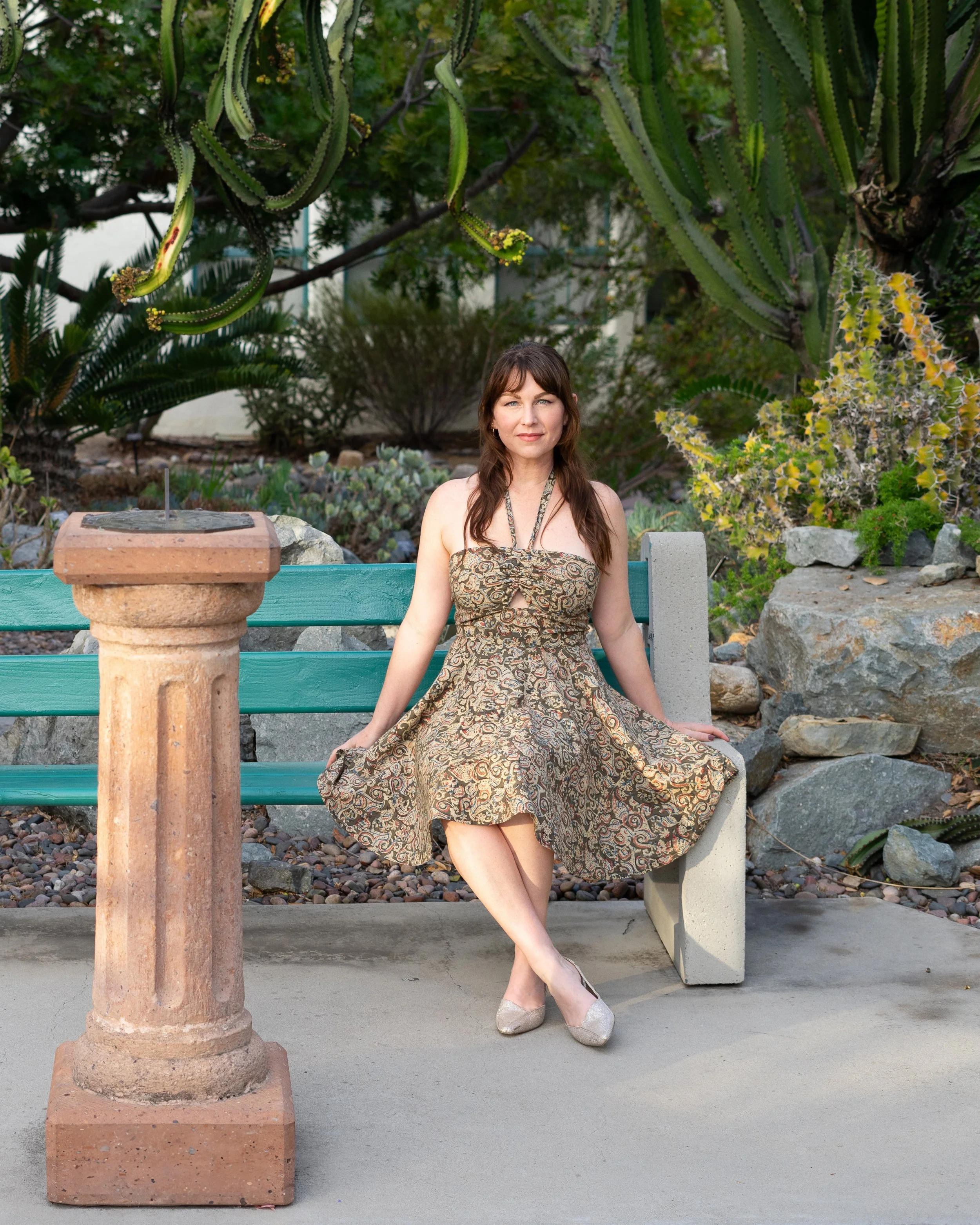
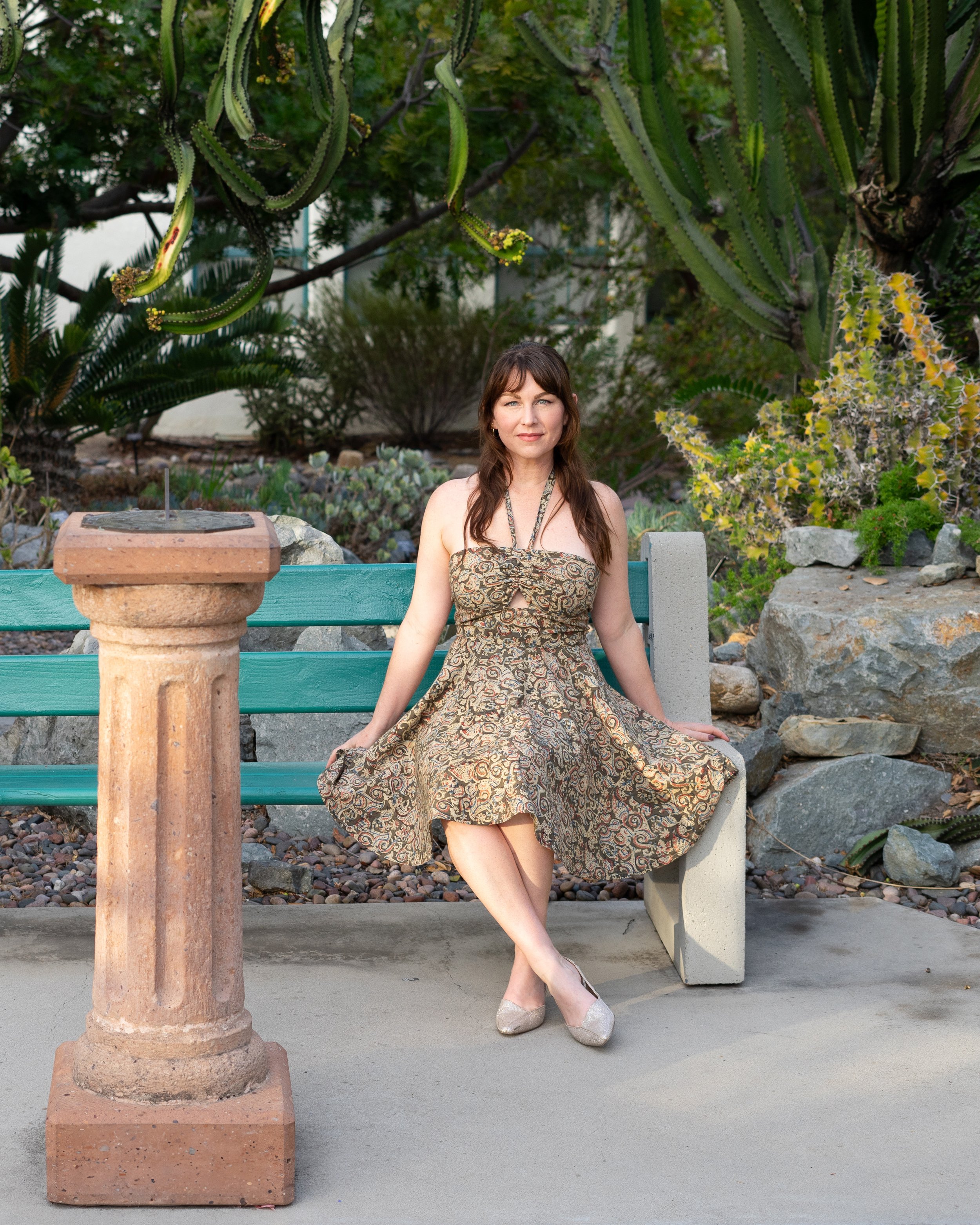
One of the best parts of sewing your own clothes is being able to identify and bring to life silhouettes that fit your body and personal style. The McCalls 7954, a mix-and-match pattern, allowed me to combine three of my favorites: a circle skirt (option 4) with and fitted bodice and bandeau halter neckline (option 1). Although it was a challenging make (oh, those pesky invisible zippers!), I couldn't be more pleased with the final product. It's a dress that's so very me... not an easy feat for someone with strong sartorial preferences.
Why I love this silhouette
Like most people, my body has changed over time (oh hey, motherhood and aging). But one thing that's remained consistent is that I have a large bust—fluctuating between a DD and F cup—and narrow rib cage, which makes it hard to find tops that fit snugly while also providing enough coverage. Bandeau-style tops work for me: they help minimize my bust and create a more proportional silhouette, especially when combined with a flared circle skirt.
Why I chose Merchant and Mills Indian Cotton
When I first started planning this dress, I was thinking silk or satin viscose... something shiny and glamorous and decadent. But I also had to be true to my personal style, and over the years I've realized I'm a "casual elegance" kind of gal. that means I like to dress down ultra-feminine silhouettes with simpler fabrics like cotton or linen (Ulla Johnson is a huge source of inspiration on that front!). So for this dress, I chose Merchant and Mills' Forest Haze Indian Block Print Cotton, an earthy, olive green floral print with coral, indigo, and cream accents. The pattern also called for underlining, so I used the Cloud9 Cirrus Solid in Sand for the bodice underlining and skirt lining, and self-lined the bodice with the primary fabric (that totals to three layers of fabric for the bodice, and two for the skirt). These combined to create a structured-yet-comfortable bodice and a lightweight, voluminous skirt that twirls like a dream.
Why I’ll absolutely make this dress again
I love this design, and I'm eager to try out the other bodice option that includes straps instead of a halter. I'll admit that the zipper installation threw me off, and the finishing isn't quite as tidy as I'd like. So the prospect of a second draft is exciting—I'm determined to perfect it this time around! Perhaps a Valentine's Day dress is in the cards, but until then I'm going to ring in the new year in this little number.

Feel Good Home Makeover for a San Diego Family in Need
I’ve been obsessed with interior design since I was a kid (more specifically, since I learned the word “theme” and how it could be applied to my bedroom). But until recently I’ve only worked with my own space. Then an opportunity came along through Pen + Napkin, a non-profit organization that furnishes and decorates the homes of families transitioning out of homelessness (see a previous Feel Good Makeover on Emily Henderson’s blog). I’ve been following their work for years, and this fall I finally signed up to be a volunteer designer for a family in San Diego! Alongside Pen + Napkin and a crew of amazing volunteers, we raised nearly $4000, purchased furniture, home goods, and decor, and transformed the home of a mother and her teenage son.
We completed the install and reveal this past weekend, and it turned out goooooood. Suzanna and her family were so excited to see to their new space and greet the holidays with a place to call home. A huge thank you to our amazing volunteers: Ara Farnam, Moira and Michael Palhegyi (aka mom and dad), Susan S. and her husband, and my ServiceNow colleagues Alaina Rasheed, Yasaman Hashemian, and Theresa Daudier!
Read on for some before and after pictures, details on how and where I sourced the furniture, and a video of Suzanna and her family’s reaction to the reveal.
Living Room: AfteR


Living Room: Before

Living room details:
I tried to find as much secondhand furniture and decor as I could (this was especially important on a limited budget). I was able to find the media console on Facebook Marketplace, donate a fe items of my own, and secure a beautiful donated rug that informed the color palette of the entire room.
Media console: Thrifted via Facebook Marketplace (originally Studio McGee for Target) | Rug: Donated by Victoria at Kennedy Contemporary | Coffee table: Thrifted via Facebook Marketplace | Side table and lamp: Donated by me (and given to me by my aunt many years ago) | Artwork: Some thrifted/ vintage, some from Target | Pillows: Target | Sofa: Amazon
Dining Room: After


Dining Room: Before

Dining Room Details
Dining table and chairs: Secondhand via Facebook Marketplace | Peel and stick grasscloth wallpaper: Spoonflower | Mirror: Hearth and Hand by Magnolia for Target | Sconces: Target
Suzanna’s Bedroom: After

Suzanna’s Bedroom: Before

The reveal!

The Crew:

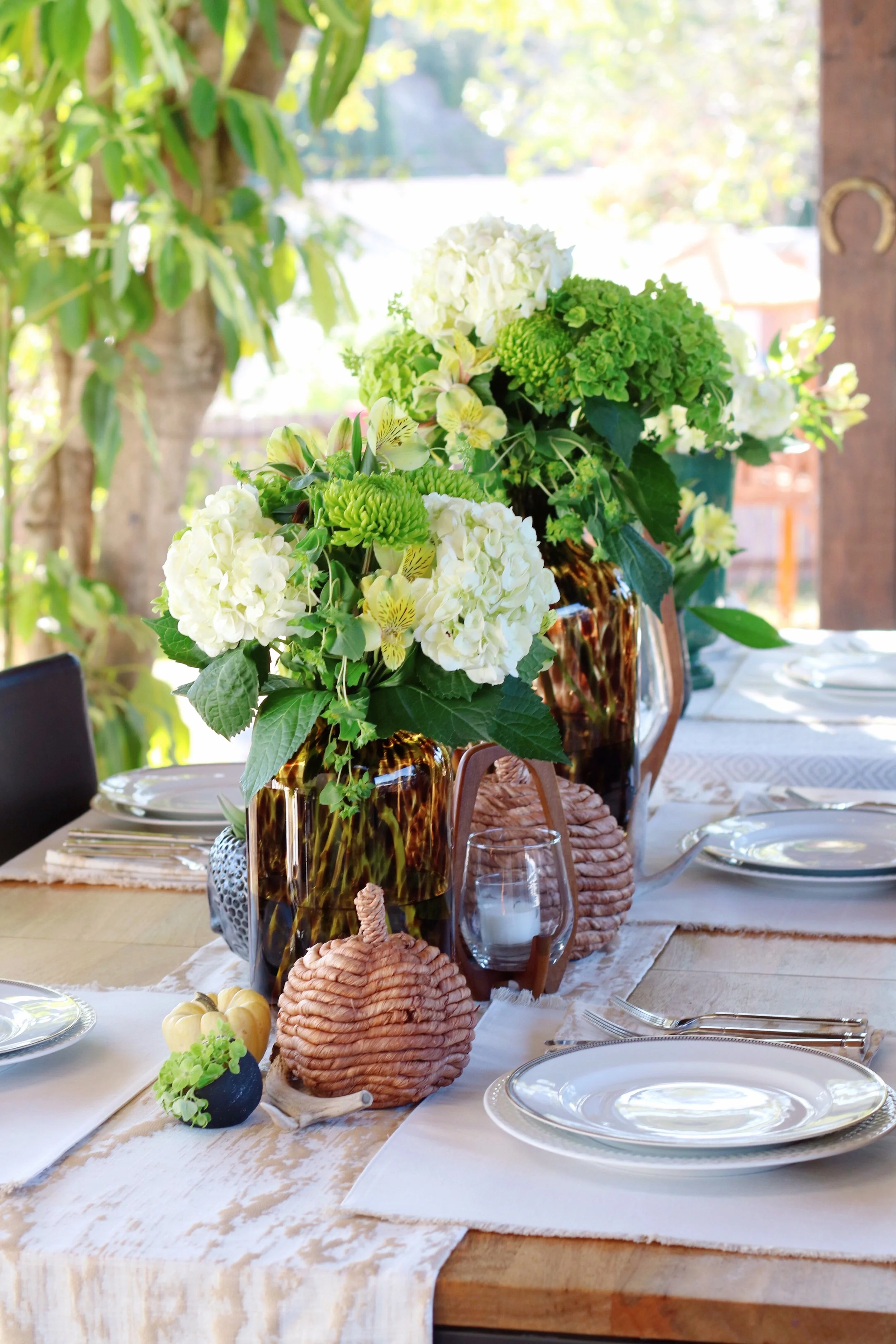
A Thanksgiving Table Inspired by Nature

San Diego doesn’t do fall in the traditional sense. The autumn leaves aren’t quite as brilliant (although they’re here), the nip in the air is more subtle, and the smokey smell that floats in around sundown is usually from someone’s barbeque, not a chimney. But when you grow up in a place “without seasons,” you get attuned to the subtle signals each one brings. Fall here means golden sunsets and yellow hills, moss growing on granite near the local creek, and a faint scent of pinion (possibly my favorite smell in the world). It means rock collecting and bonfires on the beach. I guess that’s my version of pumpkin spice, and it’s damn cozy.

We hosted Thanksgiving this year at our (relatively) new house, and I wanted to create a tablescape that captured autumn in San Diego. That meant an earthy palette of greens, soft yellows, wood accents, mineral textures, and touches of gold. I bought several bunches of hydrangeas and mums (and a few other flowers I can’t identify) from Traders Joe’s and arranged them in tortoise-finished vases from West Elm (along with a few other containers I had around the house). The flatware is a vintage 1930’s Bavarian china set that my mom found secondhand (thanks Mom!), and the gold bark-textured napkins and table runner are also from West Elm. The rest of the ‘scape includes souvenirs from hikes and flea markets: rocks, bits of moss, rattan pumpkins, and some antlers for good measure.


For appetizers, we embraced a more lively palette with persimmons, blood oranges, apples, blackberries, cranberries, mandarin oranges, walnuts, dates, and kiwi. Some local honeycomb and brie topped it off, along with mint and rose petal garnishes. It was all too pretty not to document—as was the company, of course!



Isolation Journals Day 13: Try Again
Today's Isolation Journal prompt, by Georgia Clark, invites us to reflect on a meaningful new beginning. After my miscarriage, I started to doubt whether I wanted to go through the pain of starting a new pregnancy and the risk it entailed. This story is about the day that doubt disappeared.

Early 2016, somewhere between San Francisco and Silicon Valley.
Smudged mascara on the way to work, per usual. Why do I bother?
The salt leaves taut patches on my skin, and they pulse from the sun and the music and the rolling of the freeway underneath me.
When our little snap pea, our almost-baby's heart stopped beating, I wondered for a minute if it was for best. Because she would surely be like me. Full of too many feelings and susceptible to everything.
Upset by odd smells and shifts in light. A deep pang in her guts when the music swells, wanting to turn it off or surrender. To be in it. Drink the whole fucking ocean.
Like me, she’ll be emotionally porous. A real mess.
…
But then the traffic halts and I am stuck, for a moment, suspended on the 280. Staring out at the center divider, where a disemboweled cassette tape is tangled and dancing in the weeds. One of so many little mental polaroids that can never be replicated or shared; they are mine. Only mine.
I don’t want to deny another being a chance to feel all of this. All of the sadness, all of the splendor. To take little snapshots and dive into the music and reel from the weight of it all.
Isolation Journals Day 9: Bounty
I’m diving into Suleika Jaouad’s Isolation Journals and writing my heart out. Today’s prompt: Choose a line from a book—you can grab the nearest one and flip it open to a random page, or pick an old favorite you’ve memorized by heart. Whatever grabs your attention; whatever intrigues. Use it as the opening sentence for today’s journal entry, and let the words flow from there.

Here we don’t die, we shop.
But it wasn’t always that way. Moving from one 500-square-foot apartment to another for most of my adult life meant that I was usually trying to get rid of stuff, or at least keep it at bay. In the years we lived in San Francisco, Jon and I rarely had more than a week’s worth of food (or toilet paper) in our apartment. We lived in a community that valorized minimalism—out of necessity, yes, but also with a certain sense of moral superiority. It wasn’t things, but experiences that mattered! Sure, I dabbled in that Kool-Aid.
But becoming a mother unearthed an instinct I didn’t know I had: the urge to hoard.
A maternal switch flipped, and quickly the world became ugly and scary and full of threats. I transformed from someone who laughed about eating dirt as a kid into a bona fide germophobe, a connoisseur of cleaning supplies. My perception shifted: our countertops became a breeding ground for bacteria, mold, and yet-to-be-discovered diseases. Those who coughed in public were a menace. Parks, grocery stores, BART trains? Cesspools, all of them.
“Experiences” were largely frightening. Instead, I shopped.
I bought bleach, a bottle sanitizing machine, and backup breast pump equipment (just in case the originals happened to mildew). When I went back to work and sent Avery to daycare for eight hours a day, I controlled what I could: her food. Only organic fruits and veggies in individually-packaged jars and tubes—better that than risk foodborne illness from improperly stored leftovers (what was the FDA-recommended chilling temperature? 40 degrees?). Grocery shopping became my Sunday service, a ritual exchange that reinforced my status as caregiver and co-breadwinner: I make money so that I can buy things so that the child does not die. Once home, the process of unpacking, inventorying, and carefully shelving each purchase triggered a soothing, subconscious mantra: we have enough, we’re going to be ok.
Does all of this sound a little nuts? Perhaps it was. I grew up in a less-than-stable financial environment. I (clearly) suffered from postpartum anxiety. Not every mother goes through this, and it certainly wasn’t what I expected. In fact this was far from the cloth diapering, homemade baby food-ing, blissed out mother I’d imagined I would be. I was the highest-strung version of myself, and I hated it.
But at the time it felt completely necessary.
So in the midst of this crushing global crisis, I’m trying to refrain from judgement. Did you buy a little too much toilet paper? A few too many Easter hams? Two months ago, that was odd. Today, it’s human. This triggering event reveals that we’re all weird, scared, primordial little hoarders, trying to stockpile for the winter, save our spawn from death and disease, and maintain some sense of order. Some sense of having enough.
…
I got over my postpartum neurosis—after witnessing Avery eat a gummy worm off the bottom of another child’s shoe and not die, among other reassuring vignettes. And we will get past this too. Do what you can for others; but also, let yourself be. Be weird, be scared, squirrel your nuts away. And eventually, we can celebrate another bounty (you know, the stuff that’s better than stuff): each other’s company.
“Here we don’t die, we shop.”
How I Made Avery's Yellow Fairy Costume


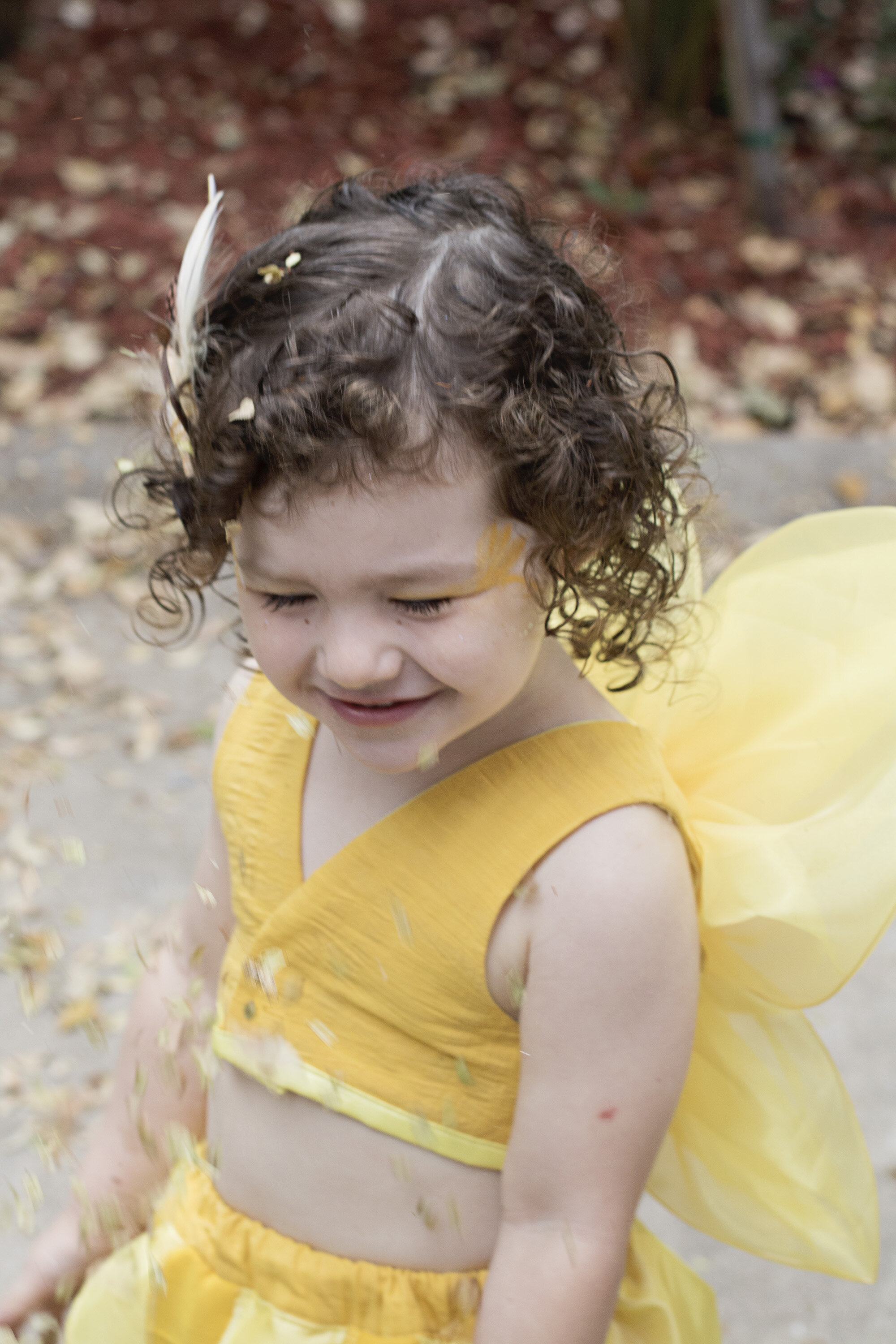
Ok, wrong season to be blogging about a Halloween costume. But we’ve been busy, winter flew by, and somehow it’s nearly spring. And what’s more springy than a butter-yellow, nature-inspired fairy costume? Bam! Off-season blog post justified.
Since she learned to talk, Avery made it clear that she was all about yellow, so it made sense that her third Halloween costume would be an variation on that theme. So I raided my stash for all of the yellow remnants I could find. Fortunately I bought a lot of yellow fabric back in my hoarding days, including a beautiful piece of marigold silk from The Fabric Store, some leftover cotton gauze from my Stevie blouse, and some scraps I had leftover from other projects. I only had to purchase some additional fabric for the wings, which required something stiff and gauzy. Here’s a recap of my process:
Inventory, plan, sketch
As I mentioned above, I took stock of the fabric I already had to avoid buying too much more. I then sketched out plans for the skirt (self-drafted and fairly simple) and determined that I would need to purchase a pattern for the top. I decided to attach the wings to the top/ vest so that I wouldn’t have to add additional straps (which I thought would disrupt the lines and look a little funky), so had to create a sturdy, heavier top to accommodate them.
I took a little trip to Joann’s and settled on Simplicity 1786 — a simple vest that I could easily alter to include Velcro closure. For the wings, I planned to use a technique I learned making costumes in high school theater: basically, a big wad of gauzy synthetic shaped into four wing-shaped bows and supported by light jewelry wire.

Prepare and Cut the Fabric
For the skirt, I used cardstock to create a simple template, and cut out about fifteen “petals,” alternating between leftover rayon and marigold silk that I found at The Fabric Store a few years back. I wanted the rayon to match the silk a bit more closely, so I used turmeric to dye both fabrics and get them a little closer in tone. I’m not a natural dye expert by any stretch, but I found that turmeric tea + extra powdered turmeric + hot water, soaked for about 15 minutes and rinsed, worked well. I used a serger to finish each petal before dying them, so the thread ended up matching, too.
I decided to line the vest instead of using bias tape. This of course made the process more complicated and required cutting double pieces (cotton gauze and rayon), but it made the final piece sturdy enough to balance the wings that would be attached later.


Sew and ASSEMBLE
The vest was fairly easy to assemble, but the skirt took a little more finessing. After attaching each petal to the waste band, I folded and inserted the elastic, but boy howdy that took about 45 minutes (I despise inserting elastic—I still haven’t figured out how to do it efficiently).
I’m not sure how to describe the wing-making process (I probably should have made a video), but basically for each wing I folded a large rectangle of fabric, inserted a string of medium-weight jewelry wire at the fold, then molded it into a leaf shape cinched at the base. Once all four were complete, I attached them at the back center of the vest, covered with a small circle of the cotton gauze, then finished with marigold embroidery thread (see pictures below).
I used fabric scraps, naturally molted feathers, and a single seashell to created the hairpiece, which I held together with embroidery thread and a hot glue gun.
All in all, it turned out pretty epic, and Avery was the happiest (and possibly only) little yellow fairy in town.


Thrifted Kids: Avery’s Secondhand Disneyland Outfit

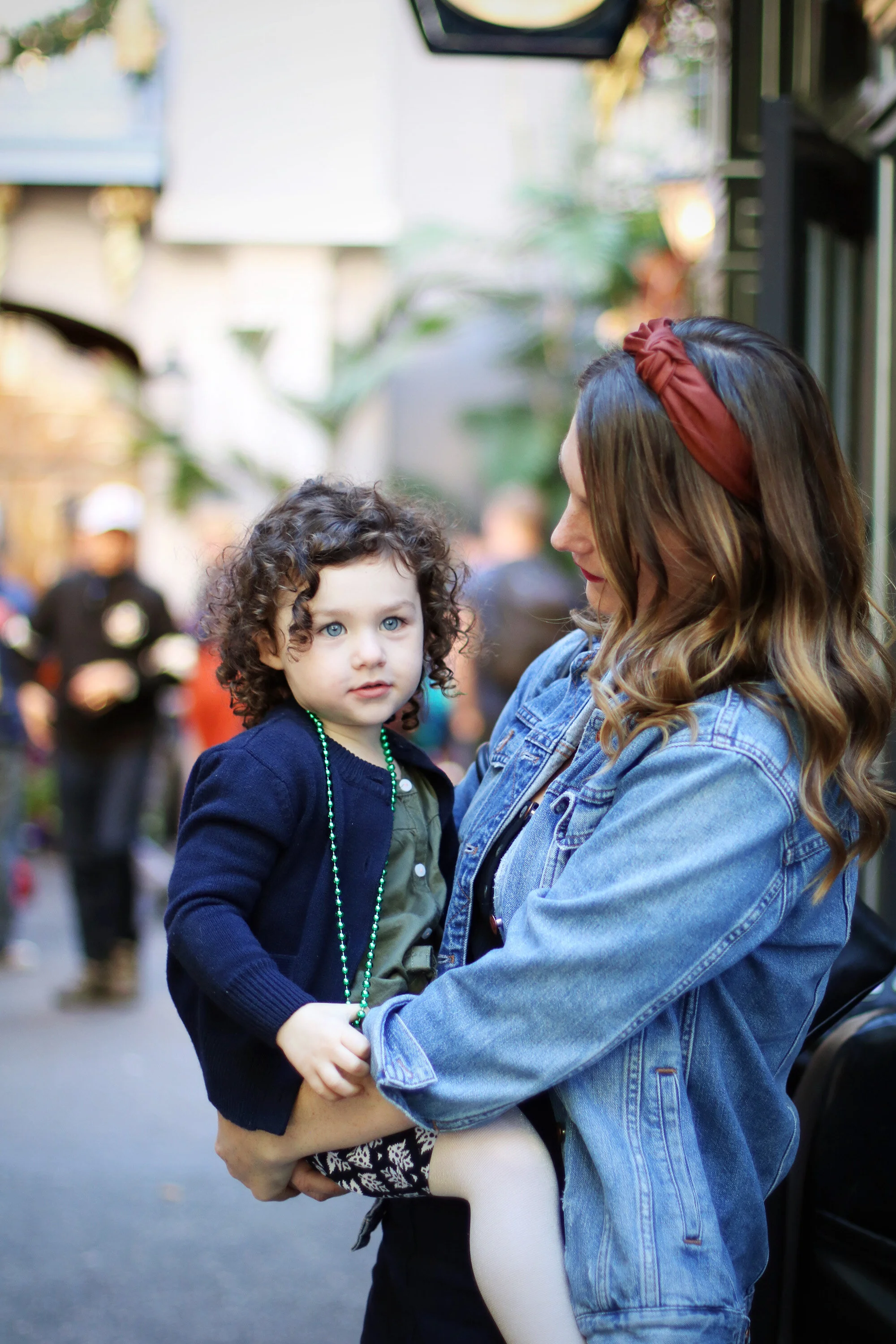
It’s hard to believe that Avery is three – but I’ll probably say that on every birthday until she’s 30. We took her on her fist Disneyland trip and boy howdy, was her little toddler mind blown. It was pretty cute to see her wide-eyed wonder at the whole scene, from the madness of Main Street to the quiet details that Disney does so well (“Does a rabbit live behind that door?”). Her only complaint was that the rocket ship ride was way too short (I, on the other hand, held her in a death grip the whole time). And I almost lost it watching her dance with daddy to a jazz band in New Orleans Square: hair flying everywhere, big grin on her face, feeling that brass…and clad in a secondhand outfit, naturally.
Happy birthday, baby girl. You’ve turned me into a total sap.
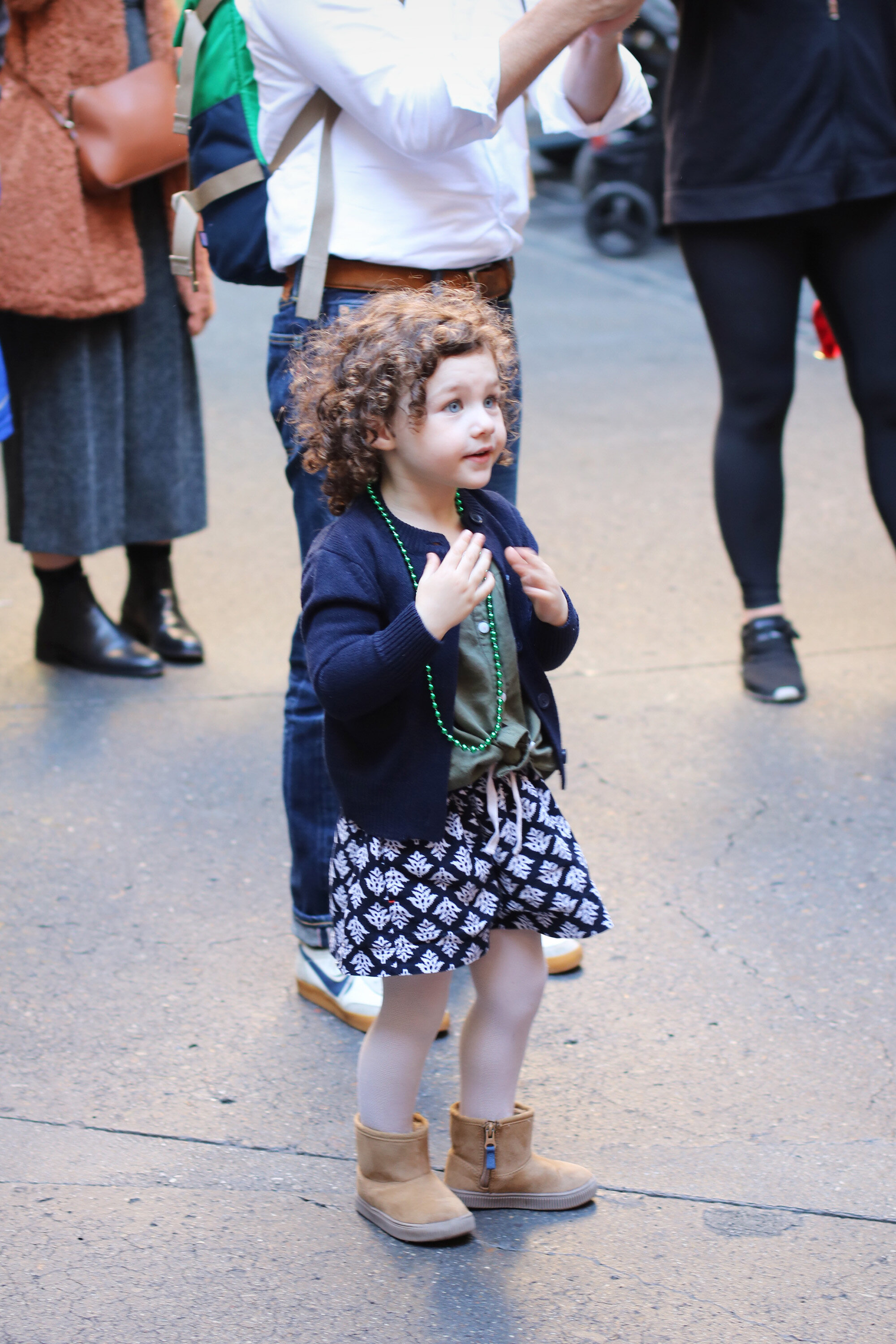
Skirt, top, and sweater from thredUP, which I highly recommend for affordable seconding kids clothing in great condition.


Fair Trade, Sustainable Black Friday and Cyber Monday Sales
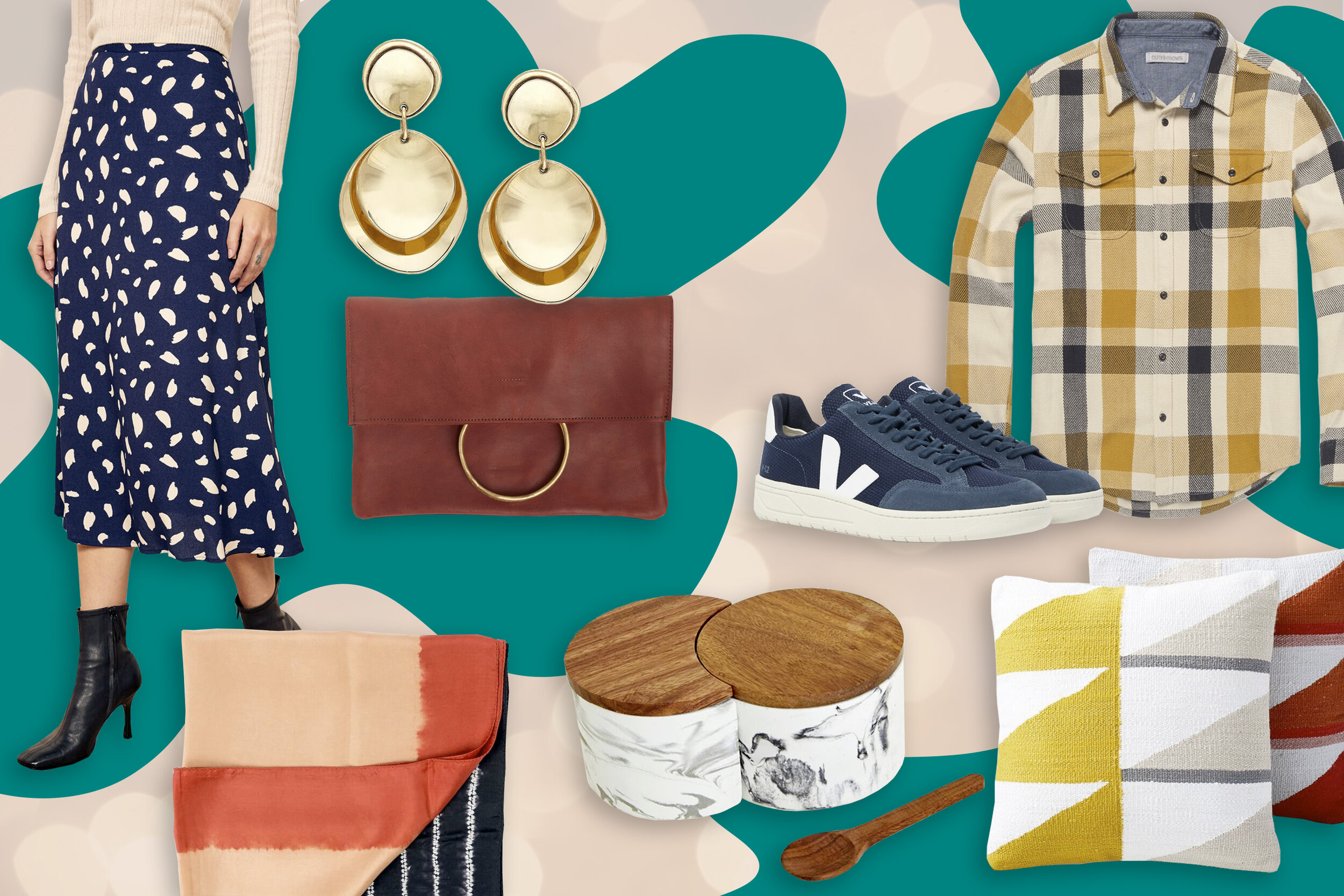
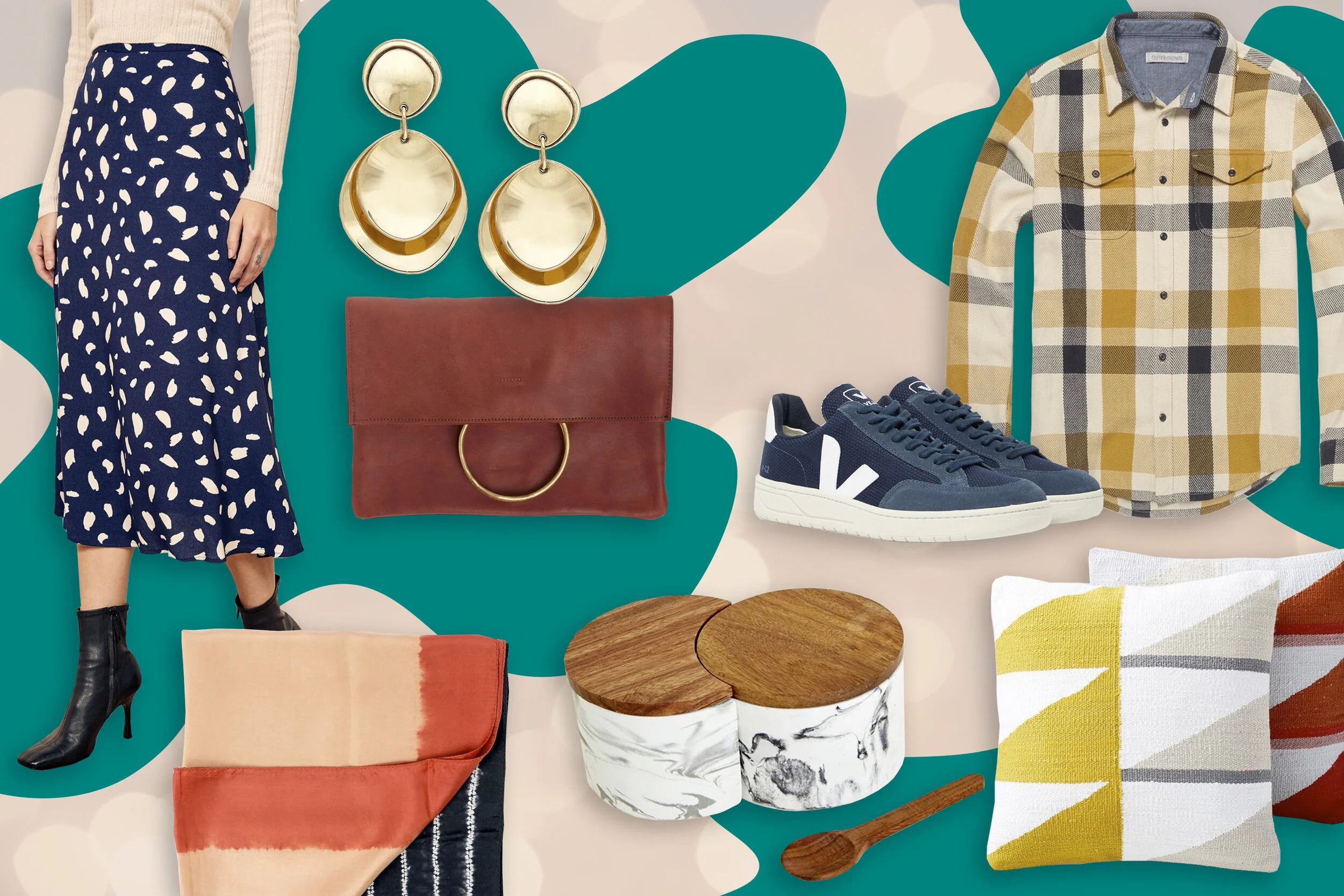
Black Friday has taken a lot of backlash in recent years—and for good reason. The fallout of discount culture, including low-quality clothing, suffering U.S. small businesses, environmental degradation, and horrific working conditions, is enough reason to stay home during this weekend’s shopping frenzy. But as shoppers find themselves focusing on buying fewer, better things, they’re also faced with costs that truly reflect the materials and labor that go into them. And that’s simply not something everyone can swing.
With that in mind, I have zero issue with folks taking advantage of Black Friday sales to invest things they truly need from companies they truly trust. This Black Friday and Cuber Monday, I urge you to ask yourself these questions, then choose from these ethical, sustainable options:

Amour Vert
Reformation

M.M.LaFleur
Clothing
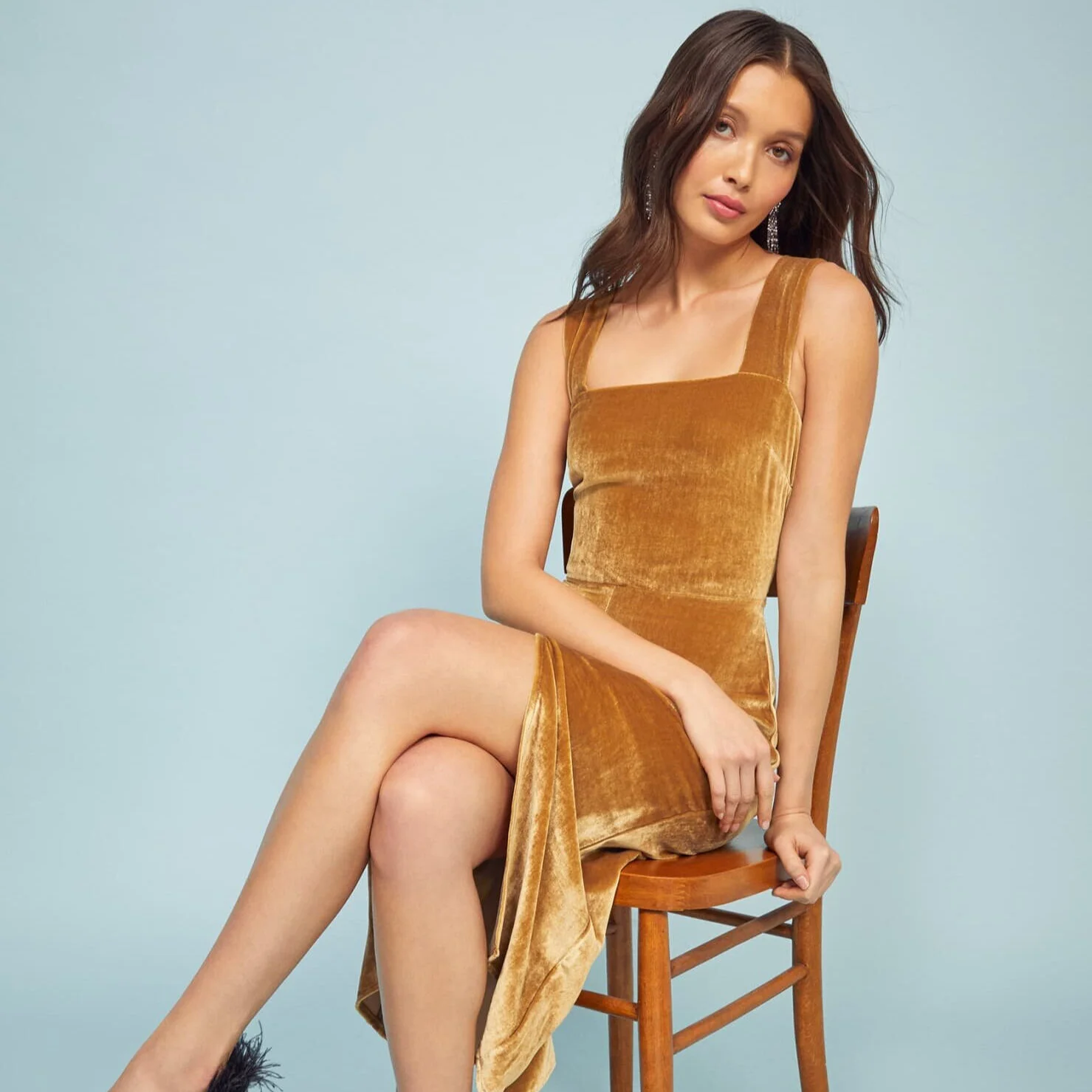
Reformation - 30% off everything through December 2
Amour Vert - 20% off everything with through December 2 with code: GREENFRIDAYSALE
M.M. LaFleur - 65% discount on select overstock items through December 3
Christy Dawn - 30% off all clothing with code THANKYOU30
Outerknown - 30% off site-wide on Black Friday. Bonus: for every order placed during the sale, Outerknown will donate a meal to the Los Angeles Regional Food Bank (in addition to the 50,000 they’ve already covered).
PACT Apparel - up to 70% off
People Tree - 30% off everything through December 2
Nordstrom - up to 50% off. Look for ethical brands like Reformation, Eileen Fisher, and Alternative.

Soko

Parker Clay
Veja
Shoes, Jewelry, and Accessories
Nisolo - Select items on sale, plus 20% off your sitewide purchase with code EXTRA20
Parker Clay - 25% off sitewide and 30% off orders over $250, plus free shipping for U.S. orders through December 1
Mejuri - Their only sale all year! 10% off one item, 15% off two, 20% off three through December 2
Soko - 25% off everything with code GIVESOKO through December 3
31 Bits - 30% of entire jewelry and bags purchase under $200 with code FRIDAY30, or 40% off your entire jewelry and bags purchase of $200 or more with code FRIDAY40
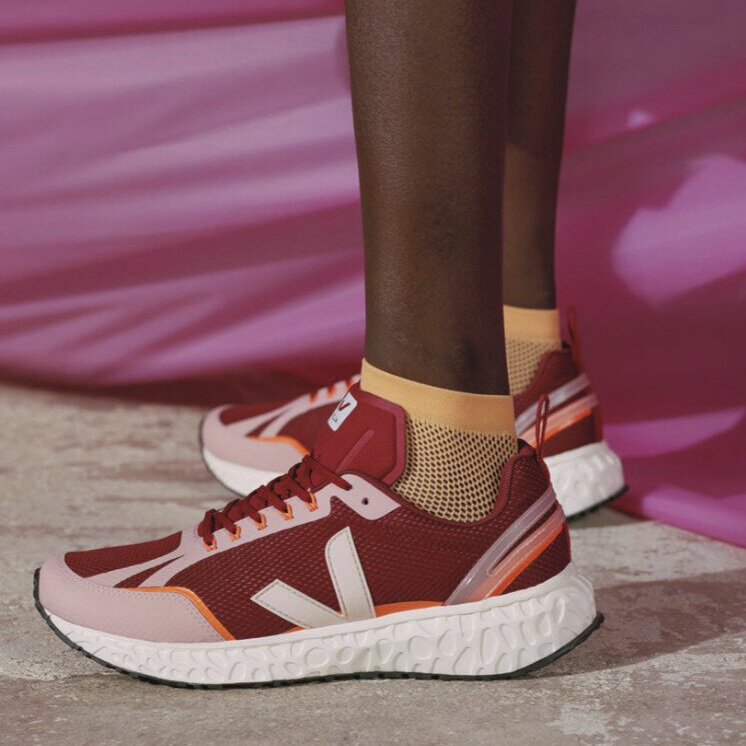
Veja - 30% off on Net-A-Porter
Timberland - 30% off select styles

West Elm Fair Trade

Made TRade

Avocado Green Mattress
Furniture and Home Goods
West Elm - Everything’s on sale! Shop with code SAVEMORE and invest in Fair Trade Certified furniture
Made Trade - This one’s not a sale, but it’s worth pointing out that Made Trade will donate 10% of Black Friday sales to help preserve 368,000 acres of virgin Amazon rainforest in Pará, Brazil
The Little Market - 25% off overstock items
Coyuchi - 40% four top sellers (Friday only); 50% when you spend $250, $100 off when you spend $500, $200 off when you spend $800
Avocado - $200 savings on any Avocado Green Mattress, Avocado Vegan Mattress, or new Luxury Organic Crib Mattress using the code MERRY200 through December 9
Disclosure: This post is not sponsored, but I do make commission on certain brands through Skimlinks. Thanks for supporting Birds of a Thread!
Like what you read? Give it a share!


I refuse to shop my feelings, dammit!

It’s a week out from Thanksgiving, and I’m a mess. I’ve gained weight, and all of my clothes tug and poke and dig as incessant reminders. I sit at a desk, spend an hour and a half in traffic each day, and have basically abandoned any semblance of an exercise schedule. I tried doing yoga the other night with Avery until she insisted that we use the mats to make a fort instead. I tried going keto for a week until it left me so exhausted I could barely stand.
After nearly two decades working towards body positivity, I sense it dissolving. Now it just feels like one more thing I’m failing at.
And in two days, we’re flying to Brooklyn—where all the stylish people live. All the cool, young people whose clothes aren’t too tight because it’s all made of billowy, plant-dyed linen anyway. All the cool-young people who probably work at standing desks or pottery studios and practice mindfulness and accept their bodies and are radically self-loving. And here I am, a 37-year old mom with a mom bod, worrying way too much about what other people think of me. Making me exponentially less woke, less cool, and more prone to cognitive distortions.
And somehow I’ve convinced myself that the solution to this overwhelming sense of inadequacy is… shopping.
Oh, how I want to shop!
I’ve gone to the mall almost every day this week during my lunch break. Feeling the holiday shopping frenzy around me, getting a little buzz from my La Columbe cold brew, searching for something to quell this feeling. Longing for something new, understated, loose-fitting, and effortless. An Ace and Jig dress, or an oversized blazer, or hell, even a slightly larger pair of mom jeans. Lipstick? I’ll take lipstick. Essential oils? Yeah, that’ll definitely do it. I hear lavender is great for existential dread.
Each store (yes, even the sustainable one) beckons with its promise of a slightly better, slightly newer me. The me I want to show the world: the together one, with great style, shiny hair, and youthful skin (she’s 37? No! What’s her secret?). The me that has never existed.
But in spite of all this temptation, I’ve held back. Because this little voice inside me (the smart one) knows I can’t shop my way out of this. That tiny, deeply rational part of me knows that the way I feel right now is so normal, so much a part of being a working parent—any kind of parent, really. And while I’m obviously not against shopping, I know that using it to distract myself from stress is only making it worse. That what I need, while it can’t be bought, is within my reach. I just need enough quiet to find it.
So once again I’m curbing my consumer impulse. Packing my bags for the east coast with the same old trusty, slightly-snugger wardrobe. Taking a deep breath and trying to embrace the ebb and flow of my body, my emotions, and my spirit.
And maybe once we’ve made it, I’ll take a little trip to Mood.
Sustainable Gifts for People Who Sew, Knit, and Craft
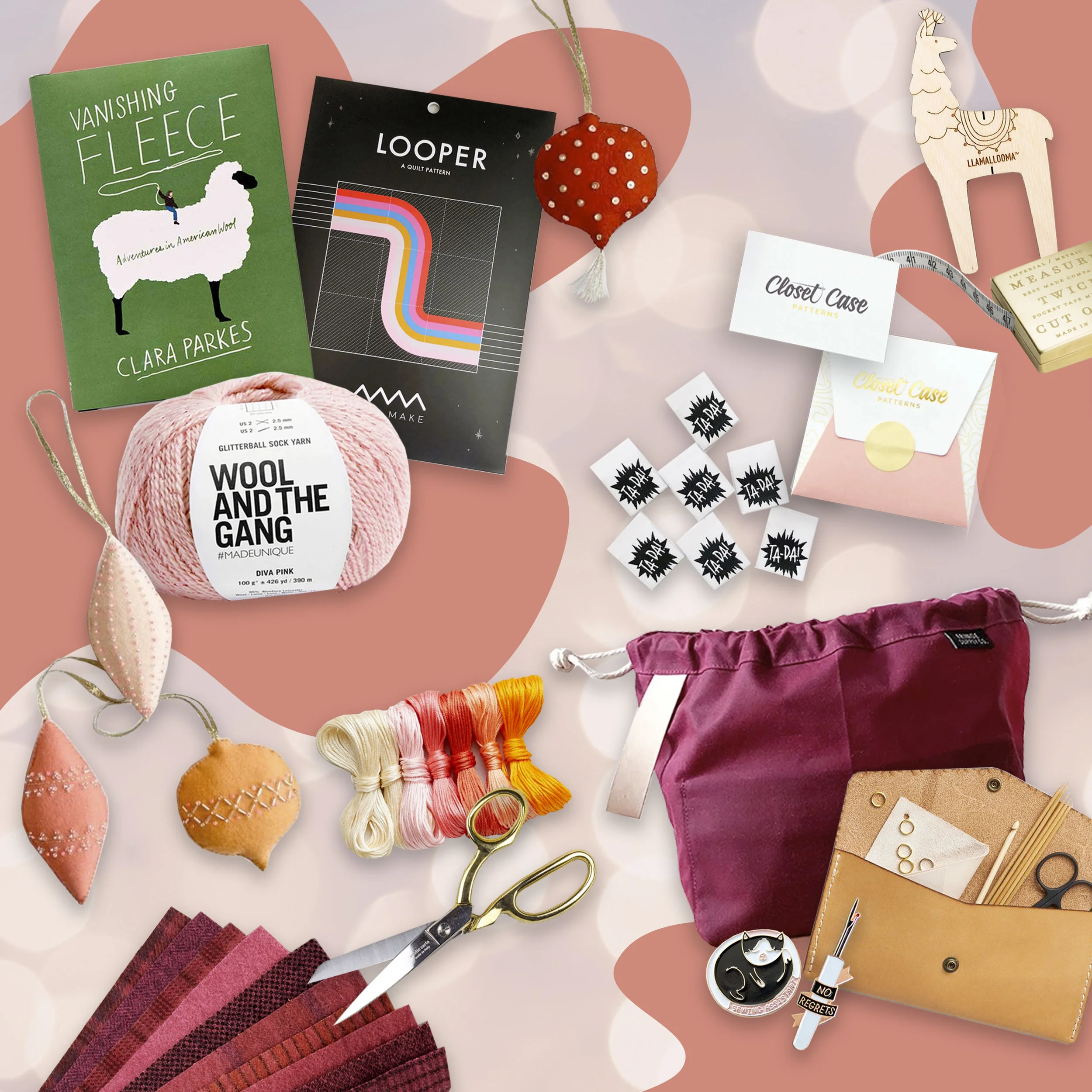
This list of list slow-made, sustainable, indie-focused holiday picks is sure to get your crafty friend or loved one thinking, organizing, and creating.

It’s no secret that I love to make stuff and that I’m a giant sentimental nerd when it comes to the holidays (having a kid has only exacerbated the problem). But I do try to be conscientious about the impact my crafting and holiday-ing has on people and the planet. As the sewing community becomes more and more focused on sustainability, it’s likely that the maker in your life has similar concerns. So I put this list slow-made, sustainable, indie-focused holiday picks that are sure to get your crafty friend or loved one thinking, organizing, and creating.

Waxed canvas Field Bag by Fringe Supply Co.
$77.90 at A Verb for Keeping Warm
This sturdy durable bag features lots of storage, a vegetable-tanned leather carry loop, and cotton drawstring. Made in the USA from sturdy waxed cotton canvas, it’s a great solution for knitters and other makers frequently on the go.

Vanishing Fleece: Adventures in American Wool
$17.99 at Amazon
In her latest book, knitter and writer Clara Parks details her adventures transforming a 676-pound bale of fleece into saleable yarn, and the people and vanishing industry she discovered along the way. Great for the knitter in your life — or anyone who loves a good nonfiction read.
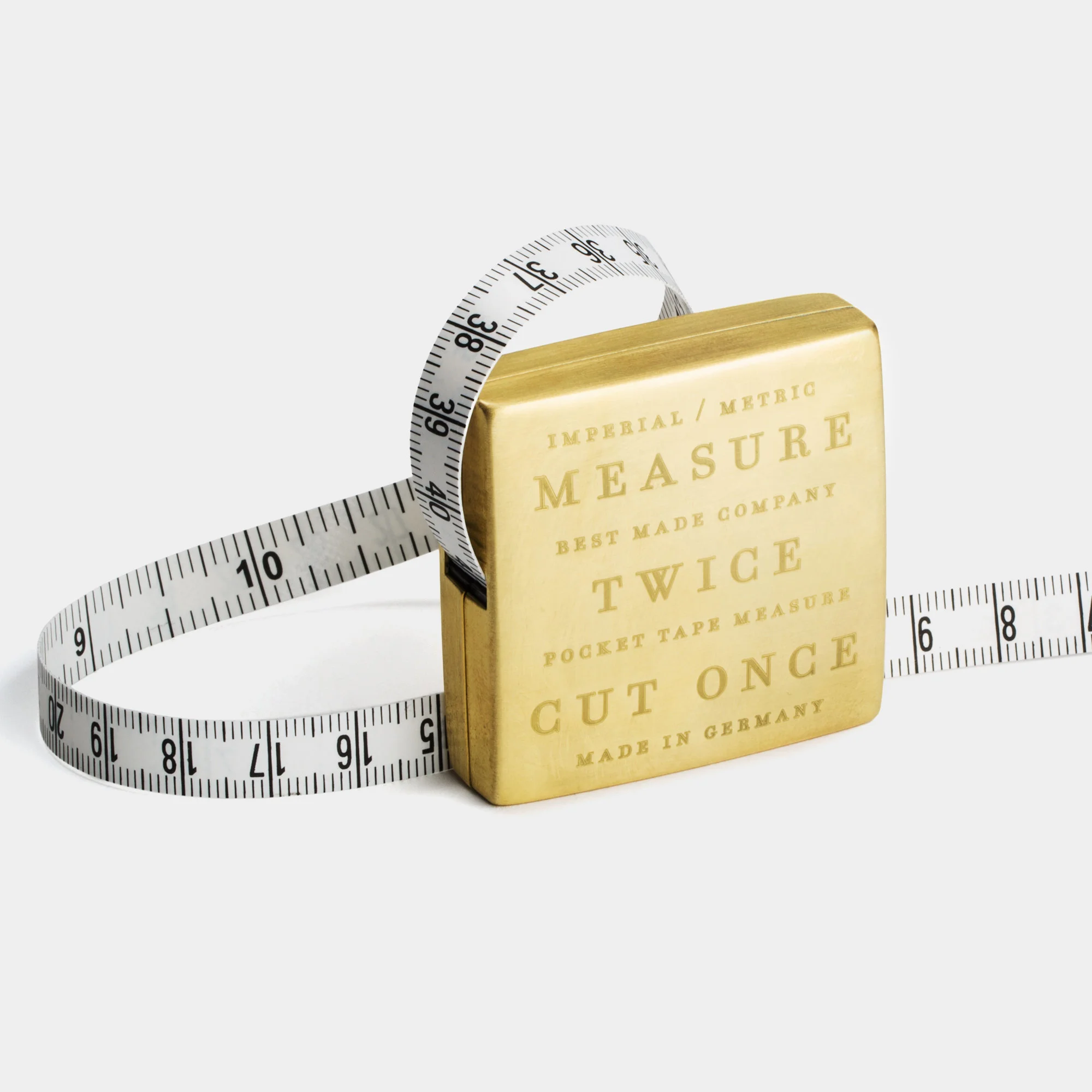
“Measure Twice, Cut Once” Solid Brass Measuring Tape
$58 from Best Made Co.
This is more of a “for the maker who has everything” gift because —let’s be honest— $58 is a lot to spend on a tape measure. But its durable, solid brass case (made in Germany) and timeless message is sure to make this one a hit.

studio carta Dressmaker Shears
$52 at Studio Carta
These dressmaker shears are functional and pretty as heck. Crafted in Italy with hard-tempered steel, sharp serrated blades and a 24-karat gold-plated handle, these shears are an heirloom in their own right.
Note: If you’re looking for a less expensive option, I always recommend the Japanese-made Kai shears. They really are the perfect scissors.

Wool and the Gang Glitterball Sock Yarn
$20 at Wool and the Gang
In general, sparkles aren’t super sustainable. But this British sourced and spun yarn is a mix of 100% naturally renewable wool and lurex offers a good compromise. Produced by eco-conscious suppliers, this extra soft wool has a subtle hint of holiday glitz.

Fringe leather tool pouch by Fringe Supply Co.
$64 at Fringe Supply Co.
Handmade in Denver, Colorado, this simple leather envelope pouch holds tools, spare needles, and all other wayward supplies. The pouch features undyed, waxed cotton stitching, an antiqued-brass snap, and natural vegetable-tanned leather.
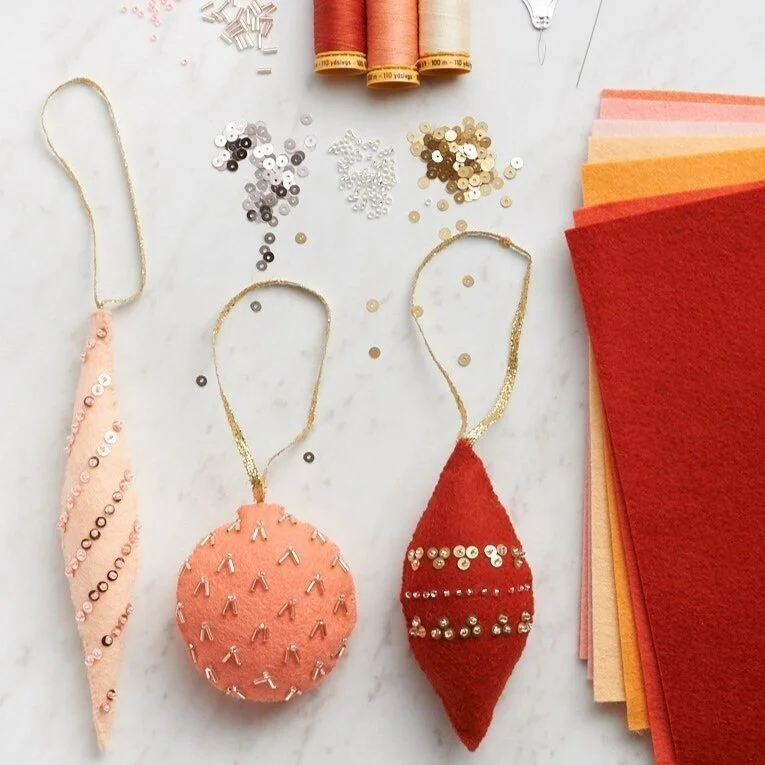
Purl Soho Heirloom Wool Ornament Kit
$98 at Purl Soho
My grandmother made several sets of felt Christmas ornaments that have been distributed among her twelve (!) children—and children’s children—for years. I managed to acquire a couple of them and they’re one of the best parts of trimming the tree. Use this kit to make ornaments for your loved ones, or give the whole kit to a crafty someone in your life! The kit includes 100% wool felt pieces, cotton thread, needles, beads, sequins, and everything else you need to complete the project.
Purl Soho also sells beautiful felted wool bundles — great for stuffing those stockings!

Miss Make Looper Quilt Pattern
$16 at Miss Make
I am in love/ awe of this recent quilt pattern release by Devon Iott of Miss Make. I’m not a super skilled quilter, but if I was I would absolutely put this pattern on my list. The Looper includes modular blocks that can be rearranged in any direction to create a continuous design. A perfectly modern, perfectly accessibly, perfectly perfect pattern.

Llamallooma Pom-Pom Maker
$15 at Fancy Tiger Crafts
Know anyone obsessed with pom poms? Empower them to make their own with the the Llamallooma from Betz White. Made from baltic birch, the loom is easy to use and cute as all get out. Pair it with some US-grown yarn for the perfect stocking stuffer.

“Ta Da” Woven Labels by Kylie and the Machine
$8.50 at Fancy Tiger Crafts
Oeko-Tex certified in plastic-free recycled packaging, these labels let the sewist in your life do a little humble-bragging.
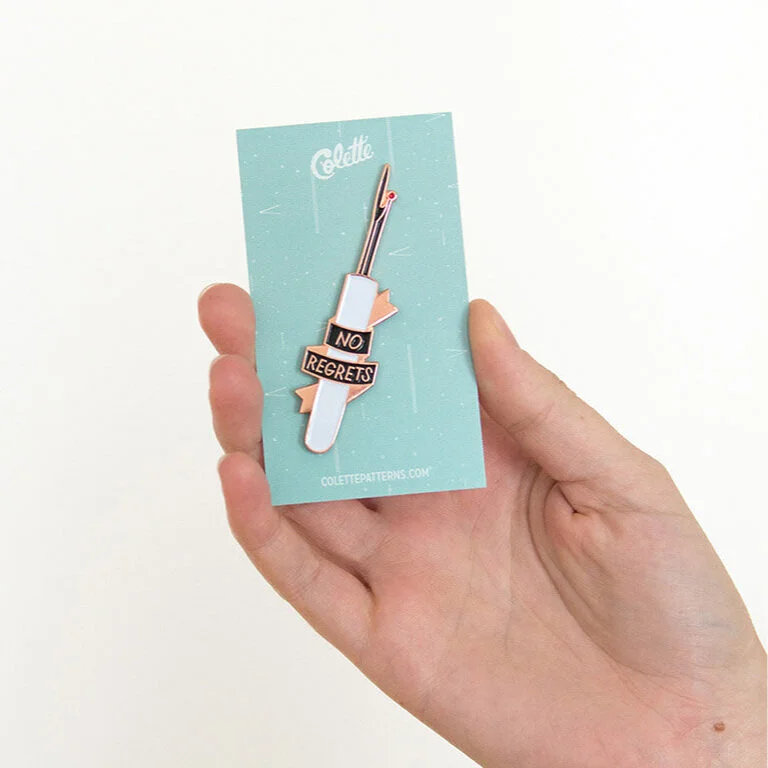
Colette Patterns Enamel Pins
$8 at Colette Patterns
These cute little sewing-themed pins make great stocking stuffers. Each pin features a beautiful rose gold finish.

Closet Case Patterns Gift Card
$25 increments at Close Case Patterns
You can never go wrong with a gift card, especially to one of the best indie pattern makers out there! This Closet Case Patterns gift cards are printed on beautiful rose and gold cardstock. Or purchase a digital version to curtail that carbon footprint.
Disclosure: This post is not sponsored, but I do make commission via Skimlinks. Thanks for supporting Birds of a Thread!
Like what you read? Give it a share!

Awkward Skirt to Fitted Top: A Fall Refashion


Holy moly, it’s been a while! During which time I’ve:
Moved to San Diego with Jon and the kiddo
Started a new role as a Communications Manager at a tech company
Contemplated whether or not to keep blogging at all (see: aforementioned cross-state move and new, demanding role)
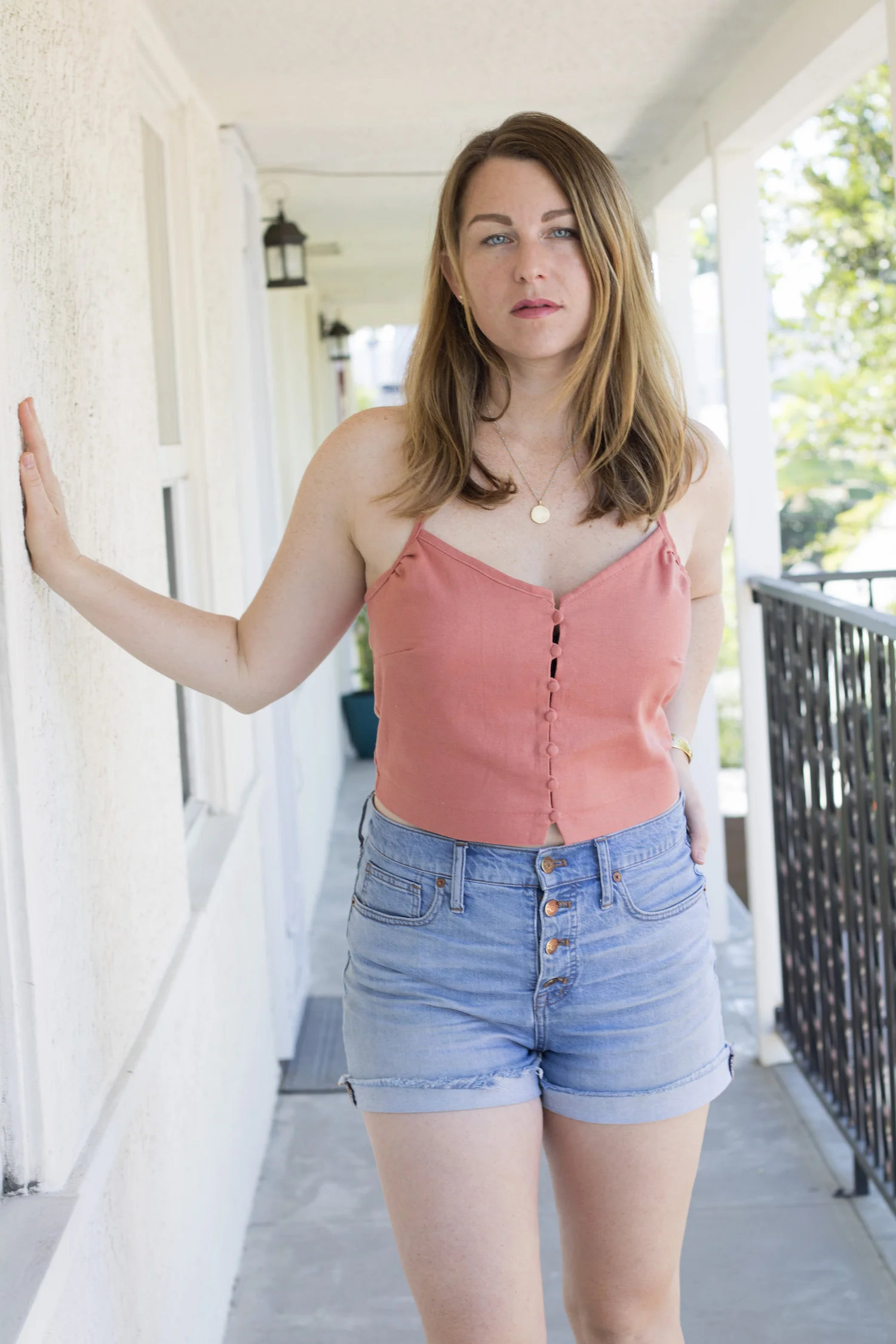
If you follow on Instagram, though, you’ll know that I’ve squeezed in a few sewing projects, including a recent refashion of a piece I’ve had sitting in my “don’t-get-rid-of-just-yet” pile. I bought this linen midi-length skirt at Madewell on impulse — I’d gained a few pounds, couldn’t fit into any of my work clothes, and was in a bit of a panic before starting my new job. Unfortunately I sized up a little too far, and the skirt was always too big and an awkward length (mid-calf, but not in a cute way).

I loved the texture, button loop closure, and color, so I finally decided to turn it into something wearable. Here’s a look into my process:
First, I unbuttoned the button closure, cut the skirt in half horizontally, and opened the whole thing up so I had a nice hunk of fabric to work with.
Then, I laid out the pattern pieces for a Mimi G Style pattern (Simplicity 8927), aligning the front closure with the skirt’s existing button closure. This took a bit of finessing, since the pattern was designed to self-line and included seam allowances and a tie-front feature.
Once I cut and assembled the bodice, it was about an inch too wide (partly because of the seam allowances and partly because patterns are almost always bigger than their sizing guide suggests). So I pinned it to fit and redid the side seams.


4. Even then, the bust was too big and billowed out at the armpits (not totally sure what happened here, but I suspect the linen stretched a bit). So I added in some pleats along the top of the bust line before finishing with bias tape that I made from leftover pieces of the fabric. I was running low on scraps at that point, so I made it a halter instead of attaching the straps to the back as the pattern was originally designed.

5. Because I used the existing skirt hem, there was no way to properly finish the side seams. So I added tiny patches to both sides, which I actually think adds charm and gives the top a well-loved feel.
This is probably my favorite refashion to date, and one that I’ve already worn out in the real world a few times (the true test!).

Avery's Surf-Inspired Nursery Includes Cork Wallpaper, Vintage Textiles, and Fair Trade Treasures

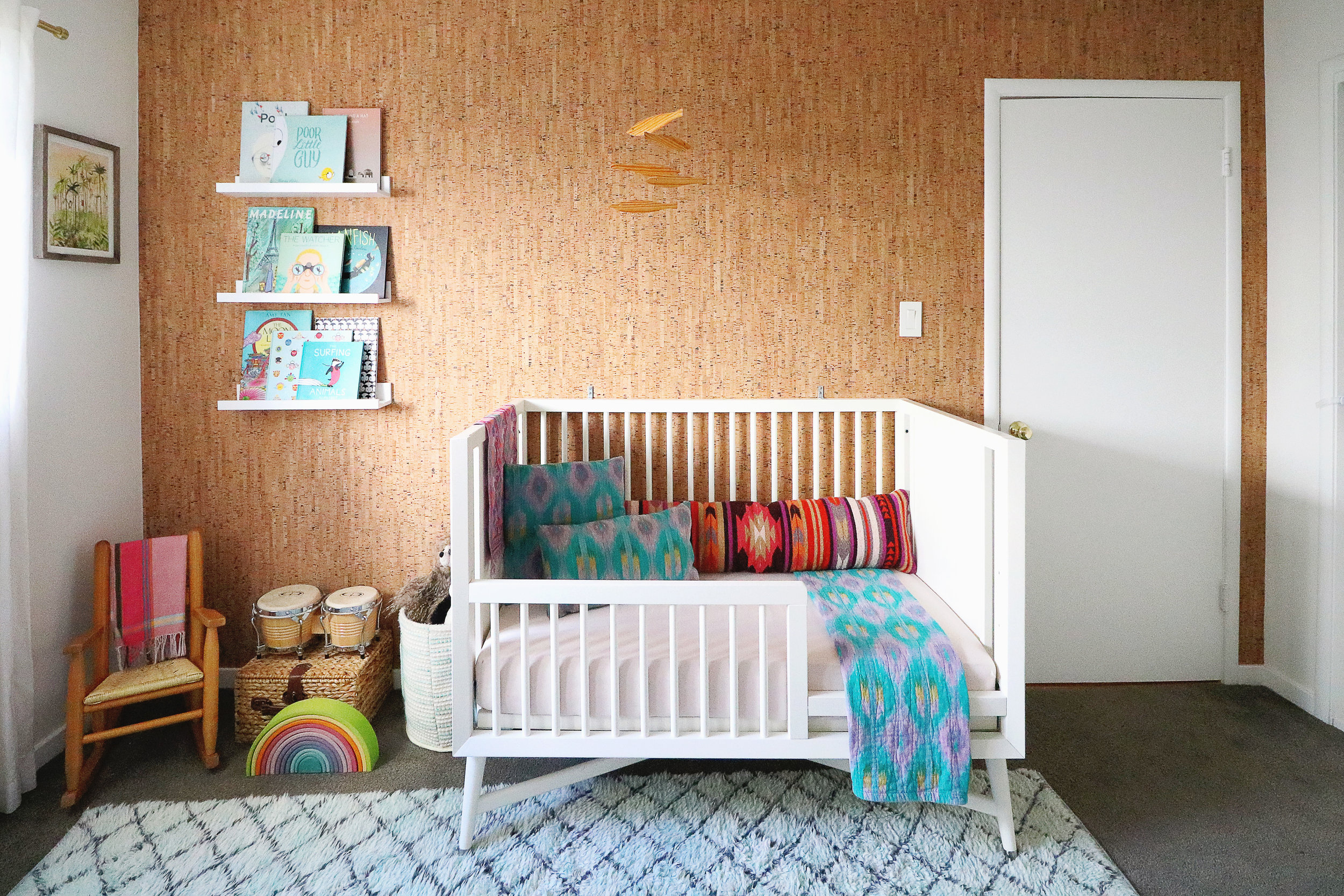
Now that Avery is nearly two-and-a-half, it’s high time I posted pictures of her nursery. I suspect Avery would balk at the idea of a nursery — because that’s for babies, and she has made it quite clear that she no longer falls into that category (Me: “I love you, my baby.”/ Avery: “I’m NOT a baby, I’m Avery!”). But for the purpose of this post, we’ll call it a nursery: the laid-back, surf-inspired nursery of my dreams.
When I first began planning this space, it was important to me to choose as many ethical options as possible while still being practical about cost. I started with furniture we already had, like the rattan side table handed down to me by my aunt, a carved wooden mirror, and various wicker baskets, and built out from there. We chose the West Elm Mid-Century dresser (fair trade, sustainably sourced) topped with an Oeuf changing station, a Mid-Century convertible crib (not particularly sustainable, but you can find a similar fair trade version here), and a fair trade wool rug (also from West Elm, but no longer available). Our big investment piece was a Monte Como Glider (made in Canada), which we found at Aldea, a glorious home and baby store right around the corner from our old place in San Francisco. Although pricey, this glider is ridiculously comfortable, and it got us through some long nights with Avery when she was an infant.


From there, I added color and texture with carefully-chosen wall coverings, toys, artwork, and linens (Cuyana is a great option for organic sheets). I found a beautiful fair trade laundry basket and turquoise pom poms at The Little Market, a handmade wooden fish mobile at Aldea, wooden wave and rainbow toys by Grimm’s, and a few other accents at local thrift stores. I made Avery’s turquoise pillows and blanket out of vintage textiles I found at the General Store in San Francisco, the the Zapotec-design lumbar pillow is from The Citizenry. The surfing bear print is from San Francisco-based 3 Fish Studios, and the other prints are by independent artists (unfortunately, though, I can’t remember the name of the studio or find any record of those purchases! I’ll update when I can).
I was initially hesitant to mess with the walls in our rental home. But one day I got a wild hair and decided to paint green leaves all over the all behind Avery’s crib. It looked pretty good, until I decided those leaves also needed a pink background and yellow, purple, and magenta accents. And that was just awful. So I ordered some (sustainable) cork wallpaper from Serena and Lily and just covered the whole darn thing up. It actually worked out quite nicely — the cork creates a natural, beachy atmosphere and can also double as a bulletin board for Avery’s art.
I love the way this space turned out. But the happy/sad truth is that, since I began writing this post, we moved to San Diego! We’re in a tiny 1-bedroom for a little while while we look into buying a house, which means most of Avery’s room is in storage. We’ve traded a beach-inspired room for the actual beach, and we’re ok with that for now. When the time is right, we’ll unpack Avery’s nursery and officially roll it into a big-girl room — maybe this time with a real surf board.


This post contains affiliate links. Thanks for supporting Birds of a Thread!
These Ethical Spring Dresses Just Might Thaw Your Cold, Cold Heart
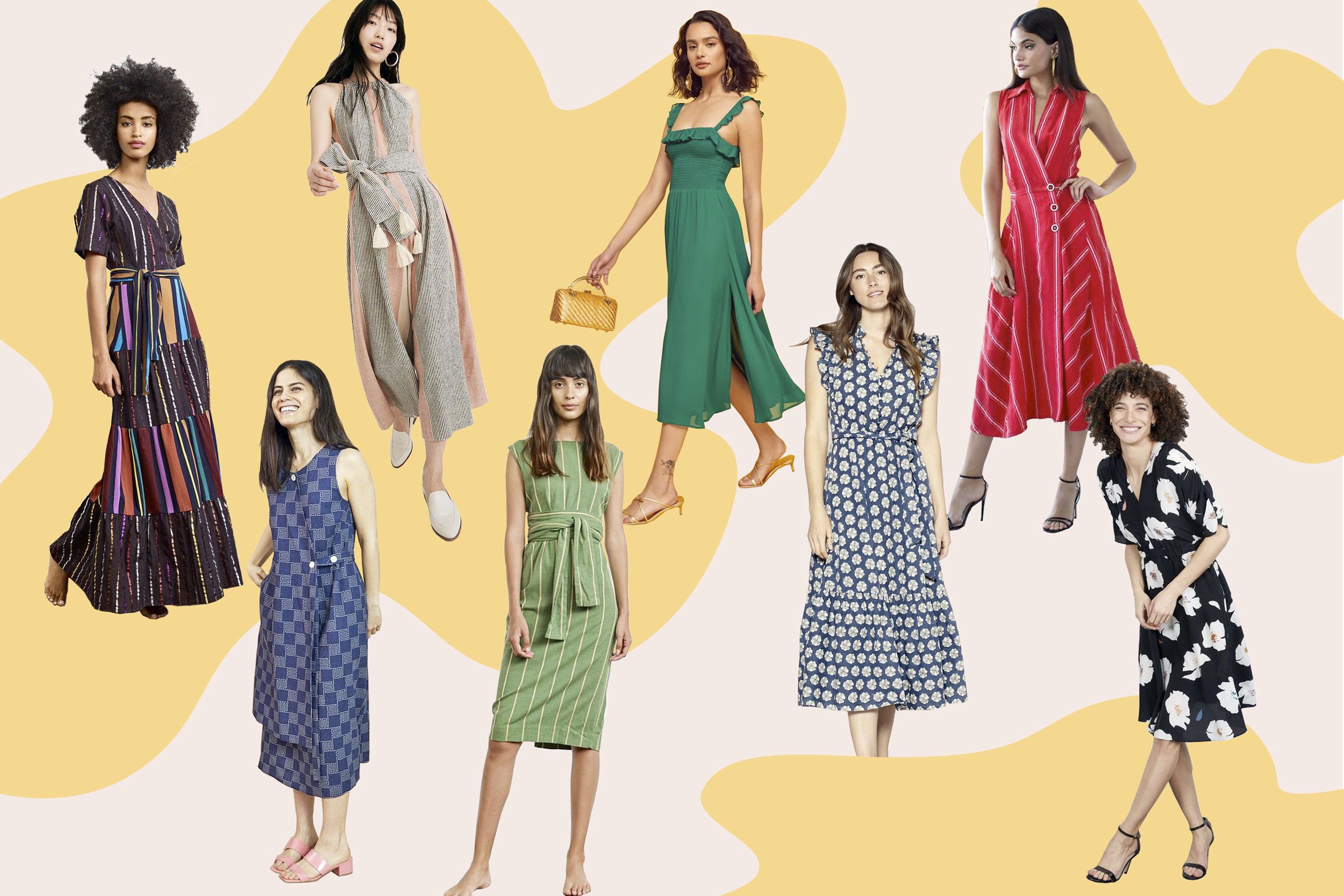
I know it’s silly for a Californian to complain about winter, but this year has been rough. It’s been wet, and cold, and dark. I listed to a lot of Fleet Foxes and Belle and Sebastian. It was a moody, broody time.
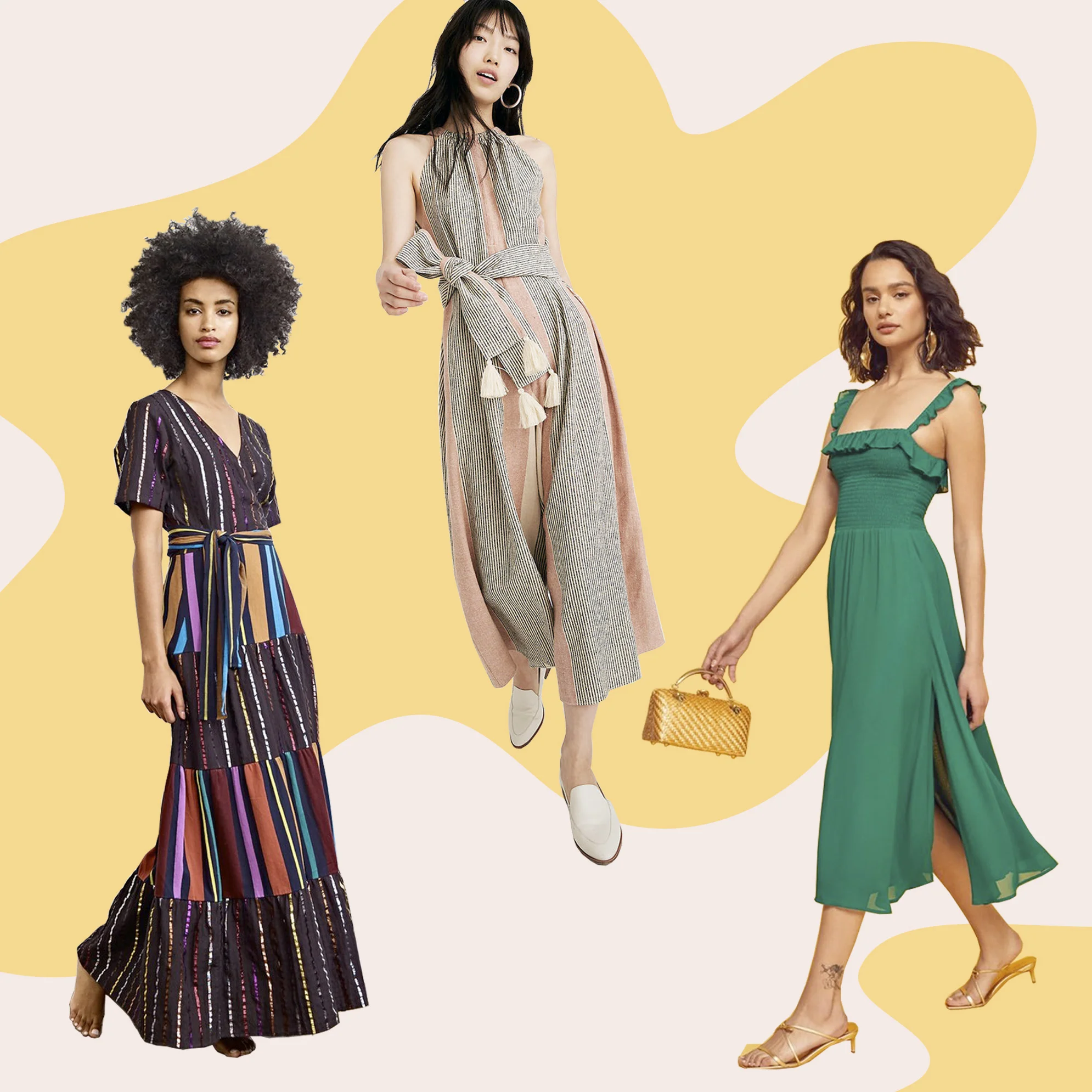
But now that the cherry blossoms are in full bloom, I’m dreaming of floral silks, block print cottons, stripes, ruffles, tassels, and a whole lot of color. Here’s a roundup of sustainable pieces that are sure to put a spring in your step…

Ace & Jig Ellis Dress
This lightweight singlecloth striped dress is made from 100%, hand-dyed and spun cotton made by talented artisan weavers in India. Ace & Jig gets an overall “Good” rating on Good on You, so while there’s still room for transparency around their labor practices, I’m comfortable promoting their joyful, color-happy designs.

Dusen Dusen Panel Dress
This relaxed linen/rayon blend panel dress is happily made in New York, USA.
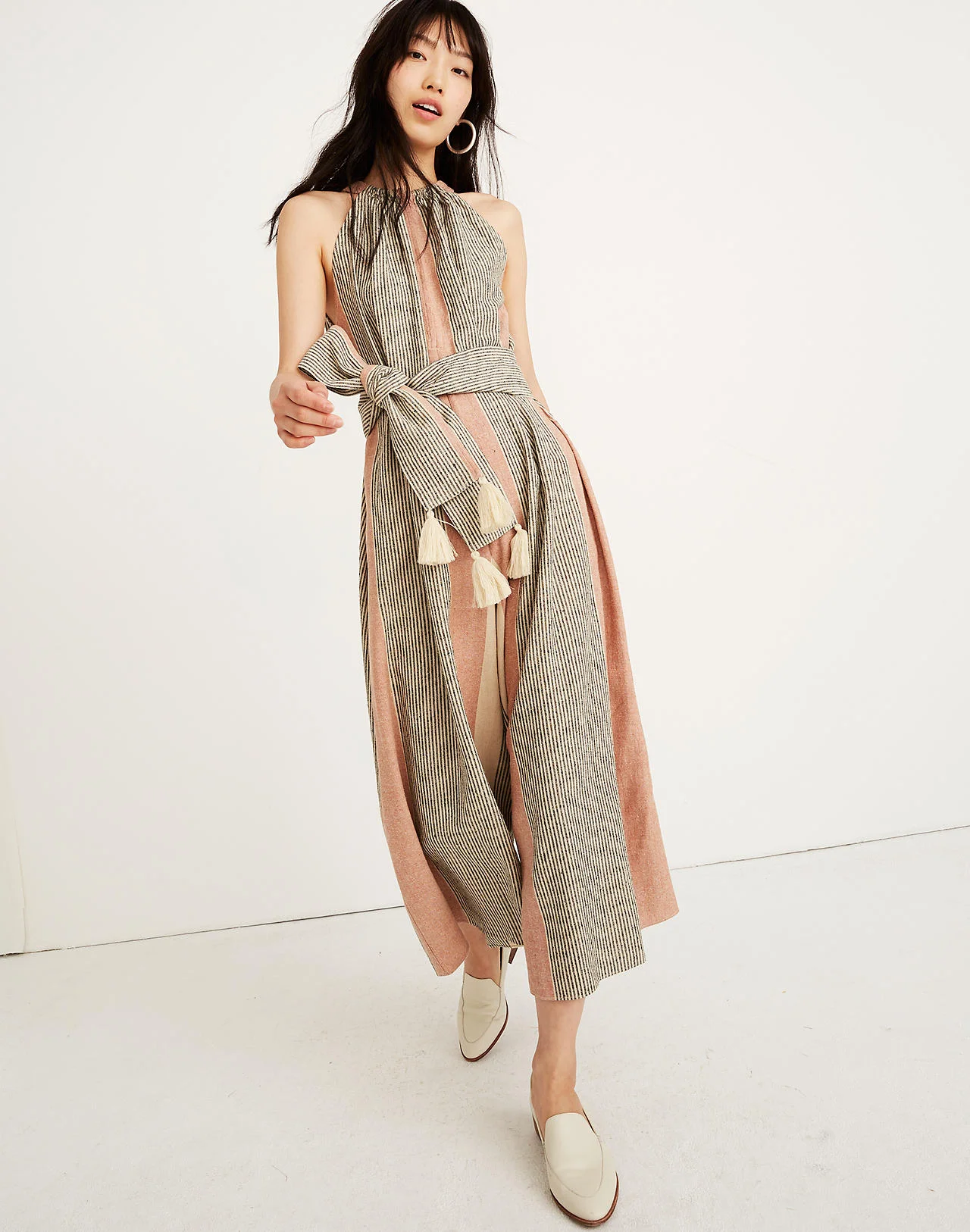
Apiece Apart Isla Jumpsuit
Okay, this one’s technically a jumpsuit, but it’s swishy enough to make the cut. With stripe-blocked silk tassel-trimmed sash, this Made-in-the-USA number makes me want to frolic.

Ace & Jig Evelyn Dress
Another gem from Ace & Jig, in a lovely shade of succulent.
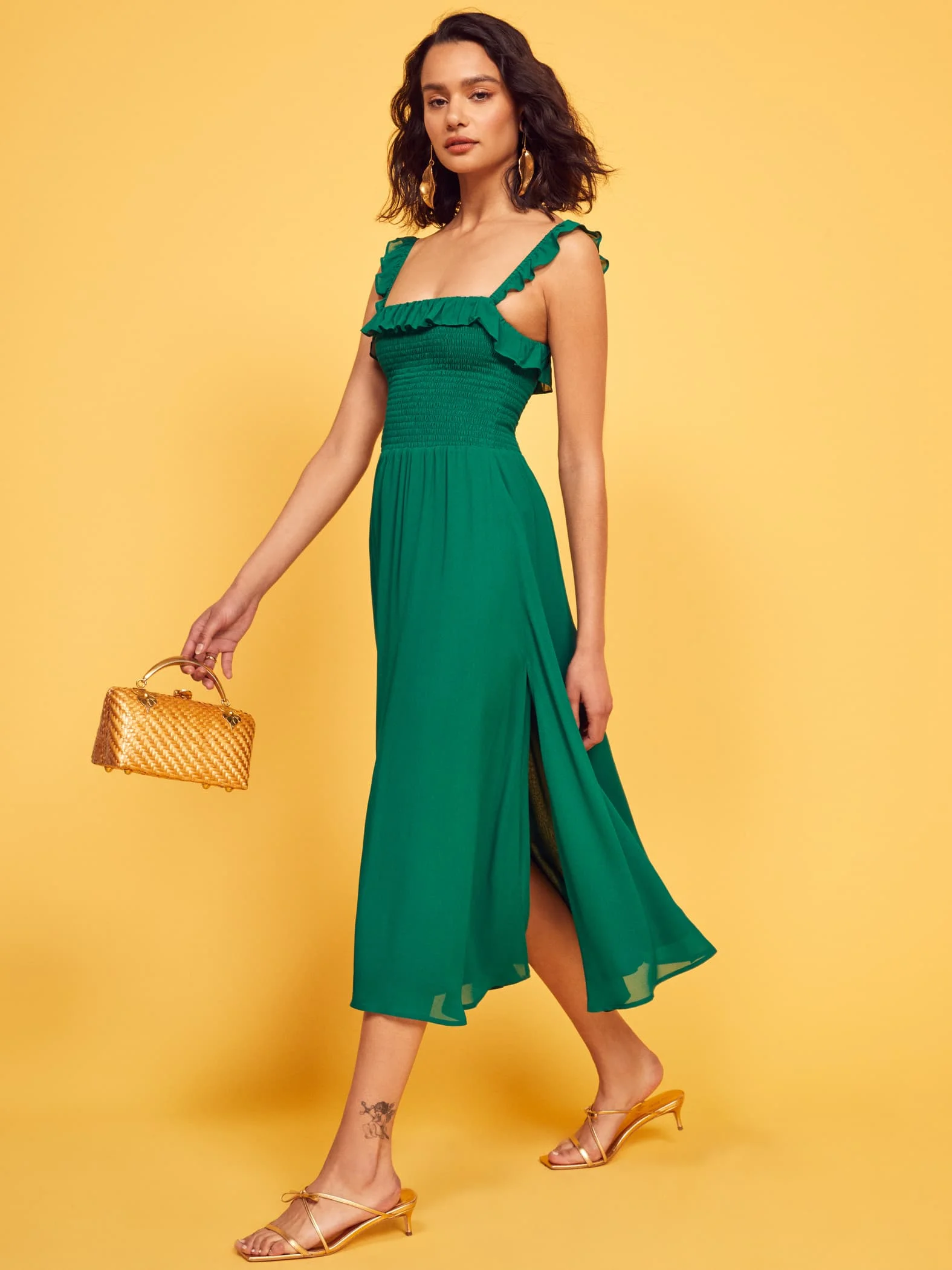
Reformation Siesta Dress
This particular shade of green slays me every time. And here it is, in full glory, on this 100% viscose dress that’s sustainably made in Los Angeles.

Outerknown Canyon Dress
After much anticipation, the Kelly Slater’s sustainable clothing company finally released a women’s line! The hand-printed fabric on this dress is sourced from Piece & Co., a company that empowers artisans in developing parts of the world.

Eva Franco Doris Dress
I’m a long time fan of Eva' Franco’s vintage-inspired designs. The Doris Dress, like all of the brand’s pieces, is made in the Los Angeles.
Note: by the time I finished this post, there was only 1 dress left! Make sure to check out Eva Franco’s other spring pieces here.
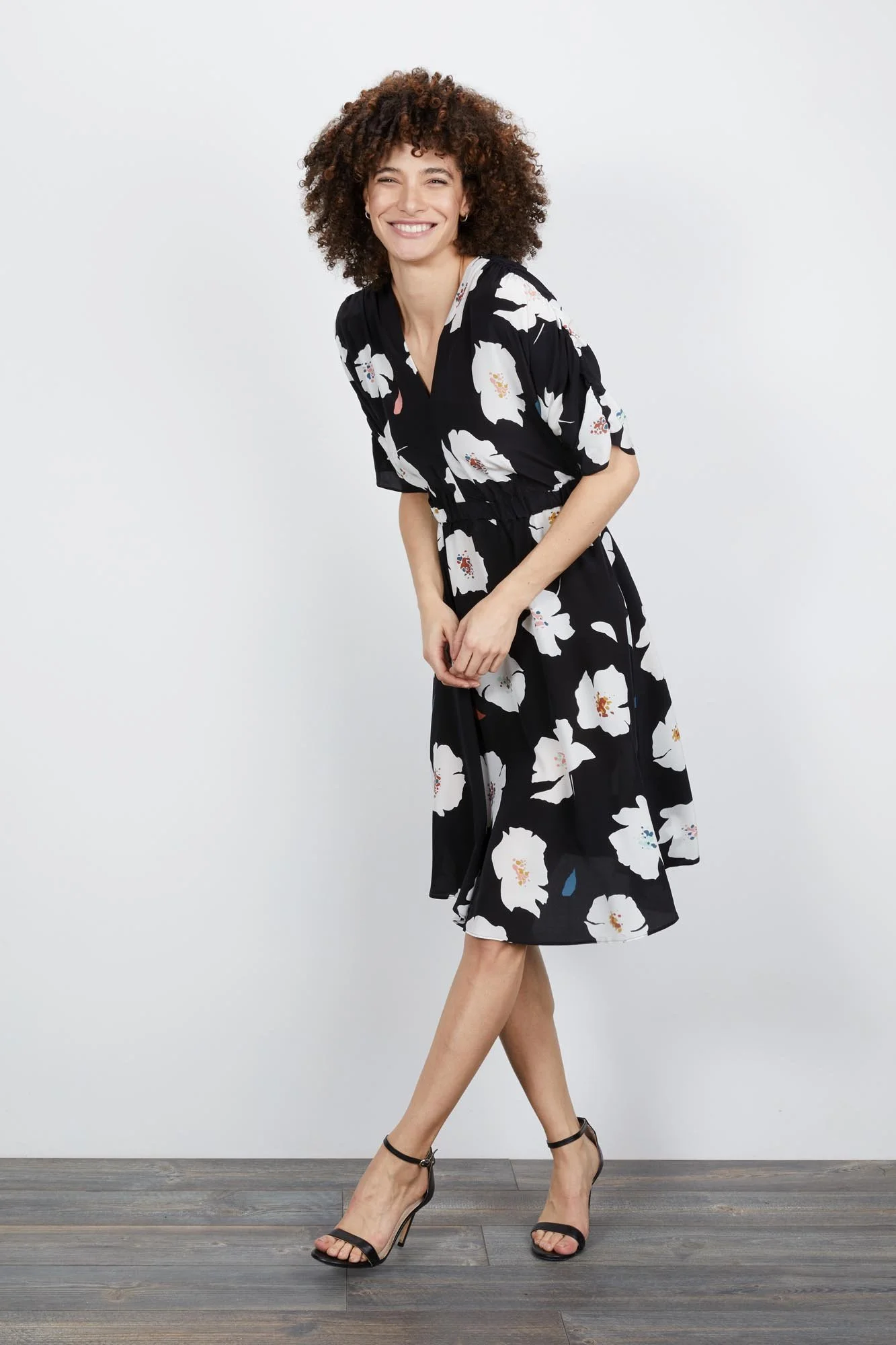
Tucker Shadow Flower Market Dress
Tucker is a new brand on my radar. They’re on the pricier side, but the materials and fit appear to be top-notch (I’ve never purchased anything from them, so reviews are welcome!). This dress is 100% crepe-de-chine and made in Tucker’s own factories, which allows them to monitor working conditions, pay all of their staff a living wage, reduce waste and over-production, and generally work toward more sustainable manufacturing.
This post contains affiliate links. Thanks for supporting Birds of a Thread!
7 Things I Love about Ethical Personal Shopping Service wearwell

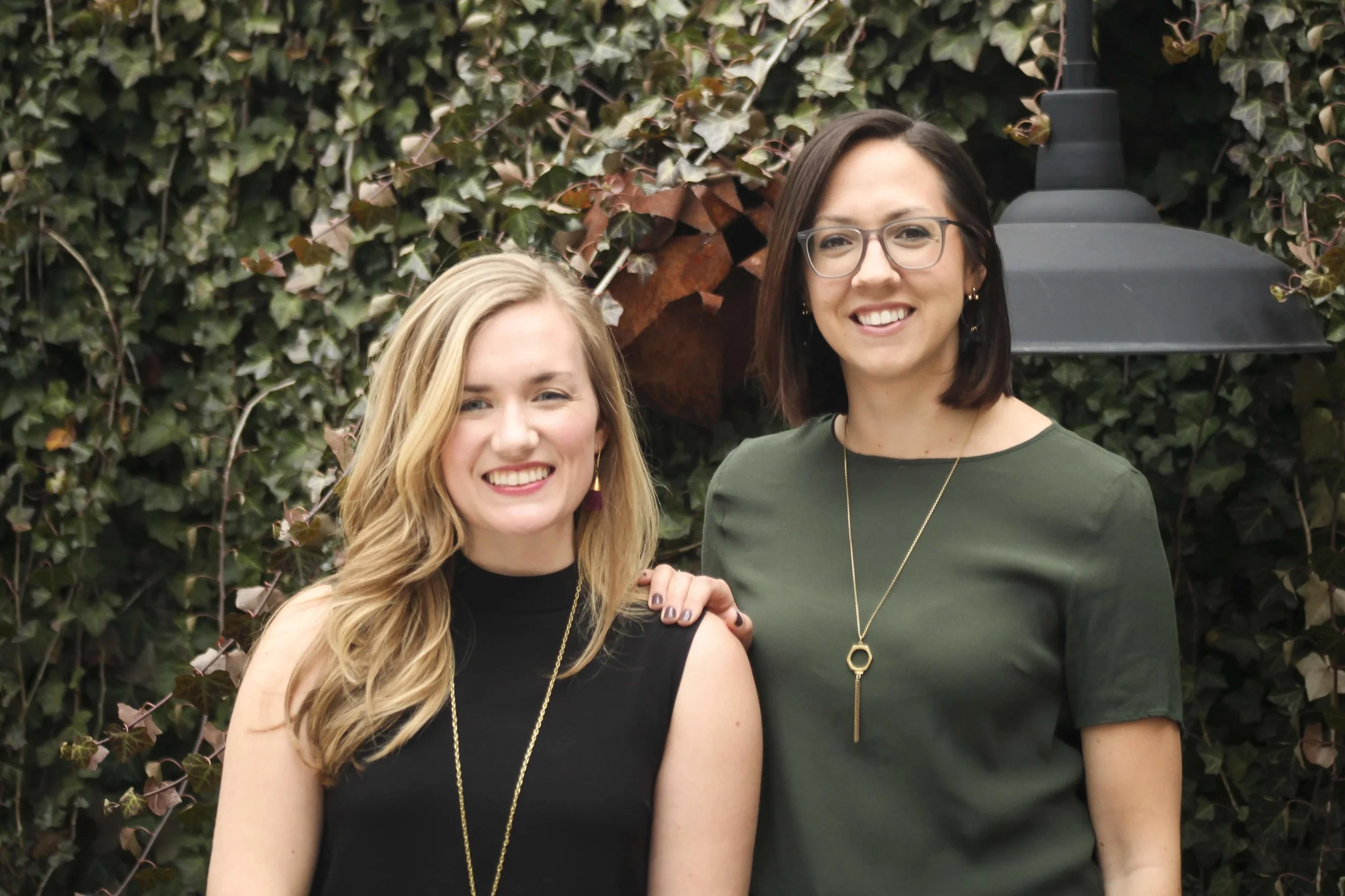
wearwell founders Erin Houston and Emily Kenny
As subscription boxes surge in popularity, I’ve been unsure how to feel about them. Although I like the concept of a specially-delivered batch of products I’ll (hopefully) love and use, I have a hard time justifying the carbon footprint of regular shipping, along with the push to consume more on a regular basis. But there’s at least one company out there doing things right, and that’s the ethical personal shopping subscription service wearwell.
Founders Erin Houston and Emily Kenney started wearwell with the purpose of connecting women with a personalized selection of ethically-made clothes. After speaking with Erin about the company’s mission, business model, and ethics, I’m a full-fledged fan. Here’s why:
1. They design for the conscious-but-busy
wearwell makes it easy to shop ethically, saving customers the time is takes to research to impact of their purchases. Because of this, they’ve found a sweet spot among older millennials.
“Many millennials are entering into new chapters of their lives from growing their careers to growing their families,” says Erin. “With ever-increasing demands on their time, we make it easy for them to find clothing they look good in and feel great about buying because it fits the conscious lifestyle they've chosen to live in every other aspect.”
2. Your mom will love iT
Surprisingly, Erin and Emily found that the moms of those millennials - young boomers – love their service, too. “They come to us looking for pieces that have a unique story to tell and style advice now that their daughters have left the nest.”

“It's of the utmost importance for us to drive industry change at the root of the issues.”
3. They don’t settle for anything less than ethical
While other services do carry some ethical and sustainable brands, wearwell requires all of their partners to meet strict criteria.
“We only carry products that make a positive impact in the making and manufacturing of the item,” Erin says. “We have sets of standards in two broad categories: environmental sustainability and workers' rights. Our standards are a blend of the many certifications that exist from Fair Trade to GOTS to B Corp and from our own expertise and studies of sustainable supply chains, community development, and social enterprise. One of our brands might be hyper-focused on improving their fabric sourcing for organic materials and non-toxic dyes while meeting some basic criteria on hours worked in factories, while another might be extremely focused on living wages and safe work environment but limited in their resources to trace their fabric origins. We try to take these various factors within self-reported data into account and plan to incentivize our brand partners as we grow to continue diversifying their impact. All this to say, wearwell does not carry products that only give back in a charitable donation manner. It's of the utmost importance for us to drive industry change at the root of the issues.”
4. They place carbon footprint front and center
wearwell doesn't ship products in a box to your door for a try-on period. Instead, they offer a membership that provides an online personalized selection each month, chosen just for you by a stylist. You browse the selection online, choose what you wish to purchase, and only then are the items shipped to you. “We changed our business model to minimize our carbon footprint,” explains Erin. “We actually began similar to a StitchFix or a Trunk Club, but quickly realized how misaligned that was with our values.”
In addition to only shipping items their customers intend to keep, wearwell works to minimize packaging waste, using materials that are 100% post-consumer recycled and recyclable whenever possible. They’re also exploring partnerships with other startups that are developing innovative, sustainable shipping materials.

“We're firm believers that if you don't love an item, you shouldn't be buying it. Why buy a boxy sage green blouse if you love the bright floral fit-and-flare dress so much more?”
5. They aren’t just for minimalists
Erin, who just konmari'd her own closet, understands that while the minimalist aesthetic is great for some, it doesn't fit everyone's style. “We're firm believers that if you don't love an item, you shouldn't be buying it. Why buy a boxy sage green blouse if you love the bright floral fit-and-flare dress so much more? The more you love your clothes, the more you wear them, and the more you'll get out of them - ultimately reducing waste that we see rampant in fast-fashion culture.”
Beyond waste though, wearwell believes that every woman should feel confident and beautiful. “Why limit yourself to an aesthetic that isn't the fullest expression of yourself?” Erin says. “Purchasing ethically and sustainably made clothing doesn't need to be mutually exclusive from stylish. We want to give every woman the opportunity to live consciously and exercise her purchasing power for good, but that should never mean that she must sacrifice her strongest sense of self and confidence when she walks into the boardroom or the PTA meeting.”
6. They have awesome credentials
While you don’t need experience in international development to start an ethical fashion business, it certainly helps. And both Erin and Emily spent years working in the nonprofit and global development; Emily worked directly in communities in Cambodia, India, and beyond, and Erin worked for a media company that serves the global development community from entities like USAID to NGOs to social responsibility divisions of major corporations.
So when the Rana Plaza Factory collapsed in 2013 killing over 1,000 garment workers in Bangladesh and injuring over 2,000 more, they were primed to take action. “We both began to confront how challenging it was to live out our values while shopping for our clothing,” Erin says. They realized how time consuming it was to find items that fit their personal style, budget, and values, while simultaneously witnessing first-hand on their jobs just how complicated transparency, workers' rights, and sustainability challenges could be.
“We set out to build wearwell to make it easier for people to discover consciously-made clothing, while also opening up the possibility to drive real meaningful change within the industry.”

7. They value progress over perfection
I asked Erin how they ensure that they keep tabs on their partner brands to guard against greenwashing or “goodwashing.”
“I love this question,” Erin says, “because it underscores how far we've come in recent years with consumer expectations and workers' rights. We believe deeply in progress over perfection. No one is perfect when it comes to purchasing consciously-made items and, similarly, no brand is perfect. Because of this, we strive to develop relationships with the brands we source where we can understand not just the efforts that they use in external communication but also their deepest challenges. By having a trusting, open and honest dialogue with the brands we source from, we have a grasp on the positive impact they are accomplishing but also insights into where the industry needs to head next.”
Disclosure: This post is not paid, but wearwell is providing me with a complimentary 3-month subscription, which I will review and share with you soon!
A Travel Opportunity that Honors Artisans and Fuels Creative Exchange
Last year, Mari Gray of Kakaw Designs shared out about an awesome travel exchange opportunity that she created just for makers. I’m happy to report that the program is back for a second year. Interested? I am, so I asked Mari to give us the lowdown on what participants can expect from this year’s exchange.

Can you tell us about your vision for the program and what sparked the idea in the first place?
Sure, let me explain the inspiration for this venture. After a number of years working with artisans in Guatemala as Kakaw Designs (pronounced “cacao” like the chocolate tree), I struggled with our role as a brand taking pride in unique design and high quality craftsmanship. While I love designing and working with artisan groups, I feel uncomfortable having to ask them to keep our designs exclusively for us. This is an awkward position to be in, because our partner artisan groups also have rural storefronts on their own, and sell to other stores in larger cities in Guatemala. And so if what we create together is beautiful, practical, desirable - then, it would be beneficial for the artisans to replicate these designs and sell however possible. But if we take this approach, we would be voluntarily giving up our unique edge on design. It’s a dilemma that artisan-made businesses face all over, and a big push for us to start our Textile Travels.


“How great would it be if we could come together and share our textile experiences and practices together, further strengthening bonds and supporting rural artisans to pursue innovative designs on their own?”
Another aspect I came to appreciate is that Guatemala is a destination for many creative-types from all over, because of the country’s vibrant traditions and crafts. And while there are many opportunities out there for hands-on learning experiences of traditional Maya crafts, I felt like there was big potential for visitors to also share their ideas to rural artisans, and this was not being realized. How great would it be if we could come together and share our textile experiences and practices together, further strengthening bonds and supporting rural artisans to pursue innovative designs on their own?
Well, that’s exactly what we’re trying to do.

How did last year’s textile travel exchange go, and what did the itinerary look like?
Last year, we hosted our first creative textile exchange in Guatemala. I was excited and nervous to venture out to new territories through our Textile Travel concept, but in the end all our textile workshops, travels to rural villages in Guatemala, and basically everything concerning the two itineraries we offered went smoothly. We were so fortunate to have wonderful and inspiring participants, and keeping the groups small was probably key to our success.
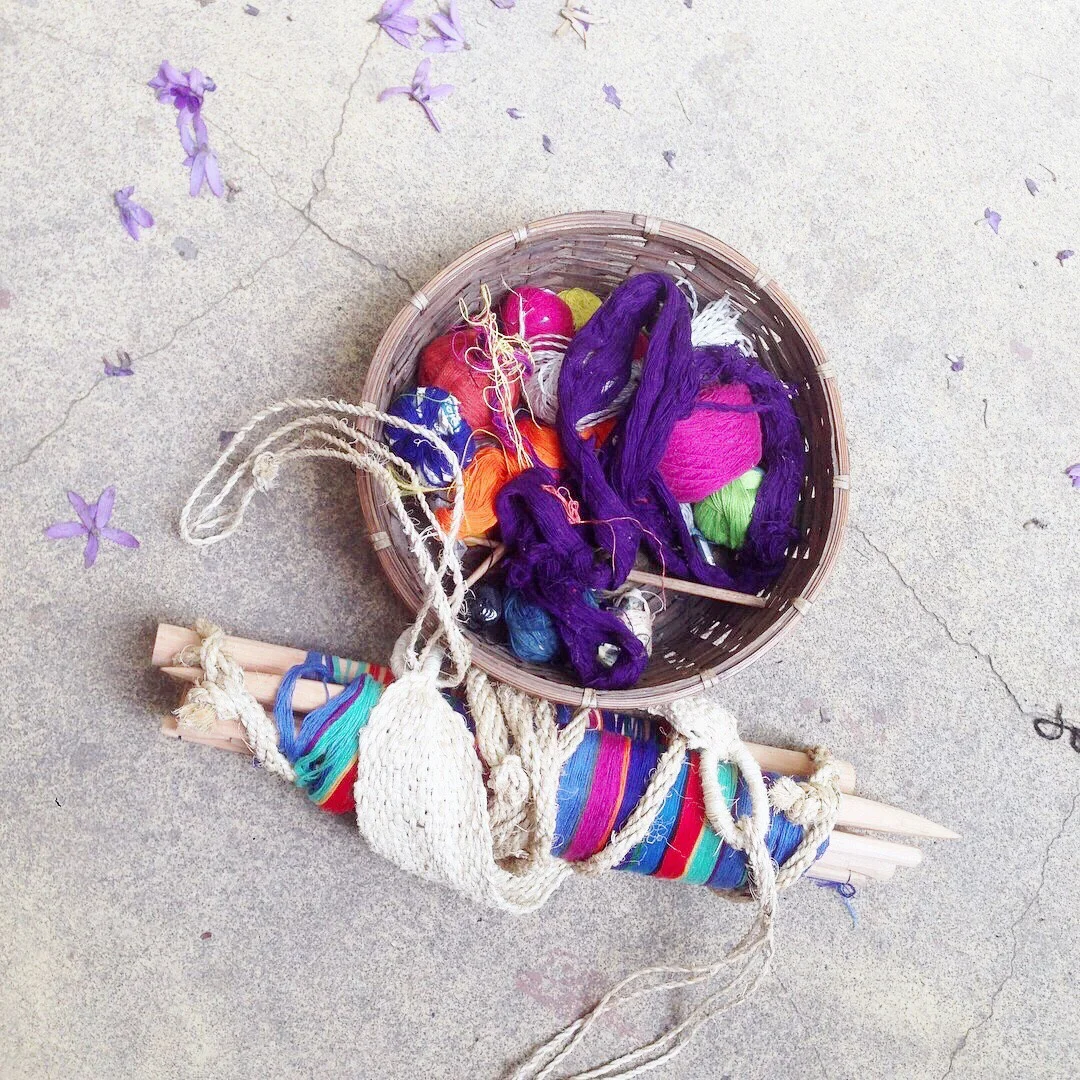
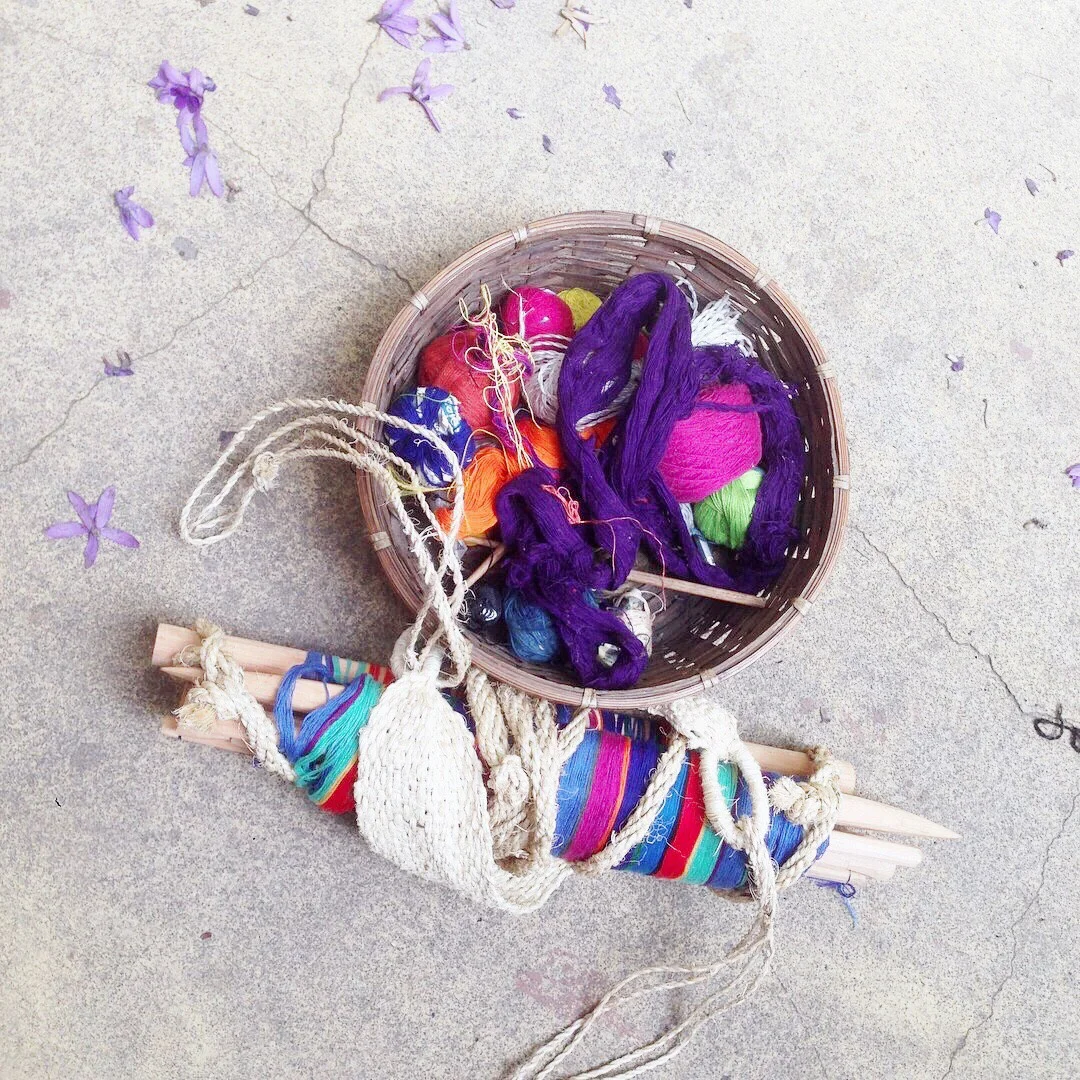
We facilitated a one-on-one backstrap weaving day, an in-depth textile lecture with beautiful vintage samples from all over the country, a hand-embroidery day where we could work on our own projects (think jeans and jackets), and a series of workshops at Lake Atitlán with our partner weavers there, including local plant dyes, indigo dyeing, ikat warp, and more. In our second itinerary, we included visits to rural villages that are truly off the beaten path and rather difficult to reach for “normal” tourists. We visited our partner weavers in these areas also, and they welcomed us with home-cooked regional specialties, and one group even had live music in our honor. What a treat!

What can travelers expect this year? Any changes to the program?
This August, we’re going to slow down a little bit, taking conscious down-time, because phew, it’s a lot to take in with all the colors, patterns, flavors, and new friendships. And since our primary goal is to create a space for idea exchange and mutual benefit among rural artisans and international participants, I do think it’s important to include a little bit of daydreaming time so that we can get those creative juices flowing. In this regard, we’ve added a couple of extra days, and low-key activities like tassel and pompom making. We will have a bit more time to wander on our own also, and shop directly from artisan cooperative groups.
If you’re interested in hearing more, please shoot me an email at mari@kakawdesigns.com.
A Simple Updo in Golden Gate Park, with SAYA Designs


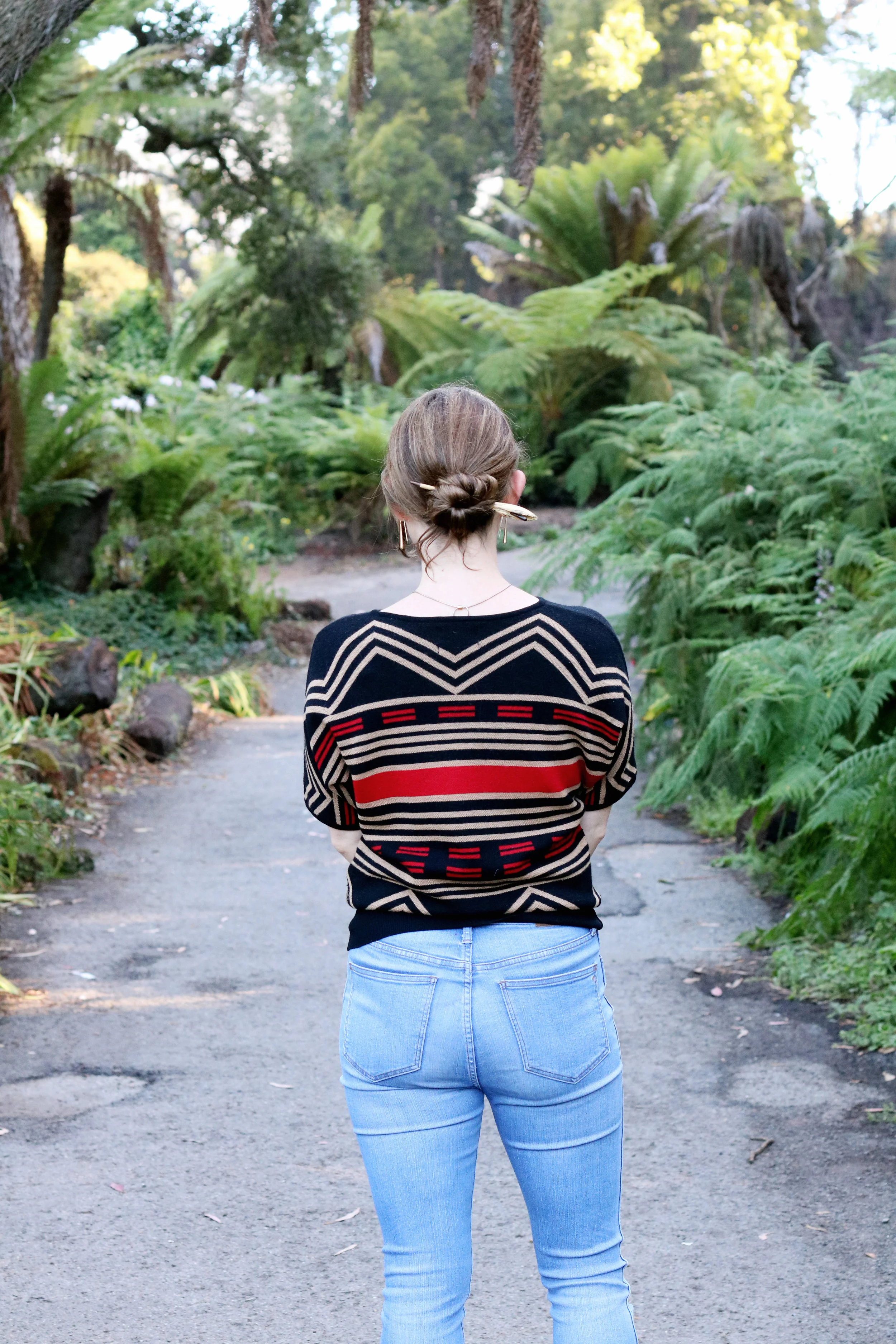
It’s been a few months since SAYA Designs sent me this beautiful Frangipani hair stick to try out, and I’ve been feeling guilty about not posting a review sooner. The plus side of my procrastination, however, is that I can honestly say I’ve worn it nearly every day since it arrived. I’m a big fan of hair pins — in high school, when stylish hair accessories were hard to find, I’d pin my hair back with a takeout chopstick or even a fancy ballpoint pen. And while I love having long hair, it can get quite unruly. Hair pins are an easy way to keep this mop out of my face!
All of SAYA’s hair sticks are hand crafted by Balinese artisans out of salvaged wood from old Indonesian plantations. This ensures that local forests are not over-harvested, and also means that each piece contains a little bit of history. And the Frangipani stick is just so pretty! Made from tamarind wood with a rosewood inlay, it almost reminds me of a quill pen (harkening back to my ballpoint pen days, sans the ink). And the wood is smooth enough to ensure that no hair gets caught while styling — a problem with other hair pins I’ve tried.
I usually wear it in a simple knot at the base of my neck with a few loose strands framing my face, but there are so many ways to style SAYA’s pieces. They have a whole tutorial section on their website that’s worth checking out, along with their other gorgeous designs.
Worn here with my favorite Pendleton sweater (made in the USA) and a pair of Soko earrings while strolling the beautiful paths of Golden Gate Park, San Francisco.


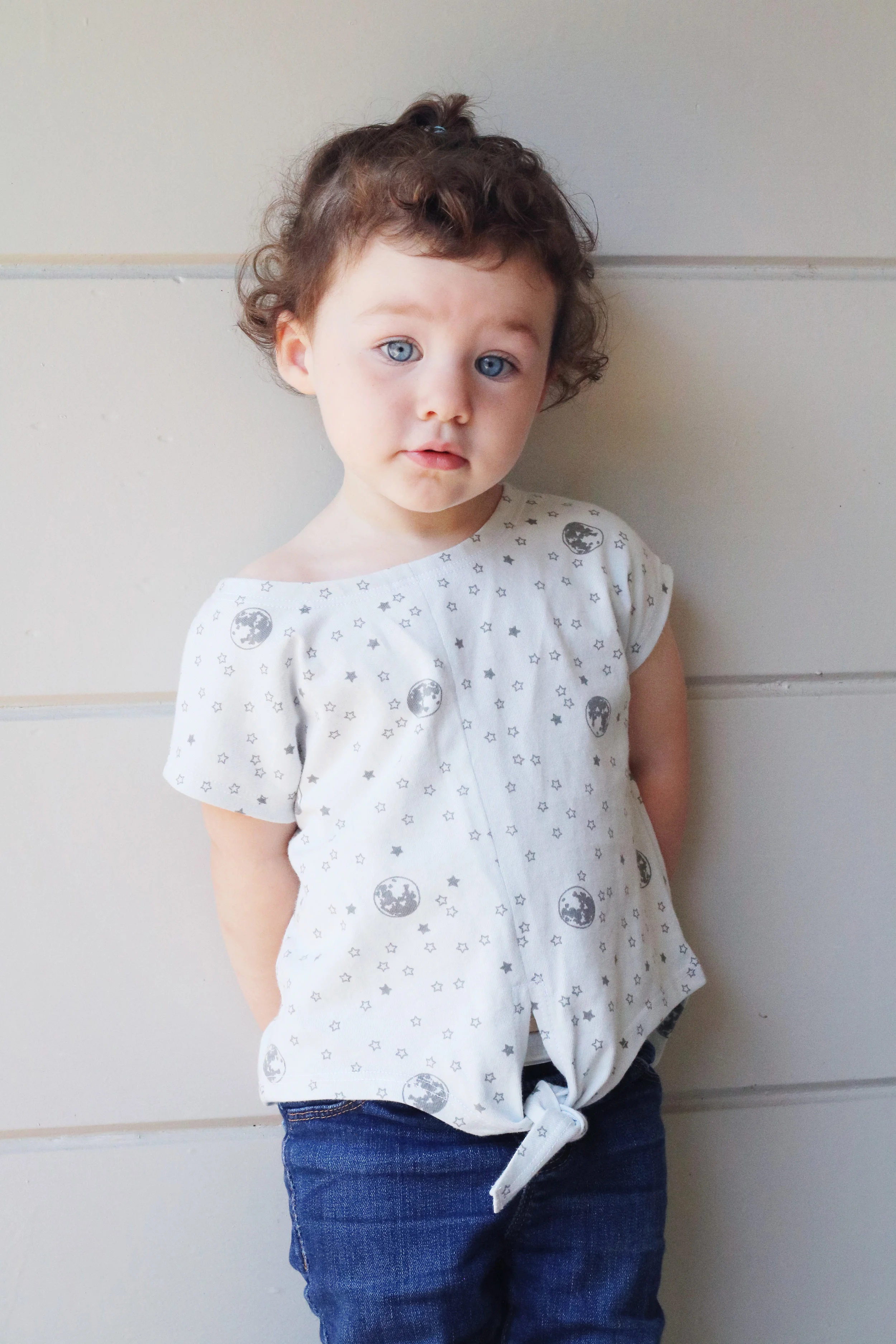
This Organic Kids Line Inspires Some Epic Toddler Smize

And just like that, we have a full-on, hard-core toddler. A toddler that has mastered the art of the high-pitch scream. A toddler who demands ham (not turkey!), frozen corn, sliced blackberries, and sparkling water WITH A STRAW. A toddler who climbs up the slide backwards, slams her chin into table corners, and collapses into a puddle of rage when informed that Peppa Pig hour is over.
A toddler who, as of last week, has learned how to pose:


Recently Noni Bee, an organic kids clothing line based out of California, sent Avery this adorable Night Sky Tie Top to try out. Expecting the usual struggle to get her to sit still for a photo or two, I was shocked when our daughter leaned against the wall, cocked her head to the side, and looked straight into the camera with her best doe-eyed stare. Suddenly she's 21 months going on 15. Sheesh!
She's worn the top several times now and it's quickly become a favorite. It's soft, comfy, and so, so cute without being overly-girly (the sparkly pink stuff isn't my jam, although I'm sure she'll hit that phase eventually). And like all of Noni Bee's pieces, it's woven from organic cotton yarn, dyed with fiber reactive dyes, printed with water-based inks, and assembled in Los Angeles, California. If you have an active kiddo on hand and care about the ethics behind their clothes, I highly recommend that you check out Noni Bee.
And if you want to enjoy a few minutes of quiet alongside some dry British humor, I highly recommend Peppa Pig.
Disclosure: this post is not sponsored, but I did receive free product from Noni Bee -- a brand I'm happy to endorse.


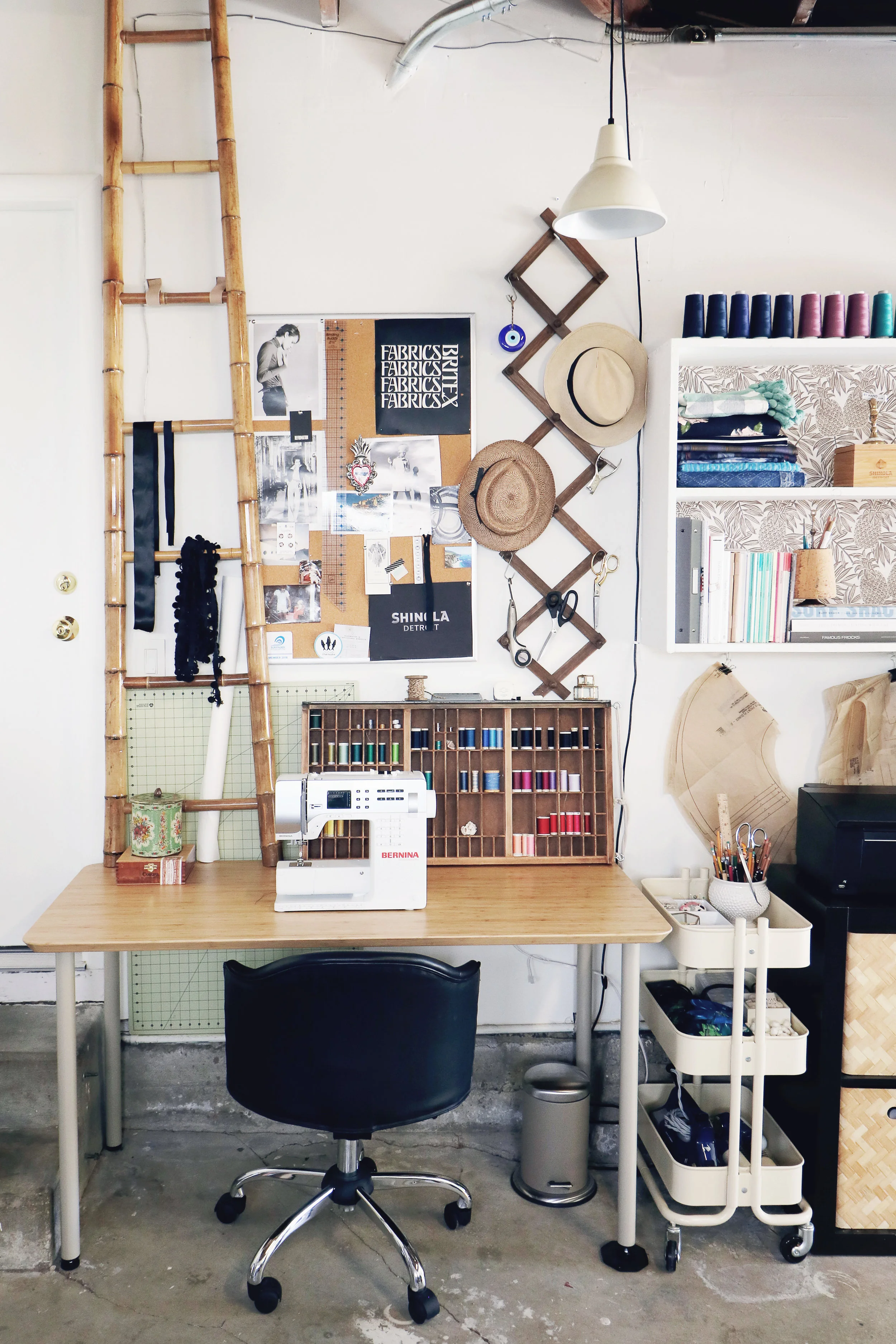
Sewing Space Tour: My Corner of the Garage


Last week I finally organized the garage and carved out a sewing/making space for myself. I’ve been feeling overwhelmed by the prospect of sewing lately, and that’s partly because of the chaos it creates. Life with a toddler takes its toll on our house, and adding fabric scraps, pattern trimmings, wayward cords, and dangerous tools to the mix was just too much for my anxiety-ridden mom brain. Creating a designated space outside of Avery’s realm has made all the difference; I can start projects, set them aside, and return to them when the mood strikes (i.e., Avery's bed time). I don’t feel the pressure to finish projects in one night, and I can leave sharp objects lying around. It’s awesome.


This space didn't happen overnight, though. I've accumulated my sewing and crafting supplies over the course of many years, some of them even dating back to high school (when I was really into making found object shadowboxes and/or covering said objects in glitter). Consequently, not everything pictured here is "shoppable," like the vintage letterpress drawer where I store my thread, the bamboo ladder used for hanging trim and project pieces, or the plaster skull that displays my favorite buttons and hair pieces. Some of my storage solutions have sentimental value, like the floral sewing tin that belonged to my grandmother and the cigar box that I found in a dusty antique store in Berkeley. And some of them are plastic ArtBins from Joann's. It's a balance.
I bought a basic bamboo HILVER table top and adjustable legs from Ikea, partly because our garage floor is so uneven that each leg needed to be a slightly different length. I've also got the ubiquitous RASKOG utility cart and KALLX shelving; like many sewing spaces, I'm pretty Ikea-ed out. I still use our dining room table to cut patterns, although I'd love to create a custom cutting table some day.
In terms of tools and machinery, I'm a big fan of Clover products (measuring tape, seam ripper, chalk pen), Kai Dressmaking Shears, and Gingher scissors/ rotary cutters (partly because they're just so pretty). I purchased my Bernina 330 sewing machine and JUKI serger a couple of years ago (based on Heather's Closet Case Files review), and they've made a huge difference in the quality of my sewing projects. I'm love sewing with knits and silks now, confident that I can create professional-looking seam finishes and beautiful hems.
I keep my prettiest supplies out on display for inspiration (patterns, fabric, thread, buttons), and the rest sealed up in bins for later use. It's just the right level of quirky clutter, complete with pineapple-lined shelving, and I wouldn't have it any other way.


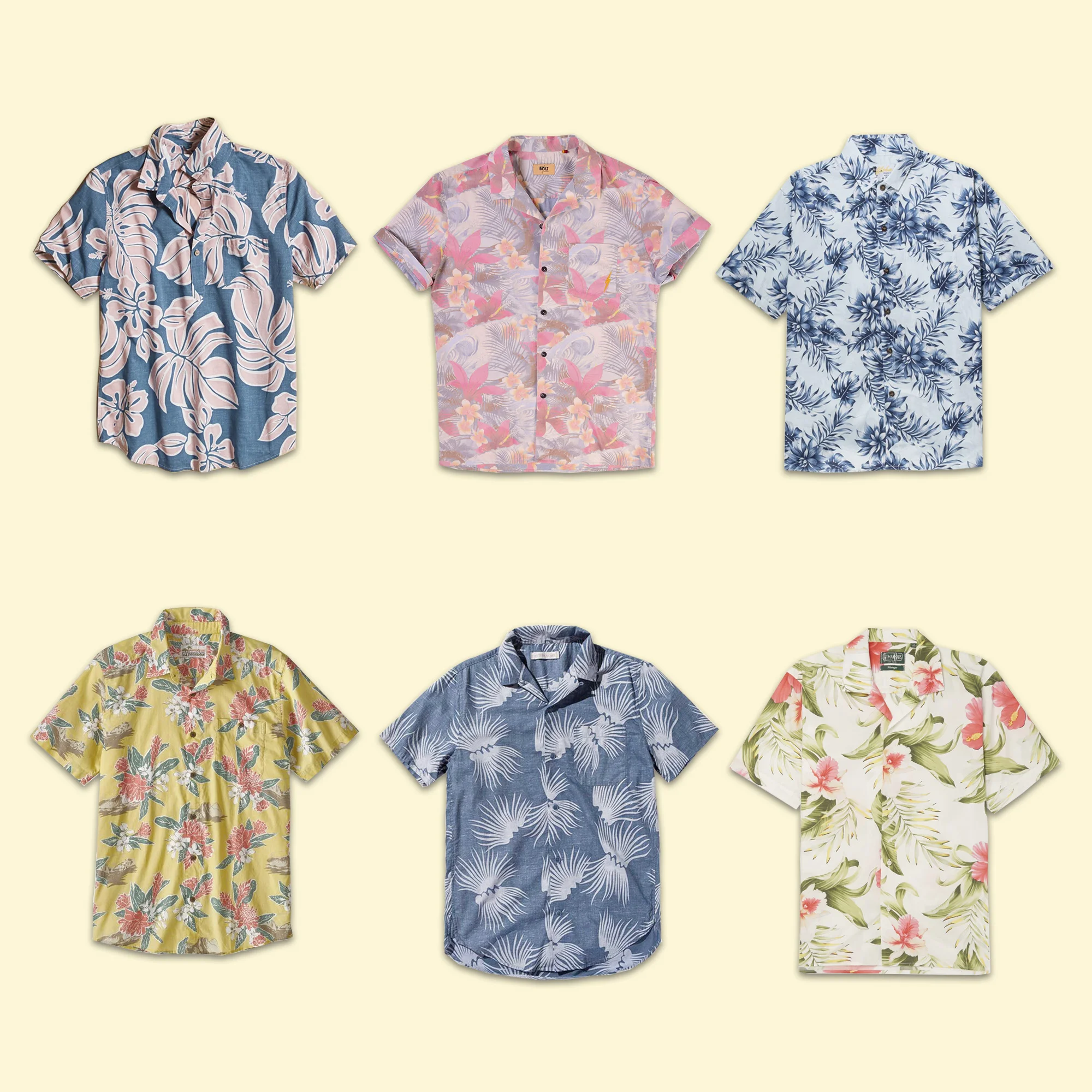
Hawaiian Print is the "Official Hot Guy Shirt" of the Summer: Here's Where to Find an Ethical One
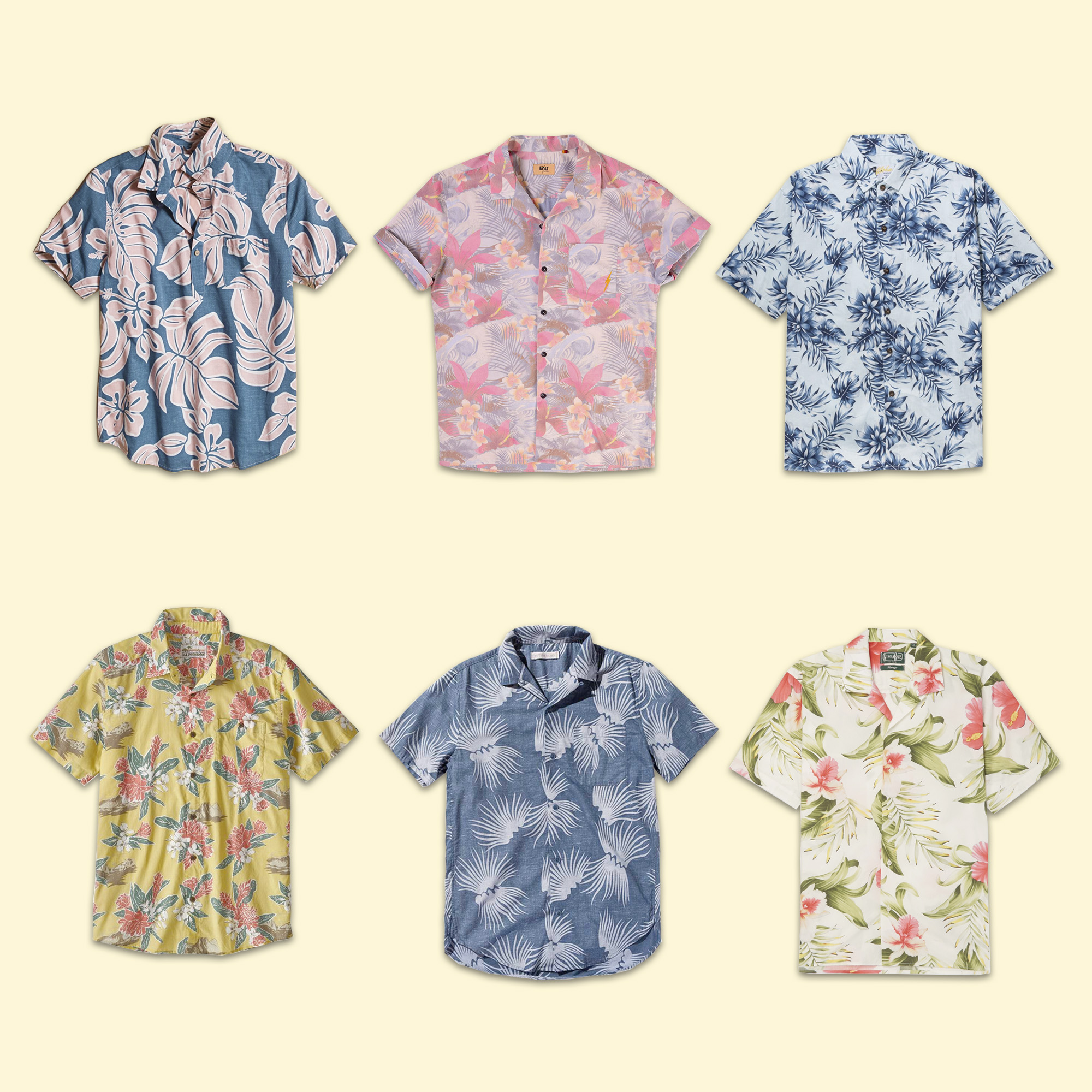
My husband, man of custom-tailored suits and pocket squares, recently informed me that he was thinking about adding a Hawaiian shirt to his weekend repertoire (inspired in no small part, I'm sure, by the street styles of Pitti Uomo). I'm all for it! I like a good suit, but I much prefer "Weekend Jon" in jeans, button-up shirt, and loafers.
Conveniently, Man Repeller just declared Hawaiian print the "Official Hot Guy Shirt of 2018." So if you're a hot guy or dating one, you should probably seek out one of these responsibly-made Hawaiian shirt options immediately.

Marine Layer + Lost and Found Mauna Loa Popover
Marine Layer is one of my favorite brands for casual women's clothing, and their men's line rocks too. This Hawaiian print popover was designed in collaboration with the Lost & Found Collection and features a custom print inspired by vintage film negatives found at a Pasadena flea market. Made responsibly abroad.

Outerknown BBQ Shirt
If you're an ethical fashion buff you've likely heard of Outknown, the sustainable mensware line founded by World Surf League champ Kelly Slater and designer John Moore. This BBQ shirt, made from 93% Organic Cotton and 7% Hemp, uses waaaay less water than its conventional counterparts. Its vintage print, modern cut, and corozo nut buttons make for major style – perfect for getting your grill on.
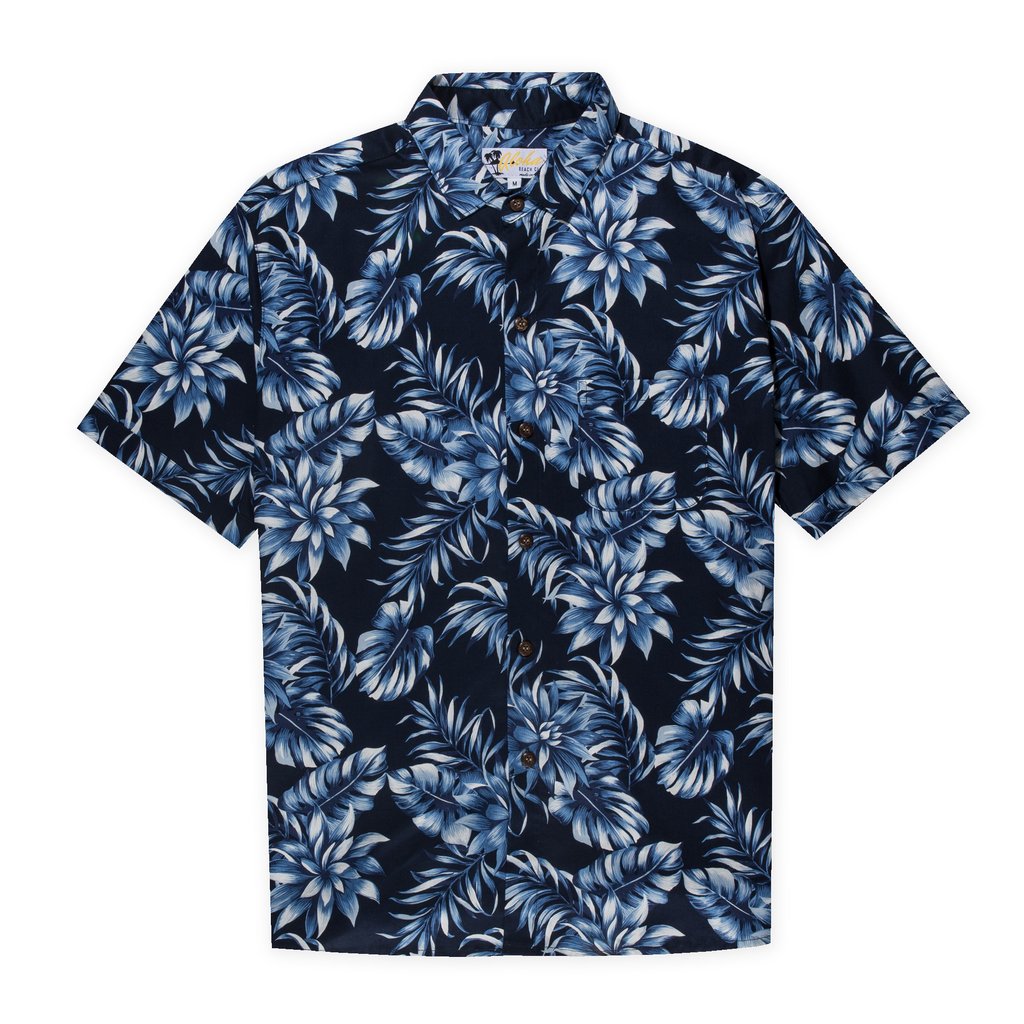
Aloha Beach Club Keola SHirt
Cut and sewn in Honolulu, this 100% cotton shirt is about as Hawaiian as it gets. Aloha Beach Club is another of my favorites for casual mensware, with a rad in-house line that's made in the USA. If you ever find yourself in the North Park neighborhood of San Diego, be sure to check out their store – replete with the beachiest of vibes.

Gitman Vintage Camp-Collar Poplin Shirt
Proudly American-made, Gitman Vintage is one of the few remaining shirt-makers that keeps every step of production in the USA. Its prints are all based on original designs from the company's archives, and this poplin number with a retro-style collar is no exception. And it's100% cotton, so no need to worry about those pesky microfibers hanging around.

Patagonia Malihini Pataloha Shirt
This 100% organic cotton shirt nails on on transparency. In line with Patagonia's commitment to sustainability and fair labor practices, each step of this shirt's production is traceable on the product description and the company's Footprint Chronicles. Happy people, happy planet: now that's the aloha spirit.

Lightning Bolt V-Land Shirt
I included this one even though it's a little obscure and probably hard to shop for. Lightning Bolt is a heritage brand that was founded in Hawaii in 1971 by and band of local surfers. It lost momentum on the islands but took off in Europe, and recently stared operations back up in the U.S. From what I can tell, their shirts are made primarily in Los Angeles and Portugal (but it's a little hard to tell from the website; I got that info from a 2013 interview). It's worth a look, especially if you hail from Europe!
This post contains affiliate links. Thanks for supporting Birds of a Thread!