
How I Made Avery's Yellow Fairy Costume


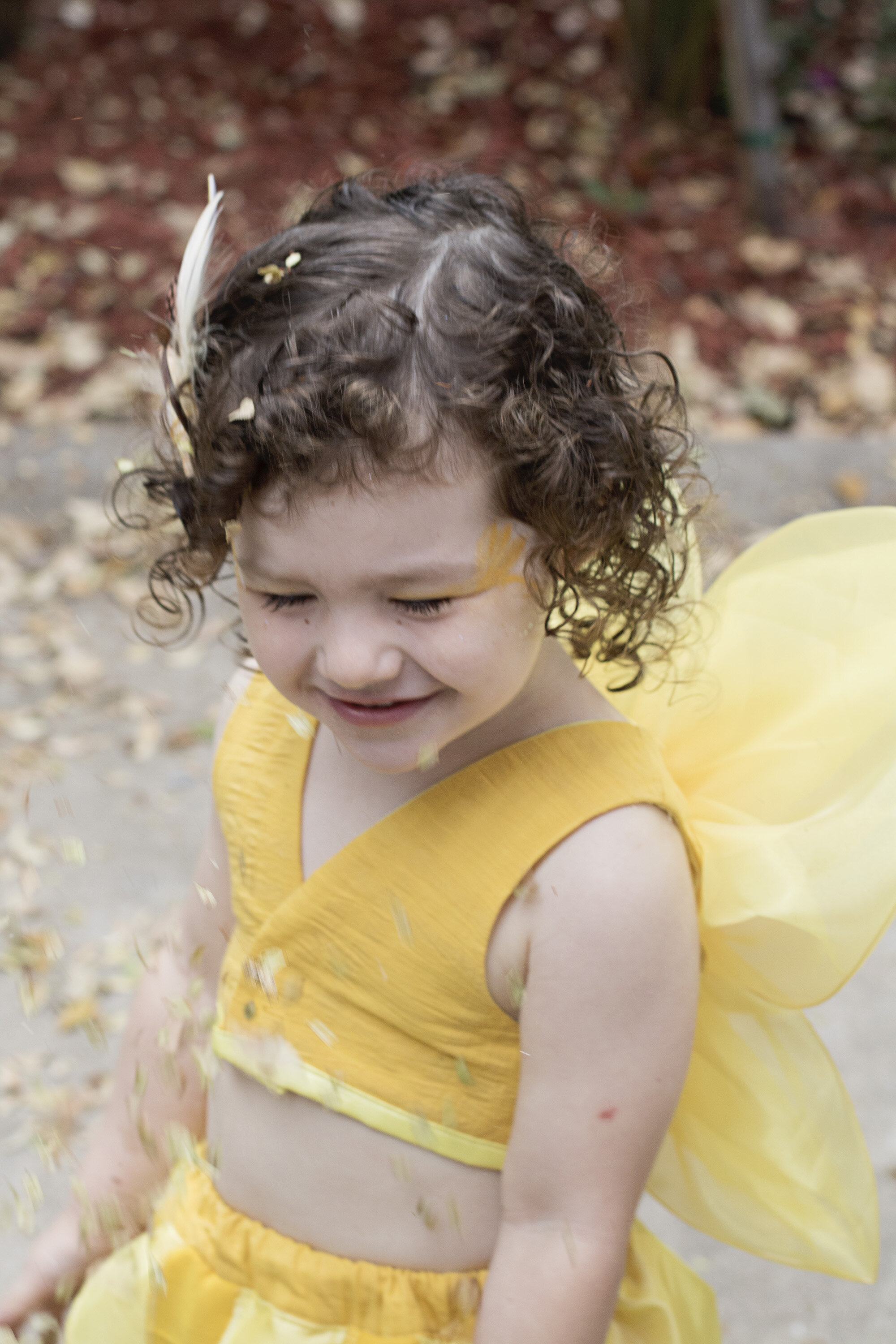
Ok, wrong season to be blogging about a Halloween costume. But we’ve been busy, winter flew by, and somehow it’s nearly spring. And what’s more springy than a butter-yellow, nature-inspired fairy costume? Bam! Off-season blog post justified.
Since she learned to talk, Avery made it clear that she was all about yellow, so it made sense that her third Halloween costume would be an variation on that theme. So I raided my stash for all of the yellow remnants I could find. Fortunately I bought a lot of yellow fabric back in my hoarding days, including a beautiful piece of marigold silk from The Fabric Store, some leftover cotton gauze from my Stevie blouse, and some scraps I had leftover from other projects. I only had to purchase some additional fabric for the wings, which required something stiff and gauzy. Here’s a recap of my process:
Inventory, plan, sketch
As I mentioned above, I took stock of the fabric I already had to avoid buying too much more. I then sketched out plans for the skirt (self-drafted and fairly simple) and determined that I would need to purchase a pattern for the top. I decided to attach the wings to the top/ vest so that I wouldn’t have to add additional straps (which I thought would disrupt the lines and look a little funky), so had to create a sturdy, heavier top to accommodate them.
I took a little trip to Joann’s and settled on Simplicity 1786 — a simple vest that I could easily alter to include Velcro closure. For the wings, I planned to use a technique I learned making costumes in high school theater: basically, a big wad of gauzy synthetic shaped into four wing-shaped bows and supported by light jewelry wire.

Prepare and Cut the Fabric
For the skirt, I used cardstock to create a simple template, and cut out about fifteen “petals,” alternating between leftover rayon and marigold silk that I found at The Fabric Store a few years back. I wanted the rayon to match the silk a bit more closely, so I used turmeric to dye both fabrics and get them a little closer in tone. I’m not a natural dye expert by any stretch, but I found that turmeric tea + extra powdered turmeric + hot water, soaked for about 15 minutes and rinsed, worked well. I used a serger to finish each petal before dying them, so the thread ended up matching, too.
I decided to line the vest instead of using bias tape. This of course made the process more complicated and required cutting double pieces (cotton gauze and rayon), but it made the final piece sturdy enough to balance the wings that would be attached later.


Sew and ASSEMBLE
The vest was fairly easy to assemble, but the skirt took a little more finessing. After attaching each petal to the waste band, I folded and inserted the elastic, but boy howdy that took about 45 minutes (I despise inserting elastic—I still haven’t figured out how to do it efficiently).
I’m not sure how to describe the wing-making process (I probably should have made a video), but basically for each wing I folded a large rectangle of fabric, inserted a string of medium-weight jewelry wire at the fold, then molded it into a leaf shape cinched at the base. Once all four were complete, I attached them at the back center of the vest, covered with a small circle of the cotton gauze, then finished with marigold embroidery thread (see pictures below).
I used fabric scraps, naturally molted feathers, and a single seashell to created the hairpiece, which I held together with embroidery thread and a hot glue gun.
All in all, it turned out pretty epic, and Avery was the happiest (and possibly only) little yellow fairy in town.


This Organic Kids Line Inspires Some Epic Toddler Smize

And just like that, we have a full-on, hard-core toddler. A toddler that has mastered the art of the high-pitch scream. A toddler who demands ham (not turkey!), frozen corn, sliced blackberries, and sparkling water WITH A STRAW. A toddler who climbs up the slide backwards, slams her chin into table corners, and collapses into a puddle of rage when informed that Peppa Pig hour is over.
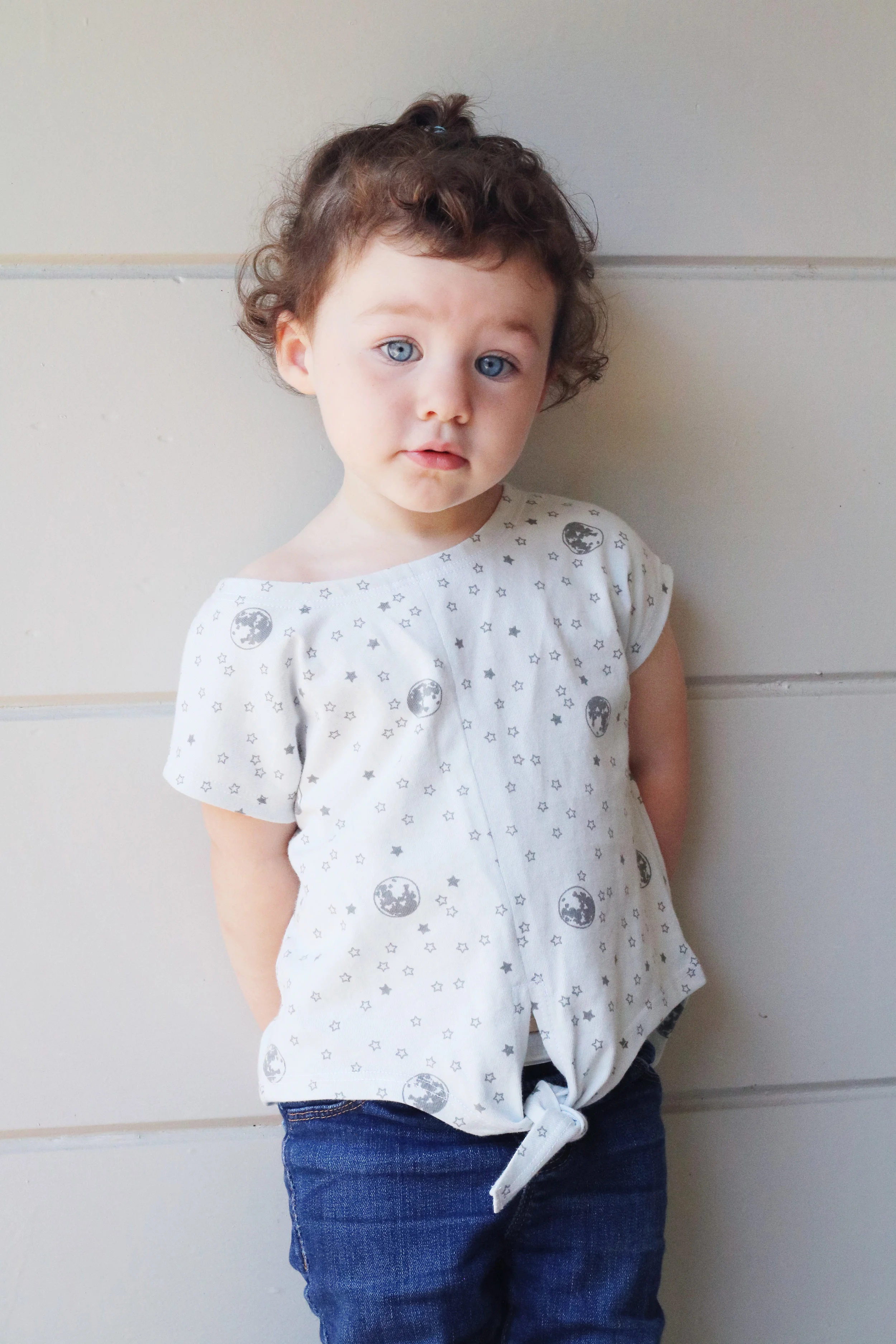
A toddler who, as of last week, has learned how to pose:


Recently Noni Bee, an organic kids clothing line based out of California, sent Avery this adorable Night Sky Tie Top to try out. Expecting the usual struggle to get her to sit still for a photo or two, I was shocked when our daughter leaned against the wall, cocked her head to the side, and looked straight into the camera with her best doe-eyed stare. Suddenly she's 21 months going on 15. Sheesh!
She's worn the top several times now and it's quickly become a favorite. It's soft, comfy, and so, so cute without being overly-girly (the sparkly pink stuff isn't my jam, although I'm sure she'll hit that phase eventually). And like all of Noni Bee's pieces, it's woven from organic cotton yarn, dyed with fiber reactive dyes, printed with water-based inks, and assembled in Los Angeles, California. If you have an active kiddo on hand and care about the ethics behind their clothes, I highly recommend that you check out Noni Bee.
And if you want to enjoy a few minutes of quiet alongside some dry British humor, I highly recommend Peppa Pig.
Disclosure: this post is not sponsored, but I did receive free product from Noni Bee -- a brand I'm happy to endorse.


Why One Green-Minded Mama Chose Cloth Diapers

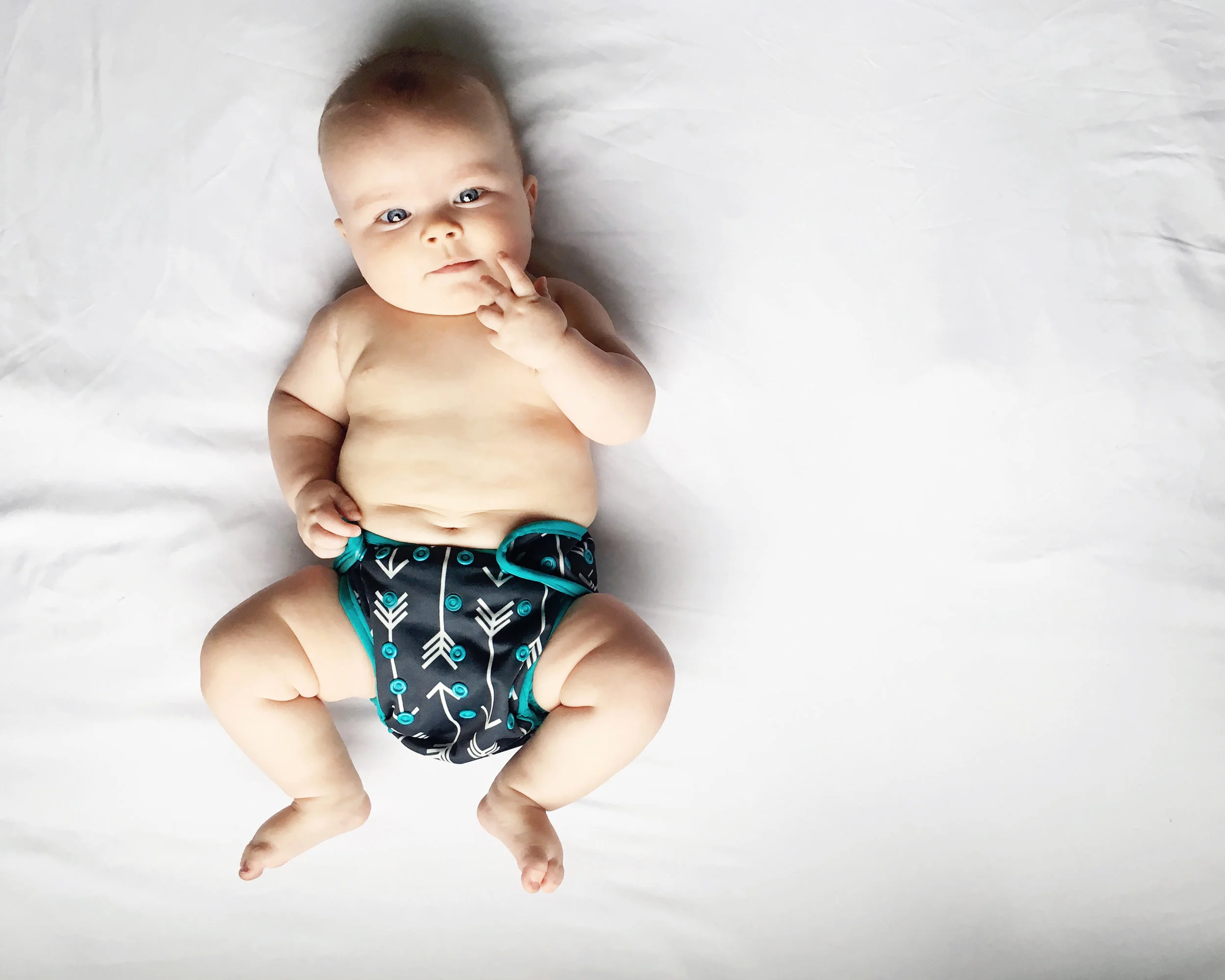
This post comes to you courtesy of my good friend Beth, who chose cloth diapers for her ridiculously adorable daughter, Melby.
Before my daughter was even conceived, I'd made several decisions about my eventual child: I would give birth naturally, she wouldn't have sugar until at least her second birthday, she wouldn't even know technology existed, maybe ever, because we'd spend so much time deeply present with each other, we would use cloth diapers, and her name would be Melby. Most of that was undone almost immediately, when I had to be induced, subsequently mainlined her secondhand sugar through eating exclusively Doritos and cookies for the first several months of her life, and have basically taken a photo of her every waking moment, my phone just inches from her head, drenching her tiny brain in radiation, just because she is so damn cute. However, her name is Melby, and, unlike the rest of my near immediate failures, we have been using cloth diapers since she was born.
Cloth Diapering 101
Cloth diapers, for the uninitiated, are the most basic concept, made nearly impossible by the barrage of options now available. At its simplest, a cloth diaper is a reusable folded piece of cloth inside of a waterproof cover. You replace the cloth regularly, as you would a disposable diaper, while the cover only needs to be washed occasionally just for general cleanliness or in the case of an epic blow out. Of course, in the internet era, there are now millions of options, and you could spend the rest of your life sussing out which insert and cover and specific combination of the two are the absolute best. I nearly went insane doing so, and settled upon the most basic version, which is a prefold-- a rectangular piece of cloth that you fold and hold in place with a claw-toothed rubber device and then cover with a waterproof cover with adjustable snaps to accommodate baby as she grows.
Much like all the unsolicited advice that comes with an impending child, whenever the cloth diapers came up while Melbs was in utero, people responded generally with some version of disbelief, caution, and confusion. Most of it ended in the worried question, Are you sure you want to do that?? People who had attempted cloth warned me that they had given up for one reason or another. The majority of people who hadn't just didn't understand why new parents would add something to their list of things to do or why they would involve themselves any more intimately with bodily fluid than already required. What I figured is: there are endless things to do as it is, and you can't avoid being covered in bodily fluids anyway, so why not be a little green?


Why I Chose to Go With Cloth
I initially chose cloth for the most obvious reason: the environment. There is a lot of discussion around whether cloth is actually better. People run numbers about the carbon footprint of electricity and water usage in laundering cloth diapers; they argue about the toxic impact of detergent and softener usage; they make lists of numbers side by side, digging down into the minutiae of things I could never actually quantify or compare. I am not a scientist or a mathematician. At this point, I am really just working on keeping my baby alive.
But at the end of the day, however the numbers stack up, it just feels better to me to reuse a product rather than to throw something away every single time it's used. In fact, I think in a culture where nearly everything is disposable, perhaps the most important element of the cloth diaper is the attitude you naturally assume in using it. It is a financial and energetic investment-- one that requires regular care, and that emotional investment means you are inherently more intentional about your belongings. There is no way to quantify that. Caring about your things instead of looking at them all as eventual trash is literally invaluable, both financially and environmentally.
As I used cloth diapers, I learned more about the other benefits. Firstly, they get wet. Real wet. And then baby pretty much demands being changed. This may seem like a deficit to some people. It can definitely be inconvenient if you want to run thousands of errands without having to unpack the abyss of the diaper bag, but for me, there is something terrifying about a product that can soak up a bucket's worth of pee and still feel dry to a child. Children, who are raised with cloth diapers, are said to potty train more quickly and easily, simply because they feel when they are wet. I pee, I feel wetness. That is a body awareness and connection that I want to be intentional about cultivating for Melby from the start, an understanding of what her body does and how it makes her feel. I know that might sound terribly hippie, but I think it's important. Just like we are often disconnected from the life cycle of our things, we can also be disconnected from the cycles of ourselves, and some very rudimentary, initial association of your body's actions and the physical feelings attached to those actions seems important to me.
Secondly, what makes those disposable diapers so absorbent so that baby can't feel it during my thousands of errands? I actually looked it up and one popular diaper brand answered and said "hydrogel, sodium polyacrylate, polyacrylate absorbents." I don't know what any of that is. Referring back to my previous admission that I am not a scientist, I won't pretend to know anything about those words. They sound scary but might just be complex names for innocuous things. I do know, however, that I'd much rather have some simple layers of unbleached cotton rather than bleached synthetic materials plus sodium polyacrylate in eternal contact with my baby’s precious, untainted body.
Lastly, if you care for them, cloth diaper are infinitely less expensive than disposables. I could go into epic detail about that as well, but the financial logic of reusable versus disposable is pretty straightforward and, at this point, I should probably give it a rest.
But Before I Do That, A Confession...
After all this evangelizing, it's time for a humbling admission: at night, I use disposables. At almost five months old, Melby sleeps a brilliant 12 hours per night, waking up only once. That's a lot of hours sitting in your own pee, and despite my every single environmental, health, and body-conscious argument leading up to this, I really, really like my sleep. You can cloth diaper a baby overnight successfully, but I wanted the peace of mind of knowing her little buns weren't marinating in urine, so that is where I drew my line. We use 30 disposable diapers per month.
I wrestled with that for a while. It felt shameful to know, share, and celebrate all the reasons to cloth diaper and then to willingly ignore it at regular intervals. But much like I understand how and strive to nourish my body with real, whole foods, I also had a Rice Krispie treat and coffee for breakfast today, and that, more than anything, is example of the reasons I mostly cloth diaper and also sometimes do not. I think it is best for my baby and for the world. I am also human and recognize and feel that parenting is hard. So the majority of the time, I make that intentional choice. The rest of the time, I am likely peacefully lying in my own drool thanks to the sodium polyacrylate in terrifying proximity to her skin. At the end of the day, I think the global and personal impact of what we're doing is still important. It is not perfect, and likely never will be.
I learned from the get go that, especially with parenting, nothing ever quite goes as I planned. Nothing is perfect. I cannot keep my daughter from every toxin, chemical, and artificial experience. My finances and, more importantly, my sanity will simply not allow for it. The best I can do is make conscientious choices and hope that, in doing so, she will learn to do the same. Cloth diapering was just one step in that process.
As a novice parent, I feel assured that she will recognize the thoughtful sacrifices I've made for her, turn out confident, healthy, and well-adjusted because of them, and thank me profusely for all I've done for her throughout her teenage years.
Or maybe, as in all things, I still have a bit to learn about that, too.
My Favorite Ethical Baby Clothing Brands (So Far)
A few of my tried and trusted ethical baby clothing brands, including Made in USA, fair trade, organic, and non-toxic options.
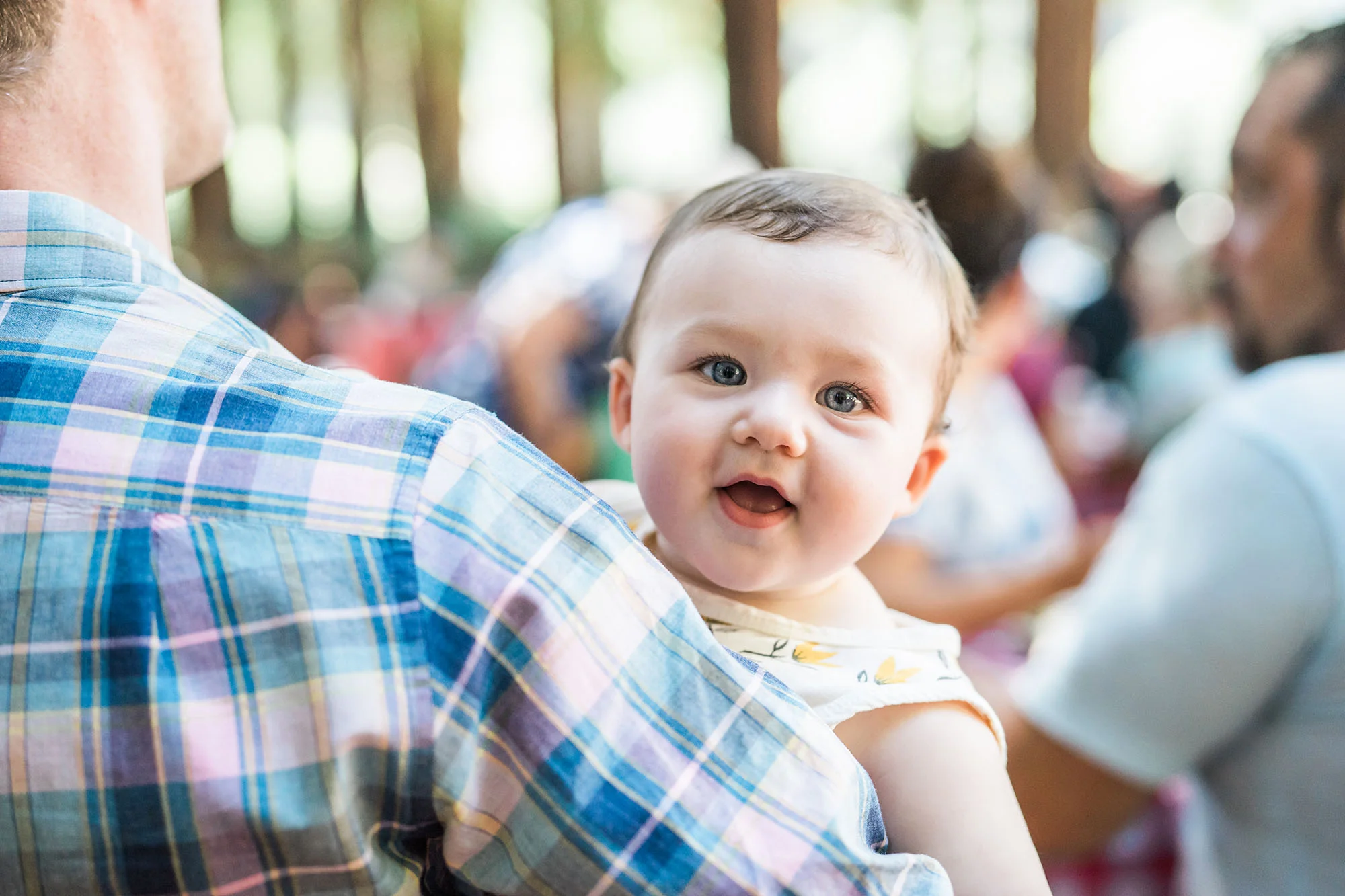
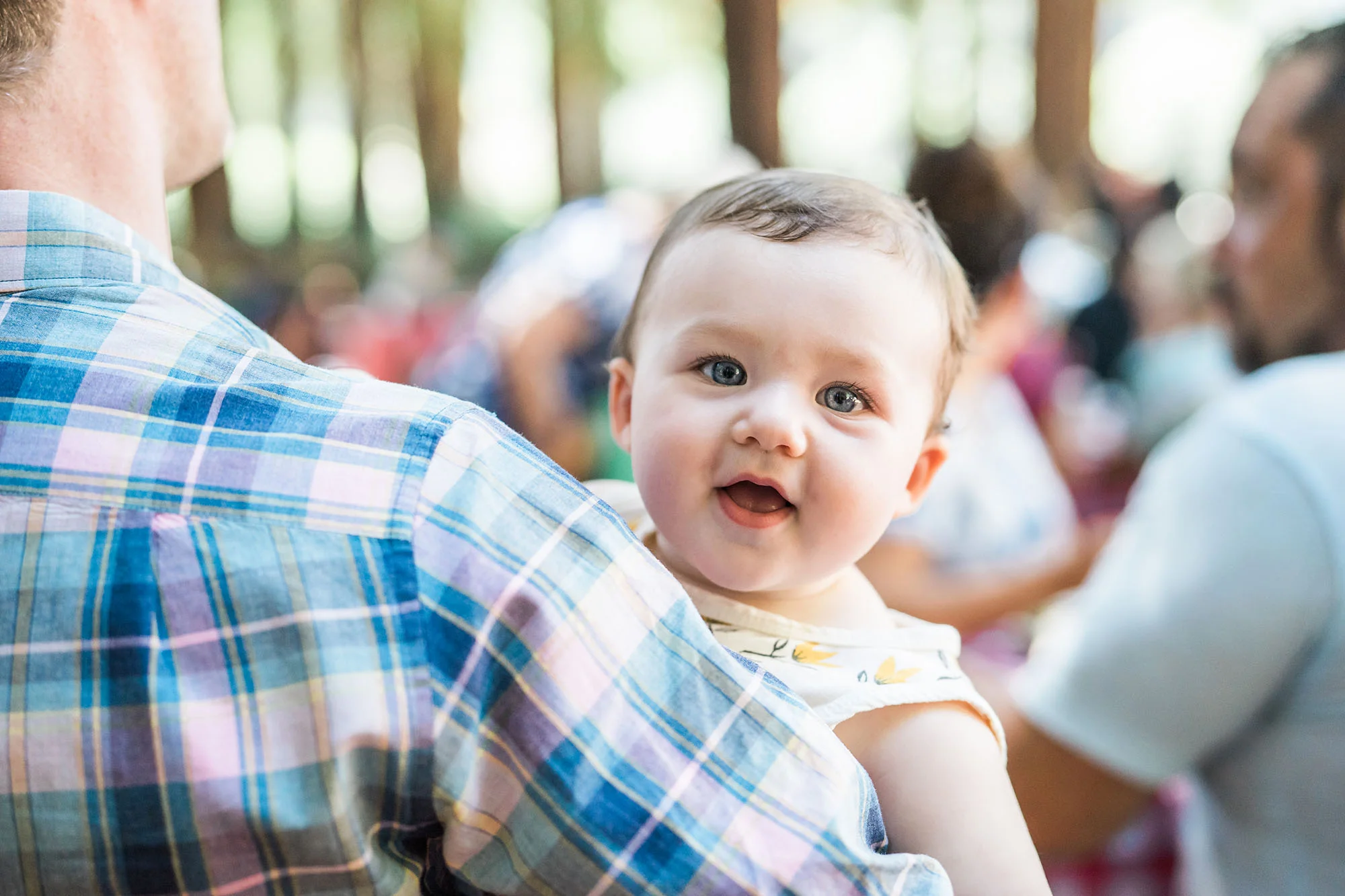
Avery is summering hard at Jon's company picnic, wearing a Rylee & Cru onesie (made in USA).
While incorporating Let's Be Fair's content into mine, I've been bookmarking all of the great ethical baby clothing brands that Dominique profiled over the years. Soon I'll be adding all of them to a new section of my ethical shopping guide, but in the meantime I thought I'd share a few I've grown to love. These are only brands that I've actually purchased from, so it's by no means an exhaustive list. But I can promise that I stand behind each and every one of them.
Under the Nile
We found Under the Nile while putting together our registry on Amazon, and received a sweet striped onesie that Avery wore as a newborn. Made from 100 percent organic Egyptian cotton, all of Under the Nile's baby clothing is insanely soft. Their cotton is grown on a biodynamic farm without the use of pesticides or insecticides, and their dyes are made with metal-free colors. To top it off, everything is made in Egypt at a certified fair trade facility.
Rylee & Cru
One of my dear friends gave Avery the floral onesie pictured above, introducing us to the wonderful brand that is Rylee & Cru. Their basics are all hand dyed, made in the USA, and of top-notch quality.
Go Gently BABY
Go Gently Nation makes clothing for women, men, kids, and babies using organic and sustainable fabrics, recycled tags, water-based inks, low impact dyes, and recycled fabric remnants – all manufactured in Los Angeles, Ca. We bought Avery a lightweight double gauze sundress that she lived in this summer. And even though she's outgrowing her clothes at a rapid pace (babies, who knew?), it's still billowy enough to be worn for many months.
Finn and Emma
Another Amazon find, Finn and Emma uses GOTS-certified organic cotton and eco-friendly dyes, and manufactures their products in fair trade settings. They also make adorable toys, including this play gym that Avery loved to bat at as a one-month old and now enjoys hurling across the room.
Colored Organics
At around six months Avery outgrew most of her gifted and handed-down clothing, and we had to restock. Fortunately Colored Organics offered organic and sweatshop-free basics at very reasonable prices. We snagged several onesies, leggings, and a stylin' ikat romper.
Loved Baby
L'oved Baby is another affordable baby brand that uses GOTS-certified organic cotton. That means that the people harvesting their cotton aren't exposed to harsh chemicals, are paid fair living wages, and enjoy freely chosen employment and a non-discriminatory workplace. Unfortunately I don't know if those principles extend to the sewing/ construction phase of L'oved Baby's production cycle, and it would be nice to see a little more transparency on their website. That said, I absolutely love their simple, soft, and colorful clothes.


Photo credit: Stephanie Pool Photography