
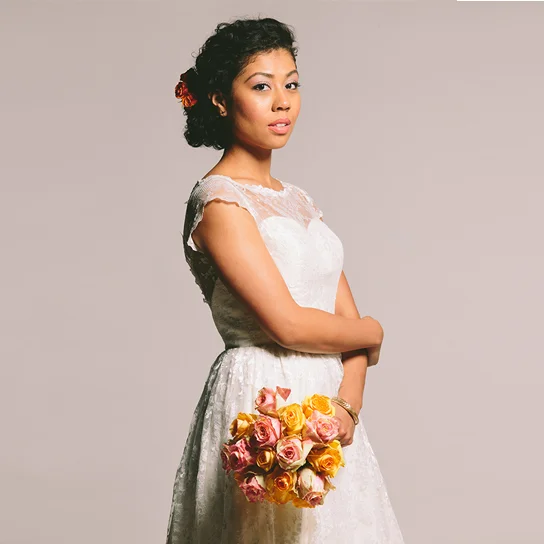
A Thoughtful Approach to Wedding Dress Shopping
Next month, Jon and I celebrate our 5th wedding anniversary (holy whaaaat?). Since we tied the knot and signed the ketubah back in 2012, I've watched several friends and relatives plan their own weddings. One of the most difficult and emotionally fraught decisions? That darn dress.

Next month, Jon and I celebrate our 5th wedding anniversary (holy whaaaat?). Since we tied the knot and signed the ketubah back in 2012, I've watched several friends and relatives plan their own weddings. One of the most difficult and emotionally fraught decisions? That darn dress.
Finding a dress that's flattering, affordable, and "you" is hard enough on its own. But if you're someone who's passionate about ethical fashion, you also take on the extra task of ensuring that your dress is sustainably-made and sweatshop-free.
Spoiler: mine wasn't. Or at least, I'm not sure it wasn't.
We put a lot of thought in to our wedding, and much of it was DIY (with lots of help from friends and family). But after hours of online and vintage shop sleuthing, I decided to buy a relatively inexpensive dress from a local bridal shop. Truthfully, I was so exhausted by that point that I just went with the first dress I liked. It felt good to have something checked off the list!
If I had it to do over, though, I would definitely put more thought in to my decision. Five years later, I'd also have a much wider variety of ethical options to choose from. Here are a few words of advice on finding an ethical wedding dress, whether you decide to go conventional, secondhand/ vintage, or sustainably-made.
Conventional Wedding Dress Shopping


There's definitely something to be said for the bridal shop experience. You're surrounded by beautiful dresses, you're usually with friends, you're offered champagne and fancy candy. It definitely puts you in the "I'm special and this is my special day" head space. It also means that you get to to try on a variety of dresses, and get an idea of what they'll look like once they're tailored to fit.
And although I wouldn't usually consider this a perk, conventional dresses are often made of extremely durable, stain-resistant fabric (probably full of chemicals, I know). Case in point: before the ceremony, someone spilled red wine on my dress. It was an tense moment, everyone looking around furtively to see who would lose it first: the bride, the mother of the bride, or the mortified wine-spiller. Fortunately no one did. The wine all but rolled off that industrial-strength, waterproof fabric, and nary a faint stain followed me to the ceremony. Wedding drama averted!
If you do decided to take the conventional route, here are some ways to remain thoughtful throughout the process:
- Choose a locally-owned, small bridal shop versus a larger chain. I went with Novella Bridal in San Francisco.
- Ask about the supply chain. Just because a dress isn't fair trade certified doesn't necessarily mean it was made in a sweatshop. Often bridal salons have close relationships with their suppliers and can give you a better idea of where the dress came from, the fabrics' country of origin, etc. They may not be able to provide you with answers to everything, but it's worth taking the time to ask. Alden Wicker provides some good starter questions in her guide to finding an eco wedding dress.
- Choose a style that you can wear again. With a few modifications, your wedding dress can usually be tweaked for another special occasion. Shorten it, dye it, add or detract sleeves... pin-spiration abounds.
Consignment or Vintage Wedding Dresses


My sister-in-law, Brye, threw the idea of a white wedding dress out the window with her thrifted, black and gold sequined affair. But even if you're looking for something more traditional, secondhand is a great place to start. Brye found her dress at Xtabay in Portland, which has a bridal salon and a regular vintage section to choose from. Here are a few more options:
Vintage:
- Mill Crest Vintage
- Blossom Vintage
- Adored Vintage
- Happy Isles (this vintage bridal salon is an in-person only experience, but probably worth the trip if you're in the Los Angeles area.)
Secondhand/ Consignment:
- Nearly Newlywed
- OnceWed
- Tradesy
- Still White (weird name, but still worth mentioning.)
- Brides for a Cause (consignment and mission-driven? Score!)
Sustainable, Fair Trade, Made in USA, or Otherwise Ethical Wedding Dresses

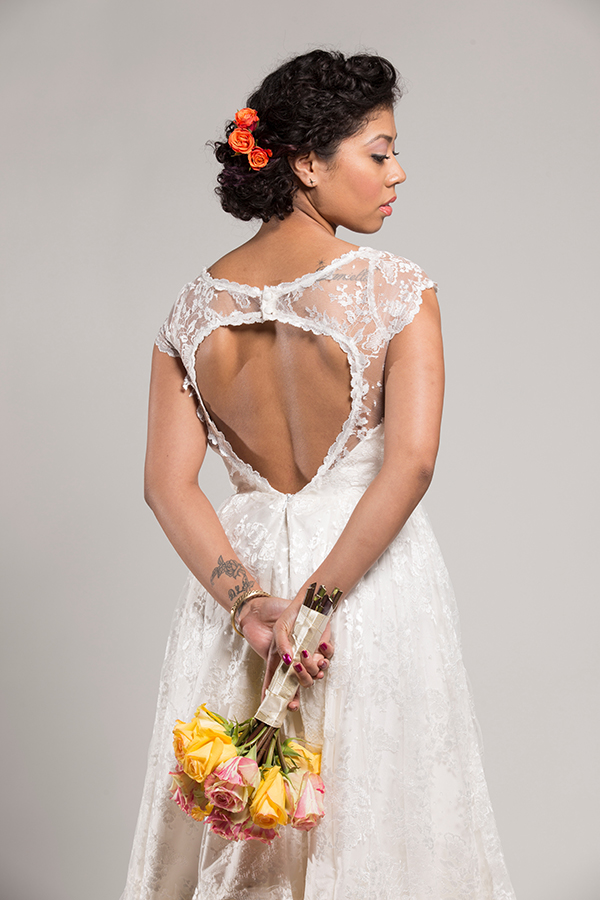
Let's Be Fair (now part of this blog!) did a beautiful wedding collaboration a couple of years ago with several ethical brands, including eco-friendly, Fair Trade certified dressmaker Celia Grace (pictured above). Celia Grace is part of an ever-growing tribe of conscientious wedding dress makers. Here are a few of my favorites:
- Celia Grace (Eco-friendly, fair trade)
- Stone Cold Fox (Made in USA)
- Reformation (Eco-friendly, made in USA)
- Aria (Made in USA)
- Minna (Fair trade, made in UK)
- Edith Elan (Made in USA)
- Deborah Lindquist (Eco-friendly, bespoke)
- Something Blue (Made in Canada using French, USA, and Italian fabrics)
- Indiebride (Eco-friendly, made in UK)
- Sanyukta Shrestha (Eco-friendly, fair trade)
- Pure Magnolia (Eco-friendly, upcycled)
Any brands or resources I missed? Let me know!
A Good Day for Vintage, a Good Day for Plaid


Sometimes I get self-conscious about wearing actual vintage clothing. I worry that it looks too theatrical, too campy, too much – and in our minimalist moment that's just such a no-no isn't it?
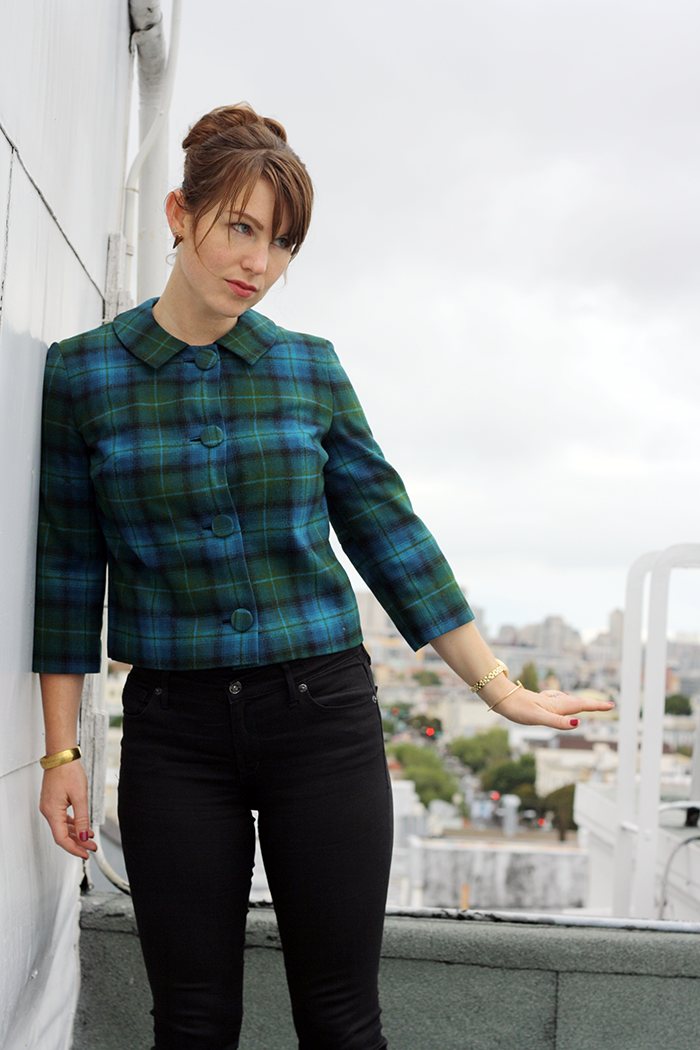
But on this grey, finally-Fall weekend I decided to break out a vintage plaid Pendleton jacket that my mom found at the Salvation Army over a decade ago. I'm not sure how vintage it is; although it looks like it's from the late 50's or early 60's, it's often hard to tell with random thrift store finds. The tag says made in Portland, so it must be from before Pendleton started manufacturing overseas (around the 1970's).
At any rate, I have a hard time styling this piece without looking like I'm on my way to a Mad Men casting call. But pairing it with more contemporary pieces like skinny jeans and booties helps balance out the dainty collar, oversized buttons, and cropped waist. Throw in some chunky gold jewelry, and you've got yourself an outfit fit for the zeitgeist.
No seriously, let's go to Zeitgeist.
Honky Tonk Hiccups


Personal Style: It's All in the Details
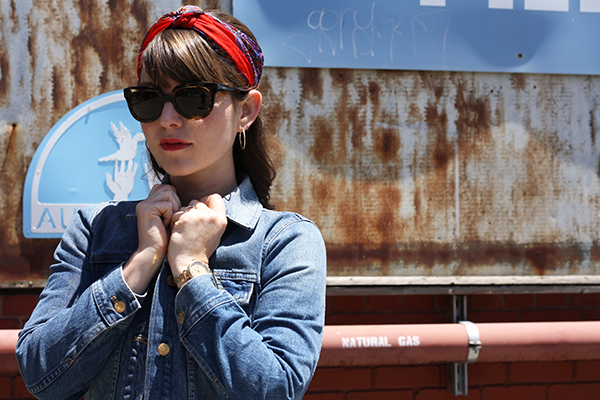
I'm a sucker for a good story, and my most cherished objects (clothing, jewelry, trinkets, and otherwise) all contain a little bit of history. The evolution of my personal style is very much a product of the objects I've collected. Many of them have been given or passed down to me by friends and family, buried in the racks of thrift stores, or found on the streets of San Francisco. I suppose my style reflects those who helped shape me, and the city and state I call home.


(1) Spring flowers from my coworkers (2) Two pendants; one from my mother-in-law, the other from my grandmother (3) Porcelain skull earrings, made in SF, from a friend (4) Ted Baker dress, thrifted (5) One of my favorite purses; I love the art deco/ steampunky details (6) Two cuff bracelets; one thrifted, the other brought back by a friend from Vietnam (I believe it's made from a reclaimed bomb casing) (7) Two necklaces; one given to me by my father on my 18th birthday (made by a San Diego jeweler that I was obsessed with at the time), the other bought in the Turkish Riviera (9) Two rings; the opal given to me by my aunt and fellow Scorpio, the other... well I guess that's obvious.
Inspired by IFB's
The Great Closet Overhaul: Part One
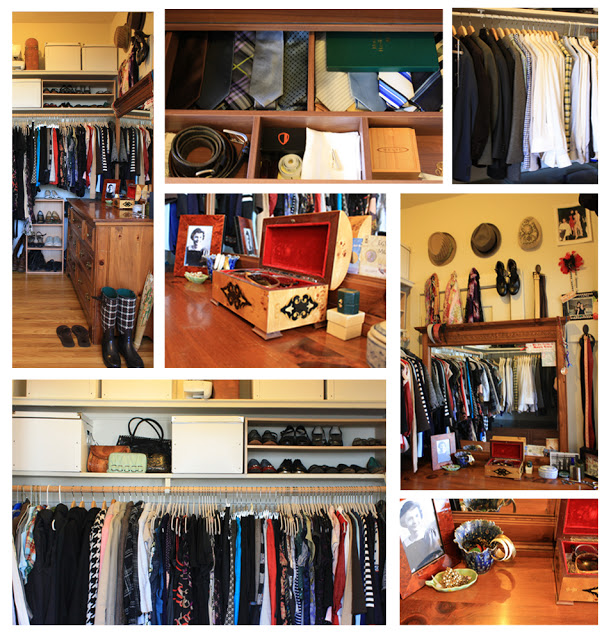
Just for a bit of context, here's what the ol' closet looked like before:

Ok, so I probably shot it at its most pitiful. Still, the lack of hanger space, drawers, and streamlined storage made it hard to find a damn thing in there. Which lead me to whine "I hate all of my cloooooothes!" consistently enough to convince my finance to help me reorganize. And oh, did we.
I don't feel that a full on narrative is necessary here (let's just say it involved a lot of sneezing, toe-stubbing, and screams of "f--king IKEA and your shitty f--king instructions!"). However, I can offer a few words of advice:
1. If you don't have enough drawers, buy a dresser or two. There are only so many things you can hang, and folding your clothes and stacking on shelving only leads to it falling off/ looking messy.
2. Invest in uniform storage containers. I know it sounds anal retentive, but the consistency of all-white boxes (or all pink, or all polka-dot, or whatever strikes your fancy) creates important visual cues. In other words, when you're looking for something to wear, your eyes aren't drawn to all the oddly-shaped moving boxes/ milk crates/ Trader Joe's bags full of old clothes and can instead focus on what's actually hanging in front of you. Trust me, it helps.
3. Invest in slimline hangers, preferably felt-lined. Not only will they maximize your hanging space, they're also just prettier. Which makes your clothes look prettier. And your clothes deserve to feel pretty.
4. Before deciding what to keep and what to get rid of, wash, iron, and hang up everything you own. I know it's a lot of work, but I ended up keeping a lot of items I hadn't worn in years simply because I hadn't taken the time to revitalize them or try them on again. Every item is worth a second look, and there are always ways to restyle the old stuff.
5. Once you have decided what to get rid of, decide how you want to get rid of it. Is it worth trying to resell? Is it something you want to keep for a clothing swap? Or does it go straight to the Goodwill? Also, this is where the laundry part I mentioned above comes in -- it's always classier to give away clean clothes.
Thankfully, the hard part is done. Now on to the fun stuff -- restyling, altering, embellishing, trading, and making some well thought-out purchases.