
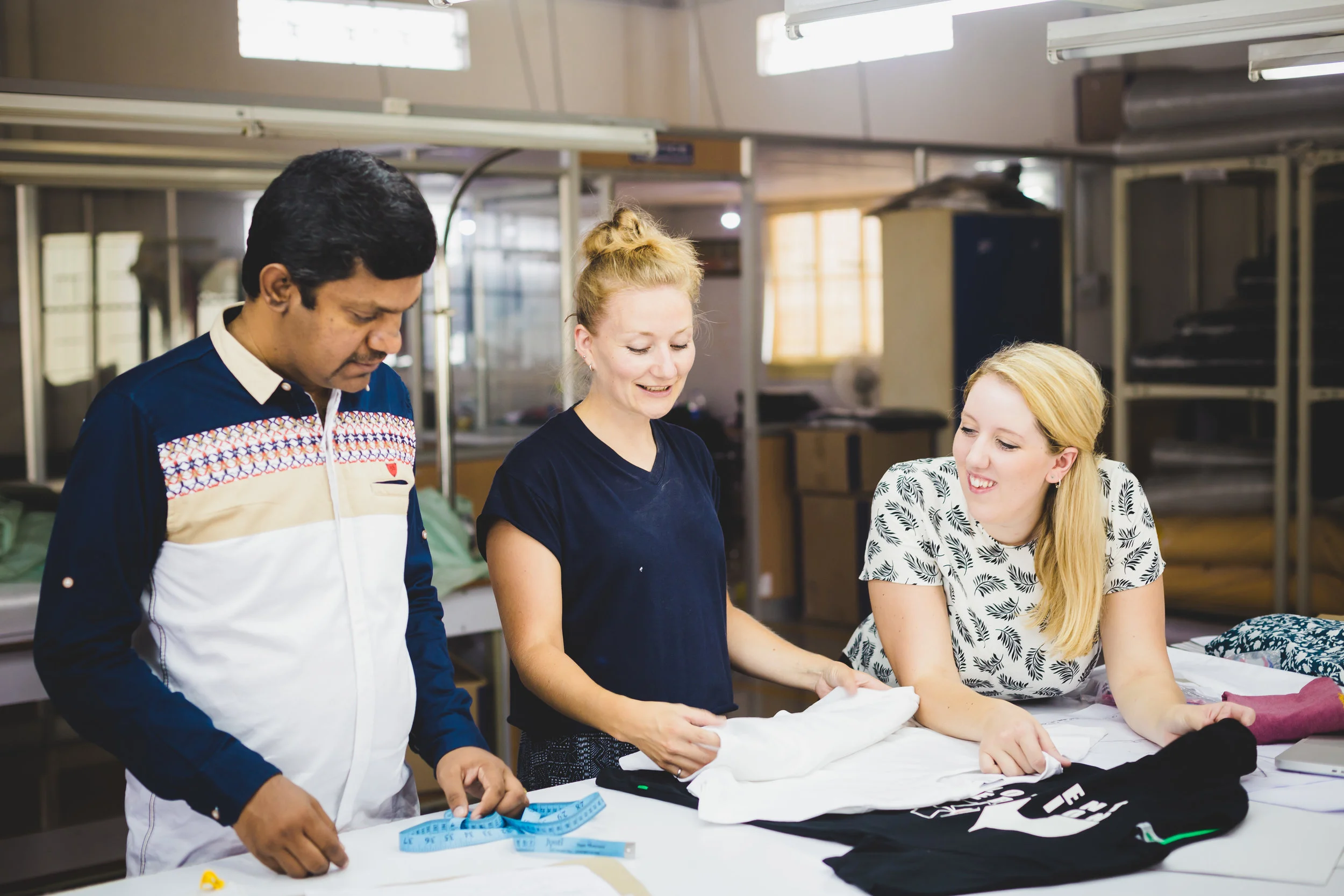
How Know the Origin Built an Ethical Brand from the Ground Up

For years now I've been fantasizing about starting my own line of ethical clothing, and I'm always inspired by those who have actually taken the plunge! Charlotte Instone and Laura Lodge did just that when they founded Know the Origin, a line of beautiful basics that follows ethical processes from seed to garment. I spoke with Instone about the company's roots and startup process, as well as her team's recent trip to India. Whether you're a budding ethical entrepreneur or a pipe-dreamer like me, I think you'll enjoy their story.
What inspired you to start Know the Origin? Were you always interested in ethical fashion, or was it something you discovered later?
I started studying Fashion Buying and Merchandising at the London College of Fashion simply with the desire to do what I love - create awesome clothing. I was learning how to produce clothing and the process at every stage, but had never stopped to ask who was actually making these garments. But when Rana Plaza, a factory in Bangladesh, collapsed in 2013 it opened my eyes to how the fashion industry holds profit above all else, at a huge environmental and social cost. I knew I didn’t want to be a part of this system. This inspired me to start Know The Origin, so I could follow my passion and work with incredible producers that wanted to create positive change in the fashion industry.
Who is your target audience? Can you describe the typical KTO customer?
The KTO customers are people who are uncompromising - in style and in values. People who love classic, simple pieces and share our values of joy and respect for people and the environment.


Your branding is spot on. Did you work with an agency, or did you do everything in-house?
Thank you! All the Know The Origin branding has been done in-house. It’s been a huge process, with lots of incredible people supporting us and adapting it, but it’s definitely one of the things I think matters most.
What do you think is one of the biggest challenges in marketing ethical products?
One of the biggest challenges has definitely been the existing prejudice against ethical clothing. As soon as we describe KTO as “ethical clothing” people often ask if it is expensive (or, you can practically see images of ugly, overly-hippy outfits dancing around in their heads!). We've tried to shatter this stereotype with our branding and products. Our Foundation Set is entirely fair trade and organic whilst also being stylish and affordable.
How hard was it for you to find suppliers and and factories that met your standards and upheld your company's ideals?
I don’t want to say “oh, it was so difficult,” because I know this is often used as an excuse for brands to not try to find suppliers with uncompromising ethical standards. There is an incredible network of amazing suppliers and factories out there! But the real test is finding ones that have full transparency and can trace where their thread, dyes, fabrics and cotton comes from. This is where research and energy is required. However, it’s been utterly and completely worth it.

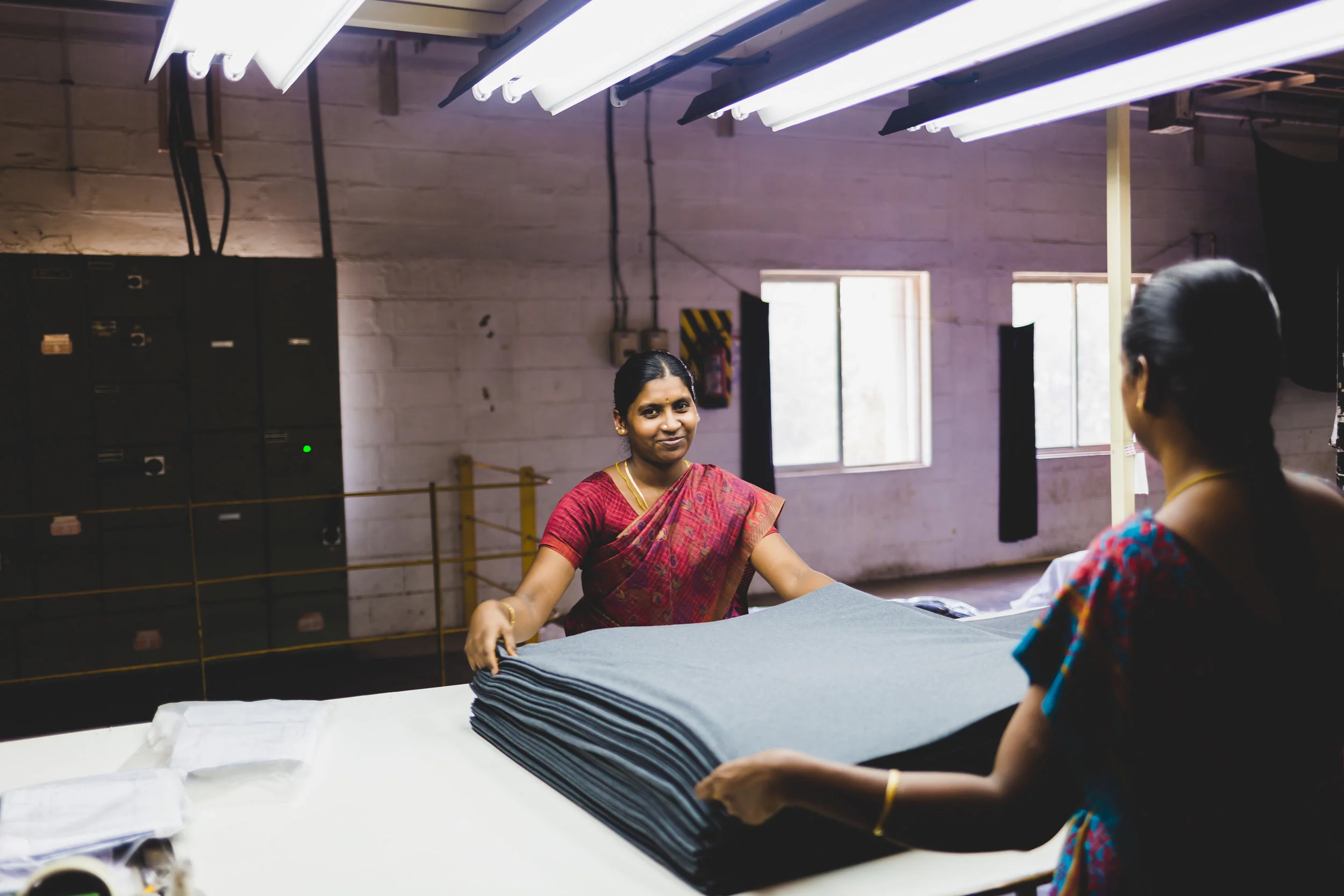

As ethical fashion becomes more and more mainstream, greenwashing (or “goodwashing”) is a real problem. How do you ensure that KTO walks the walk? Can you share some of the direct positive benefits to people and communities that your brand has achieved so far?
This is where transparency is key (and just to avoid buzzword confusion - I don’t mean we are selling entirely see-through garments!).Transparency is all about giving consumers all the information about exactly where each part of the garment is made. It creates brand-customer accountability so there is nowhere for any dark, not-so-green secrets to hide. I don’t want to take credit for the incredible benefits our suppliers and factories have in their communities - it’s just so cool that we get to be a part of their journey!
We work with a factory called Freeset in Kolkata where all the pieces are made by women who have chosen to leave Kolkata’s sex trade and are being supported in their next stage of life both with a sustainable income but also with mental health support. Then in Telangana we work with Chetna, a 100% farmer owned cotton co-operative. It is entirely organic so farmers aren’t trapped in a cycle of debt and bad health that is associated with chemically treated cotton. Additionally, they provide food security training so food crops can be planted alongside the cotton. As KTO grows we are excited to support more incredible producers, whilst also using our profits to support these communities.
Tell us a little bit about your recent trip to India. Any travel tips?
I think traveling is just about going with the flow! You can’t really predict what will happen, and we have had some pretty hilarious and incredible experiences in India so far! Our recent trip was awesome. It’s amazing that on our “business trips” we get to meet so many wonderful people. We were able to hang out with the people that work in our supply chain and chat with our producers who are incredibly passionate about supporting their community. I wish I could sum the entire experience up but I can’t! I'm just excited to go back. Favorite areas are Jaipur and Dharamsala are by far some of the most beautiful parts of India!
What (or who) is your style spirit animal?
Haha, this is the first time we have been asked this, so points for originality! I have to say Emma Watson. I am loving her ethical hype at the minute - and she does it so stylishly! Beautiful, minimal, ethical style. And I totally love the transition from frizzy haired Hermione to immaculate UN ambassador - gives me hope!
Check out KTO's website to learn more about their supply chain or shop the foundation set.


A Reformation Sally Blouse in the Land of Eternal Sunshine

I've all but forgotten what it's actually like to live in San Francisco. This place is a neverland it its own right, but the past three years have been a veritable sun-dappled paradise. Never mind that pesky drought... gather ye rosebuds while ye may, eh? (JUST KIDDING. Stoked about the recent mandatory water restrictions. Seriously.)
Anyway, about that blouse. I've been following the sustainable clothing line Reformation for a while now, but I finally got around to ordering this super-rad crepe wrap top. I love wrap styles to begin with – it's so much easier to achieve a good fit – but the Sally top's bishop sleeves, chunky cuffs, and structured collar really take the cake. And the company's sustainable practices and status as a B Corp? Well, that's the all-important icing. Happy spring!
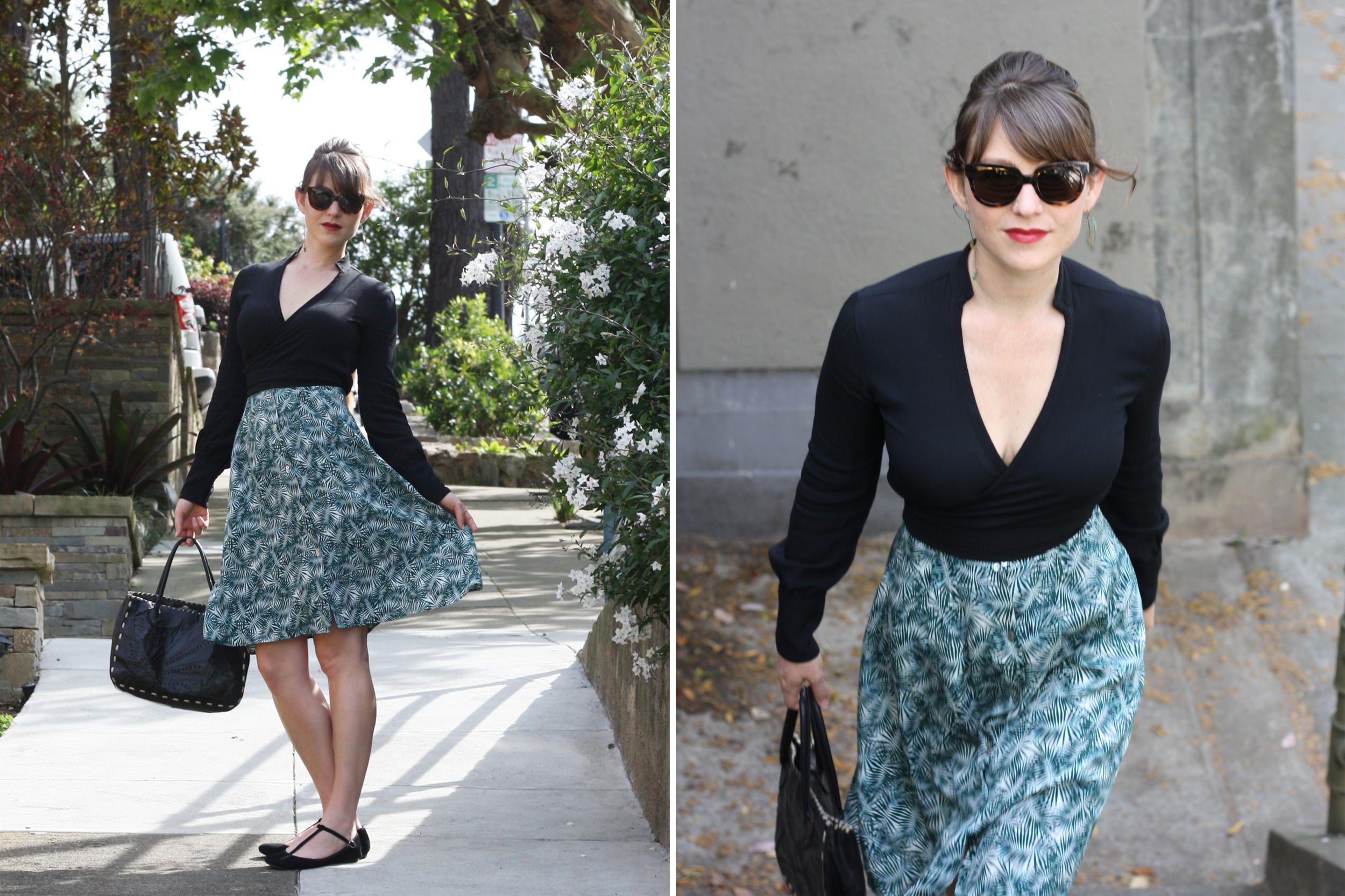


Outfit Details: Scarlett skirt, Amour Vert (Made in the USA, sustainable materials) / Sally top, black, Reformation (Made in the USA, sustainable materials) / Punched leather purse, thrifted / Black suede t-strap flats, thrifted
Moody Blues and the Lights of Downtown


The Ethical Wardrobe, Part II: Who Made My Clothes?

But it certainly hasn't been a cakewalk. It took me three years to compile a modest list of ethical fashion brands. I've been floored by how expensive some sustainable options are. I've been frustrated with the elitism inherent in the ethical lexicon. And I still feel like a total weirdo every time I walk into a store and proceed to turn everything inside out to see where it was made.
In fact for many people cost, confusion, time restraints, and even embarrassment can be major barriers to making more ethical choices. But the wonderful thing about the ethical fashion movement is that it allows you to start small. You don't need to overhaul your closet or become a minimalist or spend $360 on a fair trade scarf (although don't let me discourage you, darling). All you need to do is start asking questions, one of the most important of which is...
Who made my clothes?
It’s simple, but putting a face to the things we interact with everyday – whether it’s the food we eat, the clothes we wear, or the devices we're attached to – can help keep us accountable. During my talk, I brought in several pieces of clothing and accessories from my own closet, which included Shinola, Horween Leather Company, Mata Traders, Everlane, Krochet Kids, and BCBG. I then asked the audience to think for a minute about who they thought might have made them. What were their lives like? How much were they paid? Did they get to design the garments themselves, take pride and ownership of their work? After a brief discussion I shared what I knew about each piece based on the information the companies provided:

The first five companies are all ones I consider to be ethical or sustainable for a variety of reasons. There are a lot of different ways to define "ethical" (which I'll go into in more detail later), but the Ethical Fashion Forum's definition is a good place to start. EFF describes a "triple bottom line" necessary to make a business truly sustainable: social, environmental, and commercial responsibility. In other words, truly ethical fashion goes beyond simply doing no harm; it actively reduces poverty, creates sustainable economies, lessens and counteracts environmental degradation, and meets an existing market demand. You can read more about it here.
The companies profiled above satisfy these parameters to varying degrees, but to put it even more simply, they allow me to answer that most-important question, who made my clothes? Because these companies have transparent supply chains, I know who made my favorite alpaca scarf, I know that she was fairly compensated for her work, and I even know that she plans to major in a technical field and own her own home. These are purchases I can feel good about, and companies that I am happy to support.
But these companies are the exception, not the rule. A lot of items in my closet come from companies like BCBG. You know, the one with the dramatic question mark; the one that reads UNKNOWN. I wish I could tell you that whoever made my favorite wool coat in China wasn't a slave laborer or under the age of 14, but all I can really do is make assumptions about what working conditions are like in these factories based on vague corporate social responsibly statements.
In some cases, working conditions might be fair, and even enable employees to support their families, rise from poverty, and live better lives than their parents. NPR's Planet Money Makes a T-Shirt has a beautifully nuanced video that follows garment workers in India and Columbia and illustrates how wildly wages, working conditions, and and social mobility can vary from country to country.
And then of course, we have Rena Plaza. Which makes all this not-knowing or kind-of knowing not ok.
And remember, ethical fashion is more than simply not doing harm, it's about making people's lives better. So even if a company claims it doesn't condone slave or child labor, or pollute the environment all that much, it's not inherently ethical. I'd rather know that my purchases are actively making the world just a little more fair.
So, who gets my money?
As Jess of Notes From a Thoughtful Life points out, there's no wrong or right way to approach ethical shopping. Which companies you decide to support will depend on the ethical issues you feel most strongly about. If you're vegan or vegetarian, you might want to focus on cruelty-free or animal-free products. If you're keen on bringing manufacturing back to the United States, you might want to buy American-made. If you're foremost an environmentalist, you'll probably prioritize brands that have zero-waste policies or minimal environmental impact. Ideally, an ethical fashion brand will have several ethical traits, but my focus had always been on humans (how can I make sure my purchases didn't hurt anyone along the way?). So I usually prioritize fair trade or made in the USA options over something that's simply vegan or "eco-friendly."
As I mentioned in my previous post, fashion is a big part of our identity, and inherently emotional. Clothes can mean joy, pride, celebration, dignity, and self-expression. They can mean enough money to feed your family, and prosperity for your community. They can also mean shame, struggle, abuse, even death. So when we vote with our dollars, let’s vote for joy.
I'll be following up with two more posts: one that explores the definition of "ethical" more deeply, and another that talks about how to make your sewing practice more sustainable. In the meantime, tell me about your own experiences with ethical shopping in the comments. What are the biggest hurdles you face when making more conscientious choices?
Crafting and Ethical Wardrobe: the Knee-Length Skirt
I like to balance structure with flow, so I usually opt for a snug pencil skirt with a looser blouse or a fitted sweater with an a-line. As part of the Wardrobe Architect project, I put together some of my favorite silhouettes during week four; you can also use these handy templates (built painstakingly in Illustrator by yours truly) to find your favorite combination.

Where to buy it:
Trina Turk is a great choice for a variety of professional pieces, and much of her line is now made in California. I'm especially in love with a grey pencil skirt I recently found at Nordstrom Rack. The fit is perfect for my particular shape (narrower at the waist with plenty of room for the ol' hips), and the construction is amazing. I usually look for Trina Turk on sale; otherwise, her stuff can run a little steep.
If you're more interested in shopping fair trade, try People Tree, Annie Greenabelle, or One Mango Tree, all of whom usually carry a pencil skirt. I also love Mata Traders' Speakeasy skirt from their Fall collection.
How to make it:
I've had one of Colette's Zinnia skirts cut in a lightweight navy wool and ready to assemble in my sewing drawer for... oh, I don't know, eight months now? At any rate, I love it, and hope to finally finish mine before the end of the year (modest goals, folks). I also bought By Hand London's Charlotte skirt pattern in the hopes of making a floral version like Oona's below. Just lovely. A few more options include Sewaholic's Hollyburn skirt, Tilly's Miette, and Deer and Doe's Anemone. By Hand London also has a great tutorial on creating a simple gathered skirt — no pattern needed.

Crafting an Ethical Wardrobe: the Button-Up Shirt
So as I round out my own professional wardrobe (still a work in progress), I want to share out some of my favorite brands, along with what I consider to be professional staples. I'll show you where to find these pieces in a range of prices, or — if you're one of those crafty types — how to make it yourself. So let's start at the top, with the button-up blouse.

It's pretty hard not to look sharp in a button-up. And depending on how trendy you go with it, this piece could potentially be in your wardrobe for decades. I prefer silk or a poly-blend to cotton, mostly because I hate ironing, but any variation on the button-up can look super polished tucked into a pencil skirt or with a pair of skinny slacks.
Buy it:
I love Everlane's button-ups, along with Alternative Apparel's more casual options. Hart of Haute's Greta top has a cute vintage vibe, and People Tree's Miranda Pocket blouse and Peggy Lace blouse both put a spin on the traditional cotton fare.
If you've got some bread to spare and want a true investment piece, try Steven Allen's cotton button-ups (made in USA), Trina Turk's Eilane top (made in California), Angel Chang's button-down (check out her commitment to growing rural economies in China), and Stella McCartney's Washed Cotton Poplin (read up on Stella's commitment to sustainability here).
And if the prices above gave you a mild heart attack, check out the blouse collections on Threadflip and Twice, all secondhand and many of them work-appropriate.
Make it:
Grainline studio's Archer button-up shirt is a true classic, suitable for a variety of fabrics weights including silk chiffon, silk crepe de chine, cotton shirting, and chambray. I love the angled cuffs and pleated back — so pretty!
Burda also carries a number of button-up styles, including this one with pleated pockets, and the Epaulette blouse, and Simplicity's "Amazing fit" shirt looks like it's highly-customizable at the bust (hooray!). Also, check out this great button-up tutorial on Etsy's blog.
A few words on fit:
I have a larger bust and broad shoulders, so it can be hard to find an off-the-rack button-up that fits. Although I haven't actually done this yet, I'd like to try Stacy and Clinton's advice and buy a size up, then have it custom-tailored. I'm also intrigued by designer Rochelle Behrens' "no gape technology" (if its promise holds true, is it worth $198? At least it's made in NYC?). In the meantime, I keep that gap closed with the magic of hem tape.
How do you style your favorite button-up? Any ethical options I missed?
The Ethical Wardrobe, Part I: It's Complicated

As my mom would say, I was being a bit of a Debbie Downer about my Britex talk last week. But now that the sting of not being perfect has worn off, I’d like to share out some of the content. There’s a lot of it – more than I was able to get through on Saturday – so I’m going to break it up into a few posts and include some extra links and resources. Without further ado, then, here’s my schpeal on crafting an ethical wardrobe.
Fashion, Emotion, and Cold Hard Facts
I began my talk by asking the audience to share some of the emotions they typically felt while shopping. Responses included “guilt,” “frustration,” “score!” “having fun,” “frivolous,” “annoyance”…and more “guilt.” If you're reading this now, take a minute to think about it. Do you love shopping? Does it fill you with anxiety? Maybe a little bit of both?
Although our ages, believes, incomes, and shopping habits may vary wildly, there are two things that we and roughly every other person on the planet do every day: eat, and get dressed. And yet for something we do every day, the choice of what to wear and what to eat can be pretty mentally and emotionally exhausting. When I asked my audience to think about some of the emotions they had towards shopping, many were negative. Why is that?
Well, clothes are complicated. They’re one of the most obvious expressions of our personality, tastes, lifestyle, even social status. We spend hours hunting for them, making them, taking care of them, talking about them, loving them, hating them. And advertisers spend billions of dollars every year trying to get us to buy them.
Clothes carry an emotional weight for all of us: that adrenaline rush you get when scoring a designer label for a third of the price; the pride you feel when designing and sewing your own clothes; the shame you may have felt when you couldn’t afford to dress like your classmates, neighbors, or colleagues.
A lot of our identity, and increasingly our sense of morality, is wrapped up in what we wear. And that’s a lot of pressure! We now have access to an overwhelming number of facts around global poverty, global warming, and the effects that fast fashion is having on people and our planet. I can go online and find some pretty sobering statistics about all of this stuff within in minutes, like the fact that:
- If each person owned only one pair of pants, one shirt, and one jacket, that would be 21 billion articles of clothing. If you were to count each of those, one per second, it would take nearly 672 years. And I, for one, own far more than three articles of clothing.
- In fact, the average American family spends about $1,700 a year on clothes.
- The average American also trashes about 65 pounds of textiles per year.
- In contrast, we know that 2.4 billion people worldwide live on less than 2.00 a day.
- The average wage of a garment worker in India is $68 – 100/ month. That would be about $200 – 300/ month in the U.S. when you adjust for cost of living differences.
- There are over 27 million modern-day slaves worldwide, many of whom support the textile or cotton industries.
- Finally, if everyone consumed at the rate of the U.S., we would need 3 to 5 planets.
I first started learning about the effects fast fashion and the full scope of global inequality in college. The thing is, while these stats were pretty shocking, none of them ever inspired the “aha” moment – or the action – that I hoped they would. I bought my sweatshop free sneakers and fair trade coffee, and nagged my friends about how they should too (you can imagine how fun I was at parties). But I wasn’t really sure why, other than it seemed like the right thing to do.
Then in 2010, my now-husband and I took a trip to Cairo, Egypt. This was a year before the Egyptian revolution, so the political and economic tension was pretty palpable. We saw the pyramids. We took a Nile cruise. But for me, the most memorable part of the trip was a visit to a carpet factory outside the city. The owner gave us a tour of the gallery, proudly showed off the expertly woven rugs, and then asked if we’d like to meet the people who made them. So we went downstairs.
The carpet makers? All children, all under twelve. Smiling sweetly, but working. And that really was when it hit me. When all of those facts I’d been collecting over the years were ignited by a purely emotional experience. I realized that if I’d been born into different circumstances – or even born in the U.S. a century ago – that could have been me. It could have been one of my students. It could have been my child.
I have no idea what went on behind the scenes at this carpet factory, or whether the children really attended school like the owner told us. But the bottom line is that this is a reality for 215 million of the world’s children. That’s 1 in 7. And child labor is only one of the many global injustices that take place in the name of fashion – so that I can buy that $14 linen skirt for so perfect for Cairo in the summer.
This experience didn’t inspire me to go out and buy every piece of fair trade clothing I could get my hands on. It didn’t even inspire me take political action (mostly because I wasn’t sure where to start). But it did start me on a journey toward becoming a more conscientious shopper. And a year after Cairo, I started this blog.
Although my personal fight against fast fashion can feel small – even frivolous – at times, it’s part of a movement that is gaining more and more traction. A movement that starts with the question: Who made my clothes?
Honky Tonk Hiccups


Me-Made May, and a Month of Ethical Fashion

I work in corporate communications, and last week our department hosted a video content workshop. The goal was to learn how to develop viral content, with the idea that emotionally resonant material can spread like wildfire. One of the speakers, Karen Cheng of Give it 100, pointed out that there are specific emotions that move people to share -- amusement, excitement, and anger were among them.
When I started this blog almost three years ago, my intent was to craft a wardrobe that was fair to the environment, fair to people, and true to my personal style. I explored fair trade, handmade, and made-in-the-USA options, and started learning how to sew. I tried to make more conscientious purchasing decisions and to buy less overall. And while I've discovered some great ethical brands and purchased some gorgeous pieces along the way, I still find myself shopping J. Crew. It's an odd sort of addiction.
So even though I missed this year's Fashion Revolution Day and can only commit to a very mild version of Me-Made May, I want to challenge myself to take a step back and remember why I started this blog in the first place. Inspired by the sentiments of Fashion Revolution Day and Me-Made May, here's my hybrid ethical fashion pledge:
I, Jacqui of Birds of a Thread, pledge to:
1. Wear one fair trade, handmade, made in the USA, or vintage garment per day;
2. Wear something I've made, modified, or mended at least once a week;
3. Write two educational posts that explore the garment industry and the stories behind the clothes we wear;
4. Not to buy a single new piece of clothing this month.
Stay tuned...
Smug alert: a quick word on the privilege of "ethical" style
I was Christmas shopping this year in the upscale neighborhood of Noe Valley when I stumbled upon Mill Mercantile, a women’s clothing store that sells beautifully crafted basics. As I browsed though their Breton sweaters, hand-died stoles, and Italian-made wool jackets, I was struck by two equally powerful emotions:
1. Empowerment at the realization that, for the first time in my life, I could drop $200 on a sweater
2. Guilt, with the force of a thousand rosaries
A little context: I’ve never been poor, in that I’ve never experienced food insecurity or homelessness, and have never had to rely on public assistance. I do know what it’s like to live paycheck to paycheck, and to mentally calculate, at the mercy of an impatient cashier, whether or not that extra gallon of soymilk is going to overdraw my account. I know what it’s like to have to choose between paying rent or making my student loan payment, and the late fees and poor credit that result. I know what it’s like to sit among a group of women wearing designer blazers and feel completely inferior – because somehow my failure to dress professionally is a reflection on my initiative or success.
But eventually, I got lucky. I found work that allows me to live in one of the most expensive cities in the country and not spend two thirds of my income on rent (albeit with rent control). My husband and I both work and don’t have children, providing us with a healthy amount of disposable income. In other words, I am living a pretty privileged life. Although I know that it could all go away at any moment, for now I've got my American dream. Do I have more of a right to it than anyone else with the same education or work ethic? Of course not; I simply got lucky.
I reveal all of this because when I link to a pair of expensive shoes or post pictures of myself wearing a $200 dollar sweater, I am acutely aware of the fact that many people in my neighborhood (and the people getting Ellis Act-ed out of the neighborhood) can’t afford to shop at the boutiques sprouting up in their midst. As much as I want to support local retailers, artists, and designers, I can't help but mutter to myself every time I walk down Valencia Street, "great, more succulent atriums and minimalist baby toys.”
This doesn’t mean that I won’t shop there. I’m ecstatic that I can finally afford to invest in beautiful clothing that I will keep for years, and that I can contribute to San Francisco's manufacturing renaissance. I love that I can participate in an economy that I believe in: one that values quality construction, responsibly sourced materials, and the creation of local jobs in the apparel industry.
But I admit that this philosophy and the terms that go along with it (responsible, ethical, conscientious) are steeped in judgment and self-congratulation. They imply that anyone who doesn’t or can’t afford to shop sustainably is unethical, irresponsible... ignorant. It’s no wonder that the language of sustainability is a defining attribute of the yuppie-hipster (yipster!) stereotype. As that legendary South Park episode so aptly points out, we run the risk of being suffocated by our own smug.
I don’t have a solution to the growing income divide in the Mission and throughout San Francisco, nor do I know exactly how I feel about gentrification as a whole (that requires another, much more nuanced conversation). But as the author of a sustainable fashion blog and the owner of several succulents, I felt compelled to acknowledge my privilege and the inherent flaws in the language I use here.
My next goal is to outline how ethical style can be achieved at a range of income levels, and to continue to profile low-cost options like thrifted clothing, refashions, and DIY projects alongside more expensive items. So bear with me while I search for my place in the ethical fashion world, and I encourage you to share your own struggles and successes in navigating this complicated territory.
Conscientious Cashmere by Everlane


Introducing Everlane
As a counterbalance to the amount of floral I've been posting lately, I thought I'd show off the ready-for-work sweater I recently snagged from the ethical fashion lineEverlane. Unique among the other ethical companies I've researched, Everlane operates under a "radical transparency" model that urges customers to know their factories and question the true costs of the clothes they purchase. Everlane's website makes this easy by offering detailed profiles of each of their partner factories, from their sandal factory in Los Angeles to their cashmere factory in Dongguan, China. Developing personal relationships with the owners allows Everlane to closely monitor each factory's working conditions and overall integrity.
Made in China, and that's ok
Everlane is one of the only ethical companies I've found that carries elegant basics like crew neck sweaters, cardigans, and silk blouses. This is a big deal, because until now I've relied almost exclusively on J. Crew to complete my work wardrobe. Everlane has also inspired me to broaden my definition of what I consider ethical fashion. When I first began searching for ethical options, my criteria was limited to clothing that was fair trade or made in the USA, UK, Italy, or other "first world" country with stringent workplace standards. To be honest, I developed a mild disdain for anything with a "Made in China" label. This reaction (er, snobbery) wasn't entirely without warrant: many designer labels produce their clothes in China for a low cost in poor working conditions and mark their prices up wildly by the time they reach the consumer. "Made in China" has become synonymous with cheap and disposable, and many higher-end labels do their best to draw attention away from where their products are made, even if they do have strict workplace standards in place. This is a shame, because China has some of the most advanced machinery and talented garment workers in the world. There's a reason my vintage Coach bag has held up for so many years: it was made really well to begin with.
I support shopping and sourcing locally whenever possible, but it's short-sighted to ignore the talent and resources available overseas. It simply needs to be tapped responsibly, and I'm happy to support companies like Everlane that are committed to doing so.
Outfit details: Navy crewneck cashmere sweater by Everlane | Silk pan collar blouse, thrifted |Graham studded leather wrapby Gorjana (Made in USA) | Theory velvet skirt and leather bag via Crossroads